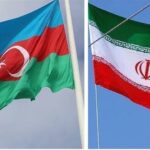
Though the United States and Iran continue to negotiate in an attempt to save the Joint Comprehensive Plan of Action—better known as the Iran deal—outside observers agree that “time is running out,” and failure to reach a compromise could have drastic international consequences. American negotiators and foreign policy experts who are skeptical that a deal can be reached should perhaps look at the recent spate of successful agreements between Iran and Azerbaijan—two countries that were only recently at each other’s throats but are now making significant progress towards achieving improved diplomatic relations and mutual material gains.
Border Tensions
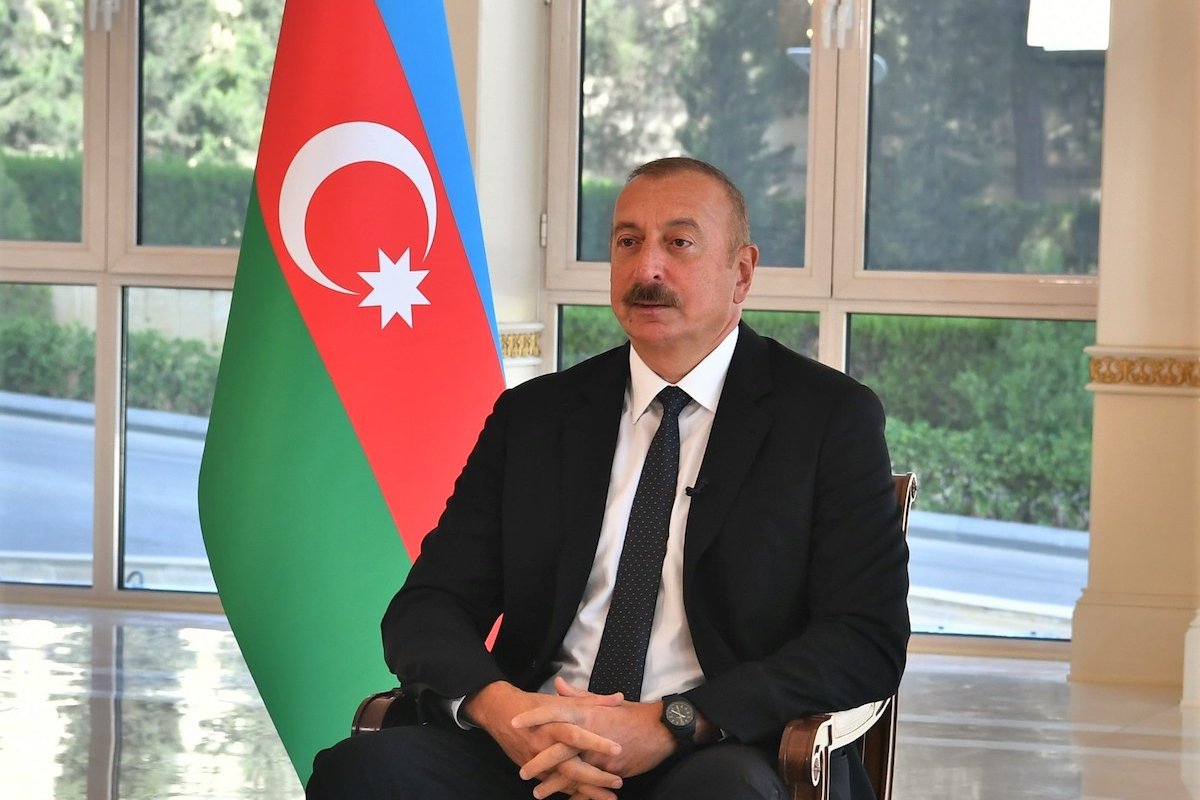
On April 26, 2021, before recent tensions between Azerbaijan and Iran began, the president of Azerbaijan, Ilham Aliyev, visited Azerbaijani territories formerly held by Armenia—now called the “liberated territories” following the Second Nagorno-Karabakh War in 2020. During that visit, he referred to the border between Azerbaijan and Iran as “a border of friendship.” This statement, along with other gestures, demonstrated that Azerbaijan was not deliberately seeking a deterioration of relations.
At the same time though, Azerbaijan informed Iran that it considered Iranian trucks crossing into Karabakh without going through proper customs to be disrespectful to Azerbaijan’s territorial integrity. Later on, Aliyev revealed that Baku had first warned Iran verbally. The second time, Azerbaijan issued a demarche to Tehran. The third time, Azerbaijan created police and custom checkpoints in the newly liberated territories from where the highway connecting Armenia and Iran passes through Azerbaijan and arrested the Iranian truck drivers heading into Karabakh.
For their part, the Iranian truck drivers tried to change the license plates of their vehicles to Armenian ones to continue to enter Karabakh illegally. This follows other various recorded instances of an illegal Iranian presence in Azerbaijan’s (now formerly) occupied territories before the Second Karabakh War. However, Tehran had always either denied that these cases were real or argued that the trucks belonged to private companies and that the government had no control over dealings of private businesses. Finally, it should also be noted that before Tehran gave ground on the matter of the trucks, Iran conducted military drills along the border with Azerbaijan. Baku, and some foreign observers, saw this an Iranian attempt to intimidate Azerbaijan to back down. It did not work.
In summary, Azerbaijan—in this case, and in preceding ones—has consistently acted to protect its territorial integrity, as is its right and prerogative. It was Iran that inflamed tensions by refusing to curb the illegal movement of people and goods coming from its side of the border.
The diplomatic normalization process to address these recent tensions began when Iran stepped back and complied with Baku’s single, and extremely reasonable, demand: that the Iranian government ban this illegal passage of trucks belonging to Iranian entities into Karabakh.
Agreements Are Possible
The détente resulting from this diplomatic normalization has produced benefits for both countries. Late last year, on November 28, the presidents of Iran and Azerbaijan met in Turkmenistan and reached important and constructive agreements—a welcome development after a spate of recent tensions between the two nations. All three parties (Iran, Azerbaijan, and Turkmenistan) agreed to a trilateral gas swap deal, ensuring that up to 2 billion cubic meters of Turkmen gas will be transported to Azerbaijan annually.
This was followed by more positive news the following month. On December 7, Kheirollah Khademi, Iran’s deputy minister of roads and urban development, announced that a new highway bridge is to be built over the Astarachay river on the border of Azerbaijan and Iran. The next day, on December 8, Azerbaijan, Iran, and Georgia reached an agreement on a new transit route that will connect the Persian Gulf with the Black Sea. On December 11, the executive director of the Iranian Gas Transportation Company, Mehdi Jamshidi Dana, said that the existing gas transportation infrastructure in Iran makes it possible to supply more gas than envisaged by the trilateral gas swap agreement, and that up to 900 million cubic meters can be transported daily through Iran’s gas transportation network.
The sum total of these agreements—the possible transportation of abundant Turkmen and Iranian gas resources to the European market through the existing TANAP-TAP gas pipeline—could very well be a geopolitical game-changer. European countries are currently experiencing one of the worst energy crises in history, and the availability of plentiful, accessible, and reliable Turkmen gas via the Caucuses could provide a much-needed lifeline. Of course, much will depend on the EU countries themselves, but the hard work, so to speak, has been accomplished.
Contrary To Expectations
The aforementioned agreements stand in contrast to the state of the ongoing Iranian nuclear negotiations, where the United States and Iran are locked in a cycle of distrust. Azerbaijan and Iran were instead able to negotiate frankly and fairly thanks to an even-handed and nuanced approach to foreign policy.
This is lost on a number of analysts, who rushed to make far-reaching geopolitical pronouncements and reached faulty conclusions solely on the basis of the recent crisis between Azerbaijan and Iran. For example, some analysts rushed to advocate and support Iran’s position during the recent escalation between two countries. They cast blame only on Azerbaijan, oversimplified the country’s nuanced and balanced foreign policy, exaggerated the role of external actors and third parties in the recent crisis, and intentionally omitted very important details in the chronology of recent events. All this served to push readers to arrive at particular conclusions, rather than the objective truth. Now that the situation has calmed down, it is possible to understand what actually happened.
According to these analysts, Azerbaijan was being influenced by Israel, Turkey, and Iran hawks in Washington, DC’s foreign policy establishment. Baku, in this telling, was deliberately seeking to escalate tensions with Iran, as part of a geopolitical agenda with far-reaching goals. The mistakes made here are evident. First, Turkish and Israeli support to Azerbaijan is often interpreted as being a master-puppet relationship, rather than independent state actors working together by choice. In many cases, this notion is perpetuated intentionally to project negative images of these countries onto Azerbaijan. Second, many experts in the West constantly fail to capture the essence and logic of Azerbaijani foreign policy. There is an unfortunate tendency to label the foreign policies of some former Soviet countries into simplistic categories, such as “pro-Western,” “pro-Russian,” or “pro-Israel,” and so on, thereby completely denying the possibility that there might be countries that pursue their own national interests, which at certain times can converge or diverge with the interests and policies of regional and global powers.
Towards The Future
Azerbaijani-Iranian relations are historically unique, multilayered, and complex. Unfortunately, commentators overly influenced by traditional Western, liberal conceptions about Iran—some of which stem from distinctly Indo-European cultural, religious, and philosophical roots—cannot explain these relations without invoking their own preconceptions, and their explanations of events often times become exercises for advocacy and justification. It is only recently with the presidency of Hassan Rouhani that these negative trends were surpassed by a positive cooperative agenda. Now, with a new government in Tehran, the improved Azerbaijan-Iran relationship will test the durability and sustainability of these positive but fragile developments.
Fuad Chiragov is Head of the Regional Security Department at Azerbaijan’s Center of Analysis of International Relations (AIR Center).
The National Interest