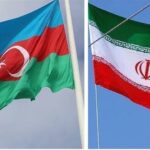
The foreign ministers of Armenia and Azerbaijan were scheduled to meet at the initiative of the Co-Chairs of the OSCE’s Minsk Group on the sideline of the 28th meeting of the Council of Ministers of Foreign Ministers of the OSCE countries in Stockholm on December 3. A few hours before the appointment, the Azerbaijani side refused to meet with the Armenian Foreign Minister – a decision which was related with the illegal visit of an Armenian parliamentary delegation to the Karabakh region of Azerbaijan. The cancellation of the meeting was interpreted by some observers in the region as another testimony to the loss of relevance of the Minsk Group in the post-war peace negotiations between Baku and Yerevan.
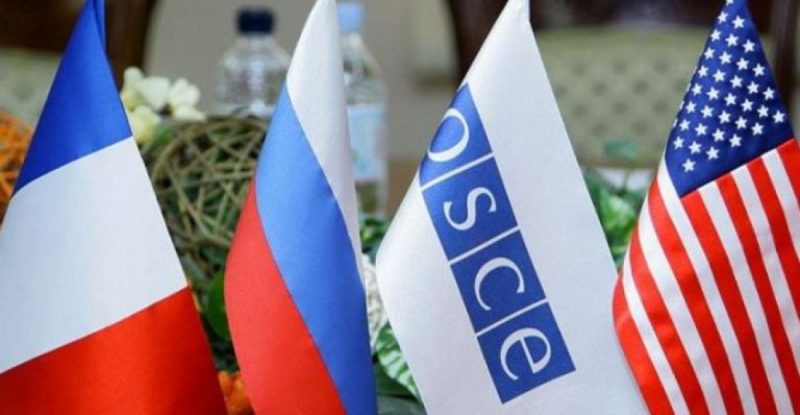
The Minsk Group played the role of the main mediator in the Armenia-Azerbaijan conflict for up to three decades from the mid-1990s to the outbreak of the 44 Day Karabakh War in late 2020. The institution has been led by a tripartite chairmanship, established in 1995-1997 and entrusted to the United States, Russia, and France. It is worth to note that all three countries have influential Armenian diaspora and their respective parliaments at various times voiced the support to the Armenian side, albeit in different forms – from illegal visits by MPs to the occupied Azerbaijan’s territories to restricting aid to Azerbaijan (e.g., the notorious Section 907 (1992) to the Freedom Support Act by the US Congress).
Since its establishment, the Minsk Group put forward a number of proposals for the settlement of the conflict but consistently failed to bring parties to an agreement. The last major blow to the institution before the 44 Day War was dealt by Armenia’s Prime Minister Nikol Pashinyan whose government rejected all the settlement formulas proposed by the mediators and demanded the restructuring of the negotiation format by including the representatives of the separatist regime (the so-called “Nagorno-Karabakh Republic”) installed in the occupied territories of Azerbaijan.
The Minsk Group’s image and effectiveness were further undermined during and after the latest war when France disregarded the principle of neutrality as a mediator and openly sided with Armenia. In a few weeks after the war, both chambers of the French parliament almost unanimously adopted resolutions recognizing the so-called “Nagorno-Karabakh Republic” even though Armenia itself has not recognized it as an independent state actor. This came on the top of the fact that France had played a remarkably pro-Armenian role also in the 1993 negotiations at the United Nations Security Council when the institution held discussions over the aggression by Armenia against Azerbaijan. At the insistence of France, the perpetrators of the invasion were mentioned as “local Armenian forces” (i.e., not Armenia as a State) and the conflict was treated “not under the Chapter VII of the U.N. Charter as an “act of aggression,” but under the weaker Chapter VI as a dispute that should be settled peacefully.”
It is due to these and other realities that the Azerbaijani people had lost trust to the mediation of the Minsk Group and never seen it as an honest broker that would bring about a fair resolution of the conflict. Against this backdrop, Russia’s resurgence as the dominant mediating actor between the conflicting sides in the wake of the 44 Day War entirely sidelined the OSCE’s mediating mission in the peace process. The group, since then, has been playing no impactful role in the post-war negotiations over the unblocking of regional transportation and communication channels and efforts for a lasting settlement and a comprehensive peace agreement.
Prior to the planned Stockholm meeting, Russia had already held a trilateral summit of the Armenian and Azerbaijani leaders in Sochi on November 26 and announced agreements on some critical issues. The deputy prime ministers of the three countries met on December 1 in Moscow for talks about the regional transportation corridors as previously announced by President Vladimir Putin after the Sochi summit. On December 4, thanks to the mediation of Russia’s Ministry of Defense, the sides maintained the next round of the exchanges of the Armenian detainees held in Azerbaijan with the maps of the mines Armenia had planted in the Karabakh region during the occupation period. More positive developments can be expected in the upcoming months – related to the unblocking of transportation corridors, the delimitation and demarcation of Armenia-Azerbaijan state border, etc.
This, however, does not mean that this trilateral format of negotiations is ideal for the peace process. One major drawback of this format is the fact that Russia, the only mediator, has its own agenda and interests concerning the future of the region and therefore cannot act entirely as a disinterested party. Moscow has military alliance with Armenia and acted, even though clandestinely, to support Yerevan militarily, while it maintains good political ties with Baku. It might be in the interests for both Baku and Yerevan if the negotiations were held bilaterally or mediated, in addition to Moscow, by more balanced party or parties. The post-Soviet history of the conflict, France’s biased stance, and the developments since the outbreak of the 44 Day War have nevertheless confirmed that the Minsk Group in its current format does suit this mediating position.
The persistence of the group in the present structure and its adherence to the pre-war agenda misleadingly fills the role of an international mediator, prevents the launch of talks about the formation of a new international mission, and therefore has become part of the problem, rather than solution. It is high time for the international community to reconsider the role of the Minsk Group in the post-war peace process between Baku and Yerevan and should either dissolve the institution entirely or reform/restructure it to effectively address the negotiation process.
Dr Vasif Huseynov, a Senior Advisor at the Center of Analysis of International Relations (AIR Center) and Adjunct Lecturer at Khazar University in Baku, Azerbaijan.
Karabakhspace.commonspace.eu