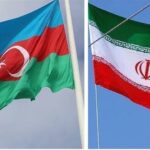
Russia, Turkey, and the European Union aim to increase their influence in the Caucasus. The three actors strongly push Armenia and Azerbaijan to normalize relations and unblock strategically important communication routes, although the two archenemies still occasionally engage into border clashes.
On November 16 intense fighting with the use of armored vehicles and artillery broke out between the two countries. According to reports, clashes took place on Armenian territory near Sev Lich, the lake in the Syunik region where Azerbaijani soldiers crossed the border in May and have reportedly remained ever since. Following the incident, Secretary of Armenia’s Security Council Armen Grigoryan called on Russia—Yerevan’s ally in the Collective Security Treaty Organization (CSTO)—to protect the territorial integrity of Armenia. The Kremlin-friendly Russian military experts claim that Armenia never officially requested Russia’s help, which sounds like justification of Moscow’s passivity vis-à-vis Yerevan.
Indeed, even during the 44-day war between Armenia and Azerbaijan in the fall of 2020, Russia hesitated to provide military assistance to its nominal ally. The Kremlin sought to preserve its role of mediator and, more importantly, not to jeopardize its relations with energy-rich Azerbaijan. It is entirely possible that lucrative oil and gas businesses between Moscow and Baku had an enormous effect on Russia’s relatively ambivalent position regarding Armenia. As a result, Turkey-backed Azerbaijan came out as the clear victor of the conflict, and restored full sovereignty over large parts of Nagorno-Karabakh, a region that lies within Azerbaijan but was under the control of ethnic Armenian forces backed by Armenia since a war there ended in 1994.
Russia, for its part, continued to act as a mediator, and in November 2020 Azerbaijan’s President Ilahm Aliyev and Armenian Prime Minister Nikol Pashinyan traveled to Moscow to sign a ceasefire agreement that effectively ended the 44-day war. As another result of the peace deal, some 2,000 Russian peacekeepers were deployed to Nagorno-Karabakh. There are now 27 observation posts of the Russian military in the region, most of them in the zone of the Lachin corridor, which connects Karabakh with Armenia. Still, some Russian analysts fear that foreign powers such as Turkey, the United Kingdom, the United States, and France aim to undermine Moscow’s efforts to stabilize the turbulent Caucasus region.
The European Union has already offered Armenia an aid package, which is part of a package for the EU’s six post-Soviet Eastern Partnership countries: Armenia, Azerbaijan, Belarus, Georgia, Moldova, and Ukraine. Azerbaijan is expected to get 140 million euros, and Armenia will be able to use 600 million to upgrade major national highways. Moreover, the EU has recently invited Pashinyan and Aliyev to meet on December 15 in Brussels, on the sidelines of the EU-Eastern Partnership summit. The main topic will be the de-escalation of the Armenian-Azerbaijani conflict.
In order to remain the dominant actor in the region, Russian President Vladimir Putin hosted the two leaders in Sochi on November 26. Reports suggest that they discussed the ongoing border tension, plans to open up borders and transportation links, and Armenian prisoners of war that are still being held in Azerbaijan. Pashinyan and Aliyev have reportedly agreed to establish mechanisms for delimitation and demarcation of the border between the two countries by the end of the year. At this point, however, it remains highly uncertain if that aspect of the deal will be implemented any time soon.
For Azerbaijan, border demarcation would mean that Baku preserves control over roads in Armenia’s Syunik province. Some Armenian political experts fear that the energy-rich Caucasus nation aims to get highway and railway access via the Syunik province to reach its Nakhichevan Autonomous Republic without any Armenian passport, customs or border control. It is no secret that Azerbaijan seeks to establish land communication with its enclave, which is why the nation’s officials strongly insist on the construction of the Nakhichevan corridor, also known as the Zangezur corridor. Azerbaijan is expected to keep making new efforts to penetrate deeper into Armenian territory and force Yerevan to accept all of Baku’s demands.
Given that Russia clearly demonstrated that it is not willing to provide military assistance to its ally, Armenian leadership is now trying to buy time and postpone the construction of the corridor. That is why Pashinyan insists on resolving other issues, namely the return of Armenian prisoners of war and the humanitarian situation in Karabakh, before making the final deal on the Zangezur corridor and border demarcation. Still, Armenian Prime Minister’s room for political maneuvers remains rather limited, and for him the meeting in Brussels will likely be yet another attempt to mitigate the consequences of Armenia’s defeat in the 44-day war.
The very summit in the EU demonstrates that neither Armenia nor Azerbaijan want to remain fully dependent on their major allies—Russia and Turkey. That is why Yerevan and Baku could be looking for new formats of negotiations, although it is not very probable the EU will manage to position itself as a new mediator in the turbulent region. For the foreseeable future, South Caucasus is expected to remain in Russian and Turkish geopolitical orbits.
Nikola Mikovic
Diplomaticourier.com