Sometimes these new “facts” are created by military actions. However, when the guns are silent, other moves can create new realities even more powerful than any army. In autumn of 2020, Armenia and Azerbaijan entered a hot conflict—the Second Karabakh War (September 27–November 9)—from which Baku regained control of all the buffer areas Armenia had occupied since the mid-1990s and some of Karabakh itself. Armenia not only lost these areas but suffered damage to housing stock and infrastructure it had de facto controlled for three decades. After the war, some Armenians moved into remaining Azerbaijani territory still under Armenian control. As a result, construction companies, not soldiers, are creating new “facts on the ground” via competing construction projects in the liberated Azerbaijani areas and, on a smaller scale, in those portions of Karabakh still controlled by Armenians but defended by Russian peacekeepers.
The size of the Azerbaijani effort, made possible by Baku’s rapid de-mining efforts, infrastructure construction, as well as industry and housing investments by Turkey, Iran and Russia, is far larger than the Armenian one, which is supported by Yerevan, Armenian non-governmental organizations and humanitarian assistance from Russia. This imbalance is likely to play a major role in future moves to resolve the conflict between Armenia and Azerbaijan. At a minimum, the disparity in local redevelopment will mean those actors like Russia that favor the nebulous status quo for the region rather than a final settlement will have to come up with far more money to keep the separatist economy going. If that does not happen, there are two possibilities: the Armenians in Karabakh may turn to terrorism, as have other people who see those around them doing far better than they; or they may become more willing to cooperate with Azerbaijan and thus limit Yerevan’s—and Moscow’s—leverage over Baku.
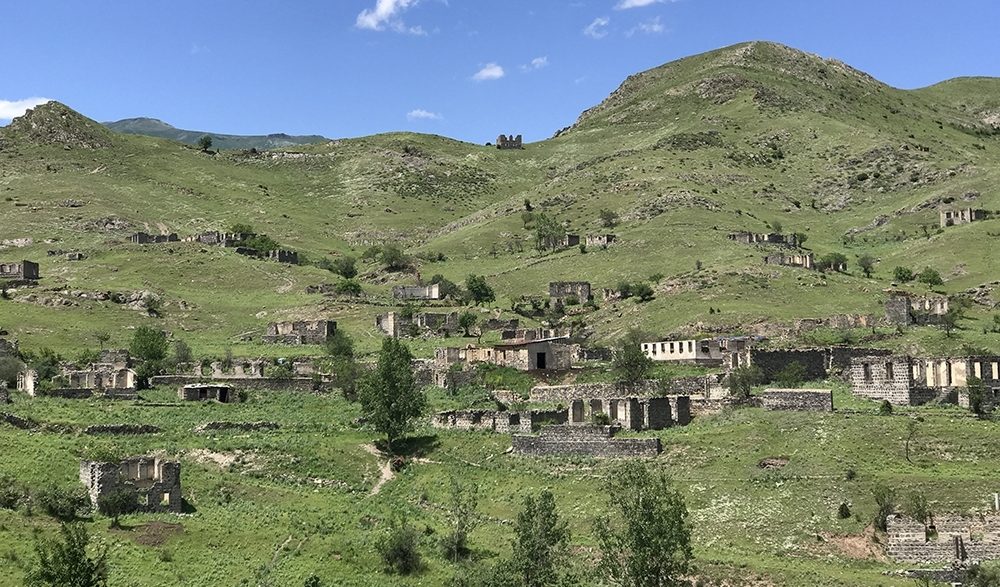
Many assumed that the areas Azerbaijan had retaken last year would become “dead zones,” at least temporarily, because the Armenian population had fled and because both infrastructure and housing had been destroyed (EurasiaNet, November 19, 2020). But Baku moved quickly to de-mine the area and to rebuild, attracting investments from Russian, Turkish, Iranian and some Western firms, whose governments were anxious to gain influence with the winning side (see EDM, April 26, 2021). The Russian government, for example, has sponsored a series of business missions to encourage Russian firms to invest in the formerly occupied territories. Turkey has been more open and has focused on infrastructure like roads and railways. Iran has sought out a variety of niches for its businesses as well (Rosbalt, October 22).
Baku itself has invested almost $3 billion in redevelopment to date. Perhaps even more importantly, it has extended tax and other benefits to firms—both domestic and foreign—that are prepared to promote development in the formerly occupied territories. The Azerbaijani government has created several economic development zones to focus investment on infrastructure like roads and airports. They adopted a much-ballyhooed policy of “smart villages” that will rely on green energy and be organized far more efficiently and productively than the traditional villages they will replace. Baku has almost completely restored electrical power to the entire region, most of which lost that resource during the war or did not have it prior to that time. As a result, Baku is confident that development in the recovered lands will accelerate in the coming year (EurasiaNet, October 20; Worldbank.org, March 2021).
This program has not been without problems for Azerbaijan. Many of the Azerbaijanis who fled this region in the 1990s now feel they are receiving less land back than they deserve, with more of the plots going to businesses and government. So far, such feelings have not limited the development of smart villages in what was previously scorched earth; however, they are likely to force Baku to modify its program so as to ensure that Azerbaijanis continue to return to the region (EurasiaNet, October 15). Irina Dzhorbenadze of Moscow’s Rosbalt news agency concludes, on the basis of her survey of these projects, that “in the near future, the Karabakh region will become an investment center of Azerbaijan, not only in terms of economic breakthroughs but also with regard to the image of the authorities of the country who have already shown how a depressed territory can be quickly transformed into a flourishing region” (Rosbalt, October 22).
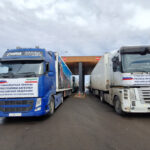
The situation on the Armenian side of the ceasefire line is quite different. There, officials are concentrating on meeting the humanitarian needs of people who have fled the regions now under Azerbaijani rule or whose housing was damaged by the fighting. Both Moscow and Yerevan have dispatched humanitarian assistance; but so far, the fiscal outlays have been inadequate. And though housing is being gradually restored, work on infrastructure and factories has been much slower than in Azerbaijani-controlled regions (Tcf.am, August 18; EurasiaNet, October 15; Pace.coe.int, September). One plant, the Savva Cement factory, near Askeran, is being repaired more quickly because officials believe its output will allow them to accelerate the rebuilding of housing throughout the Armenian-controlled area (President.nkr.am, September 18).
These competing construction projects may not be as dramatic as the Azerbaijani military’s advance during the 44-day war last year. But—especially because they are so different in size and extent—they are establishing new, diverging “facts on the ground” that neither the governments in the region nor analysts elsewhere can afford to ignore if they are to predict how the conflict will evolve.
Eurasia Daily Monitor