By using this site, you agree to the Privacy Policy and Terms of Use.
Accept
Azemedia new logo
  • Home
  • Opinion
  • News
    • Economy
    • Energy
    • Climate and Ecology
  • Diaspora
  • Interview
  • Science
  • Logistics-Transport
  • History
  • Defense
Aze.MediaAze.Media
Font ResizerAa
Search
  • News
  • Economy
  • Climate and Ecology
  • Energy
  • Opinion
  • Culture
  • Gender
  • Interview
  • Science
  • Logistics-Transport
  • History
  • Defense
  • Karabakh
  • Diaspora
  • Who we are
Follow US
© 2021 Aze.Media – Daily Digest
Aze.Media > Opinion > Normal Ankara-Yerevan ties impossible without Baku
Opinion

Normal Ankara-Yerevan ties impossible without Baku

AzeMedia
By AzeMedia Published September 22, 2021 608 Views 10 Min Read
6149eb1f4e3fe112c8f8e6a4

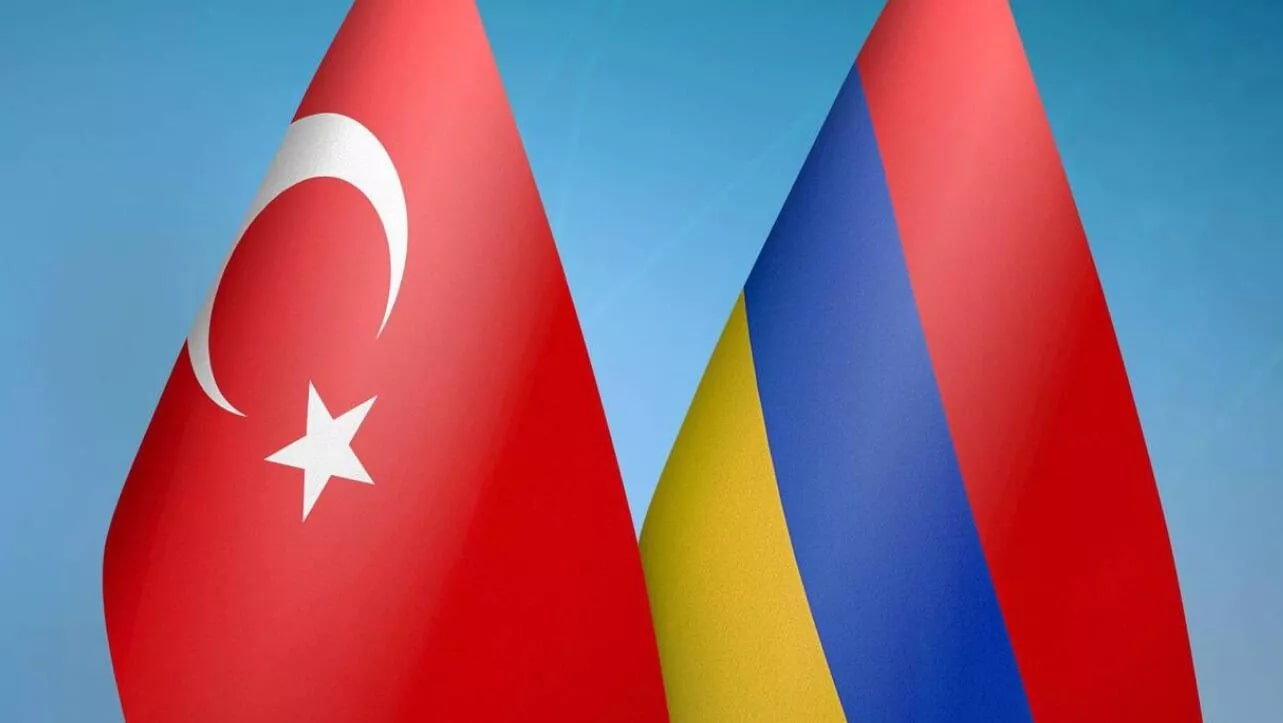
Stability and security in the South Caucasus require a three-way dialogue between Turkey-Armenia-Azerbaijan and for Armenia to give up its fantasies of a Greater Armenia.

The reason for the need for a three-way dialogue between Turkey-Armenia-Azerbaijan is two-fold.

Firstly, Armenia is not reconciled with its inherited borders from the USSR. Nationalists in Armenia and the Armenian diaspora have not given up their support for a Greater Armenia through territorial claims towards Turkey and Azerbaijan. While welcoming steps to normalize relations, Turkish President Recep Tayyip Erdoğan specified the need for both sides to “respect each other’s territorial integrity.” Surprisingly, such “language is provocative for some Armenians, particularly in the diaspora, who demand that Turkey hand over land in eastern Turkey – which they call ‘Western Armenia.”’

Secondly, Turkey and Armenia signed a joint “Shusha Declaration” in June which committed them to forge a strategic partnership. Armenia has to therefore normalize relations with Azerbaijan and Turkey at the same time.

The inviolability of “internationally recognized borders” was mentioned four times in the “Shusha Declaration.” The “Shusha Declaration” includes Azerbaijan’s condemnation of “any activity directed against the sovereignty, territorial integrity, inviolability of borders, stability and security of the Republic of Turkey, including all forms and manifestations of terrorism, and resolutely supports the fight the Republic of Turkey is waging against terrorism.” This statement means both Azerbaijan and Turkey refute Armenian territorial claims in the 1920 Treaty of Sevres.

Prime Minister Nikol Pashinyan is disingenuous in announcing Armenia’s readiness to normalize relations with Turkey while continuing to be unwilling or unable, because of nationalist and diaspora pressure, to sign a Peace Treaty with Azerbaijan. An Armenian-Azerbaijani Peace Treaty would have to recognize Soviet internal republican boundaries as post-Soviet international borders, which is a step Armenia is currently unwilling to take.

Therefore, Pashinyan’s focus on “the restoration of road and rail links” is merely side-stepping the more important issue of whether Armenia is ready to forgo its century-long fantasy of supporting a Greater Armenia.

In reality, Pashinyan seeks to divide Turkey and Azerbaijan using the old imperial policy of “divide and rule,” which Armenia undoubtedly learned from its old alliance with Russia. It is difficult to see Armenia’s approach working.

Russia’s approach to the normalization of Turkish-Armenian relations is, after all, contradictory. On the one hand, Russia believes that because it is a great power, it has the right to dominate the South Caucasus and is uncomfortable with NATO member Turkey’s presence. On the other hand, the re-opening of the Turkish-Armenian border would increase Turkish trade with the Russian-led Eurasian Economic Union, perhaps leading to deeper integration and a reduction of ties with the EU.

The obstacle to these geopolitical games is Russia’s so-called “peacekeeping” effort in Karabakh where Moscow is not implementing important provisions of the November 2020 ceasefire agreement. Russian so-called “peacekeepers” do not insist on the demilitarization of Karabakh through the withdrawal of all Armenian security forces; instead, they turn a blind eye to the transfer of military supplies by Armenia to Karabakh separatists through the Lachin corridor.

The French and the U.S. positions are unclear. While Western countries wish to see a lasting peace settlement in the South Caucasus, they have at the same time been disengaged from the South Caucasus for a long time. With its only purpose to punish Turkey, in April of this year, Joe Biden became the first U.S. president to recognize the events of 1915 as a genocide. It would seem that Washington sees Armenia as more strategically important than Turkey, which has the second-largest army in NATO and hosts U.S. nuclear weapons.

Both Turkey and Azerbaijan rightly do not trust France because of President Emmanuelle Macron’s deep bias in support of Armenia. Azerbaijan no longer wishes to include France in the Minsk Group and it should be replaced by the EU as an international organization.

The U.S. cannot hope to become involved in the South Caucasus without first repairing its relations with Turkey and only then moving on to facilitate the normalization of relations between Turkey and Armenia. After the chaotic withdrawal from Afghanistan and declaring an end to foreign interventions, whether the more isolationist and realist Biden presidency will take an interest in the South Caucasus remains to be seen.

Although Pashinyan claims he considers peace and stability in the South Caucasus as a long-term strategy of the Armenian authorities, this is flatly contradicted by his country’s de facto territorial claims against both Azerbaijan and Turkey. Pashinyan has to put his money where his mouth is and take two steps.

Firstly, Armenia should sign a peace treaty with Azerbaijan, which recognizes the internal boundary between their two Soviet republics as their post-Soviet international border. This Peace Treaty would end irredentist claims to what Armenian nationalists claim is “Eastern Armenia” but which is, in reality, Western Azerbaijan. Armenia would also have to accept Karabakh as part of Azerbaijan and that Baku – not Yerevan – decides which policies should be pursued towards the Armenian minority.

Secondly, Armenia should decouple international recognition of 1915 as a genocide from the demand to renegotiate the Turkish-Armenian border based on the Treaty of Sevres. Yerevan’s ending of irredentism towards what Armenian nationalists call “Western Armenia,” itself a term first coined by Soviet dictator Joseph Stalin in the 1940s when the USSR sought to annex Eastern Turkey, would allow intellectuals and historians from both countries to discuss the events of 1915 in a less charged atmosphere.

The normalization of relations between Turkey and Armenia will only produce long-term security and stability if the process includes Azerbaijan.

Taras Kuzio is a professor of political science at the National University of Kyiv-Mohyla Academy and the author of ‘Russian Nationalism and the Russian-Ukrainian War,’ which will be published by Routledge in January 2022.

Hurriyet Daily News

You Might Also Like

Iran’s Caspian signaling and the boundaries of regional alignment

No talks with revanchists: what Armenians will have to pay for

Turkey-Azerbaijan alliance strained by opposing stances on Israel

Caspian escalation raises stakes for Central Asia

Dialogue amid escalation

AzeMedia September 22, 2021 September 22, 2021

New articles

148898 AAfileIranAzerbaijan
Iran’s Caspian signaling and the boundaries of regional alignment
Opinion April 1, 2026
Tumblr 7785d4993072edee15c5f76f97426150 cbc66783
No talks with revanchists: what Armenians will have to pay for
Opinion April 1, 2026
FzXmfsHpncSf7mjEilSDOohDU3PyMoxbiG63JOjQ
ING Group: Azerbaijan’s external economic position remains very strong
News April 1, 2026
69ca6321ec2b869ca6321ec2b9177487132969ca6321ec2b669ca6321ec2b7
Baku Initiative Group calls on UN member states to take practical steps on slavery resolution
News March 30, 2026
7YNXnb05zWpwunxmQWNmwxfqd6tq6osklTkNbHWo
Azerbaijan evacuated over 3,000 people from Iran to date
News March 30, 2026
Bildschirmfoto 2026 03 30 um 11.14.38
Turkey-Azerbaijan alliance strained by opposing stances on Israel
Opinion March 29, 2026
Screenshot
President Ilham Aliyev completely, directionally turned his country around – Steve Witkoff
News March 28, 2026
69c778d12350869c778d123509177468027369c778d12350669c778d123507
Azerbaijani oil price exceeds $124
News March 28, 2026
QJ9m9qaUTjKho4NQMQ4PTfRb7ykBAWVDMnL2UsSf
FAO offers Azerbaijan to develop five-year fisheries development plan
News March 28, 2026
577c9b7a tcxj78bkp11yulvvjs6gr
Türkiye and Azerbaijan sign media cooperation pact at STRATCOM summit
News March 28, 2026

You Might Also Like

148898 AAfileIranAzerbaijan

Iran’s Caspian signaling and the boundaries of regional alignment

April 1, 2026 6 Min Read
Tumblr 7785d4993072edee15c5f76f97426150 cbc66783

No talks with revanchists: what Armenians will have to pay for

April 1, 2026 7 Min Read
Bildschirmfoto 2026 03 30 um 11.14.38

Turkey-Azerbaijan alliance strained by opposing stances on Israel

March 29, 2026 7 Min Read
Image Mar 25 2026 02 25 03 PM

Caspian escalation raises stakes for Central Asia

March 25, 2026 9 Min Read
148898 AAfileIranAzerbaijan

Dialogue amid escalation

March 24, 2026 6 Min Read
Azerbaijan armenia border shootouts scaled e1717316787977 1536x862

Diaspora activism and the limits of external influence in the Armenia–Azerbaijan peace process

March 23, 2026 8 Min Read
655215

The ‘Azerbaijani Way’: Three lessons from Baku to Jerusalem

March 21, 2026 10 Min Read
BneGeneric Caspian Sea ariel

War reaches the Caspian: Central Asia faces growing regional risk

March 20, 2026 9 Min Read

Useful links

426082d1 a9e4 4ac5 95d4 4e84024eb314 pojkz91103g6zqfh8kiacu662b2tn9znit7ssu9ekg
Ab65ed96 2f4a 4220 91ac f70a6daaf659 pojkz67iflcc0wjkp1aencvsa5gq06ogif9cd0dl34
96e40a2b 5fed 4332 83c6 60e4a89fd4d0 pojkz836t9ewo4gue23nscepgx7gfkvx6okbbkasqo
759bde00 a375 4fa1 bedc f8e9580ceeca pq8mvb9kwubqf6bcadpkq5mz16nayr162k3j2084cg
aze-media-logo-ag1

We are a unique political and socio-cultural digest offering exclusive materials, translations from Azerbaijani media, and reprints of articles from around the world about Azerbaijan.

  • Privacy Policy
  • Terms and Conditions
  • Cookies Policy

Email: editor@aze.media

© 2021 Aze.Media – Daily Digest
aze-media-logo1 aze-media-logo-ag1
Welcome Back!

Sign in to your account

Lost your password?