

But in many cases, such ideas are not lies, but truth, and this is how the notion of “banal truth” appeared. The mechanism of banalization of truth is apparently also very simple and banal: an idea sinks into people’s minds precisely because it is true. Those inoculated spread it further, the number of those who know and speak that truth grows, and it thus becomes banal.
One of these banal truths is that music is food for the soul. To be honest, I don’t know who said it first. Perhaps the real author lived in ancient times; it is possible that he came to this conclusion, among other things, by drawing parallels between spirit and body. At any rate, the idea is true: most of the judgments we make about food can be applied to music.
The most important of these judgments has to do with healthy diet. We all care about that the food that keeps our body in working order is healthy, promoting organic food, trying to avoid artificial nutrition. Unfortunately, knowing little about music, we do not take as good care of our soul. We often indulge our soul in music that is not organic but synthetic, actually harming it.
However. it is easier to distinguish between organic and synthetic music than between organic and artificial food. The most natural and organic generators of musical sounds are acoustic musical instruments—almost every instrument known to us, except synthesizers. What all these instruments have in common is that sound is extracted from them mostly by people; that is, in order to produce musical sounds, someone either touches the strings or keys with fingers, or blows into the tube if it is a wind instrument, or strikes a percussion with hands or sticks.
Sounds produced in this way are as unique as the various sounds of nature. Both people and acoustics, as well as the electrical and technical factor, which has been constantly evolving in the past century, play a role here.
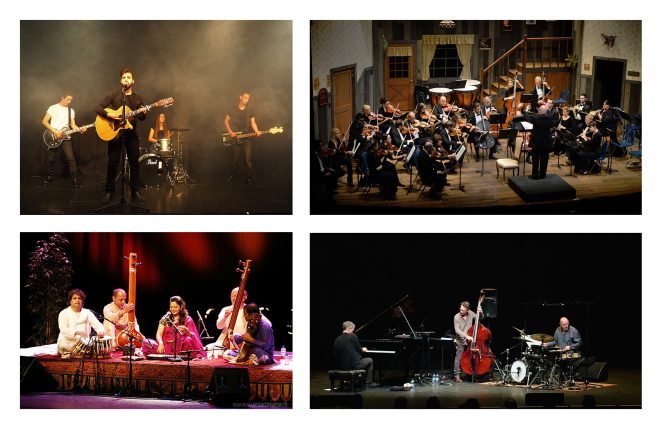
The human factor itself stems from physical and emotional parameters. Physical parameters include the build of the musician’s fingers, the strength of the wrists, the lung capacity, and so on. Since these indicators are never 100% identical for any two people, musical sounds are also produced very differently. Moreover, a person can never repeat their own performance of the same musical piece with a 100% accuracy. The difference is not made up by the banal sequence of notes—it is in the distances between the notes as they are played and in the volume of each individual note. That is, the next time a musician plays the same piece again, there is a seconds or milliseconds difference between the sounds of the notes, as well as in their volume, and often the difference of the musical piece as a whole can be measured in seconds or even minutes proportional to the quantity of notes. The difference in the duration also has to do with the musician’s emotional state, with their mood during the performance. Even if we approach the issue microscopically, we may see microscopic emotional differences when the same musician performs the same piece for a second time immediately after the first time. Clearly, the more time passes between two performances, the greater the emotional difference in the sound.
Acoustic, electric and technical factors depend on the venue where the music is played, the location of the source of sound, and the distance between the microphone and the source of sound. The same music sounds different in a room, in a concert hall and in the open air. A few centimeters difference in the distance between the microphone and the performer also affects the resulting sound.
Synthetic sounds, which I compared to artificial food, are produced by mechanical oscillators that generate sound waves by manipulating electric current and their virtual analogues—various software. After the oscillators generate sound waves, mechanical or virtual synthesizers can perform various manipulations with those sound waves to make them different, and by synthesizing those waves together (hence the name synthesizer), they turn these sounds into a “musical instrument”. Thus, most of the above factors, including the human one which we called the most important, play virtually no part in the process of creating synthetic music: these sounds are devoid of both human touch and human breath.
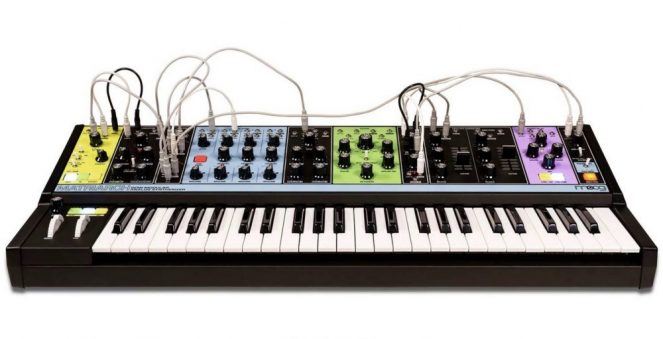
Just as chemical additives present in some foodstuffs these days are impossible to avoid and practically harmless, synthetic sounds sometimes used in music are not considered to be artistically or emotionally harmful. These sounds are often used either to support the background harmony or bass function that do not carry the main musical idea (often in film scores and some popular music genres), or with a certain degree of conventionality in genres such as jazz, where the impromptu creation of musical ideas is essential. But if in the first case the carriers of the main musical idea almost necessarily are acoustic instruments, in the second case the remaining instruments are mainly acoustic. For example, in jazz, percussion or wind instruments, as well as double bass, or bass guitar; meanwhile, most of the factors inherent in acoustic instruments also play a role in the sound production in electric guitars, electric bass, electric violin and other similar instruments, so they are also referred to as acoustic instruments.
Although it may seem a bit cynical, I must say that acoustic music is “expensive”. Quality acoustic music comes at the cost of the performer’s years of training, lifelong practice to keep in shape, sleepless nights, and a restless, occasionally stressful life. The audience’s investment does not stop at buying a ticket—to fully enjoy acoustic music, you have to be aware of the different levels of complexity intrinsic in its genres, the nuances of sound of instruments, and what they do in general. But it is not too difficult: often, all it takes is focused listening and an open mind. Rest assured that the music will return the investment with interest.
In some genres of music, especially in music combined under the common name of EDM (Electronic Dance Music) in recent years (formerly known as Techno), almost everything we hear is created with synthetic sounds. It is true that such musical compositions sometimes, very rarely, use bits—samples—of previously recorded pieces of acoustic music, but in the general context, their role is practically insignificant. That is, when we listen to this kind of music as a whole, the neurons in our brains receive synthetic music waves en masse.
If we imagine how the synthetic food we put into our body changes and shapes it, we can assume that the music we let into our soul has a similar effect on our state of mind. The decisions our soul makes depend on the music we listen to as much as the future functioning of our body depends on what we eat. Considering that one of the marks of EDM, including Techno, Trance, Trap, Hip-hop and other genres, made up of synthetic sounds throughout, is the constant repetition of music patterns, it becomes clear to all of us how this kind music can affect our soul.
Aze.Media