In 1916, Irish nationalist Roger Casement was arrested by British police. Shortly before that, he had made an arrangement with the government of Germany, which was at war with Britain at the time, for the supply of weapons for the Irish uprising. However, the British intercepted German military communications, so that the ship with the weapons never reached the Irish shores, and Casement was charged with treason. This case was widely publicized, and many British intellectuals stood up for Casement. The issue of Irish independence had long divided British society. Besides, Casement had worked as the British ambassador in the Congo and Peru for a long time, investigating the crimes of the colonial administrations, and many of those who knew him from this work, for example, Arthur Conan Doyle and Bernard Shaw, pleaded for clemency for him.
Casement’s fate was to a large extent decided by the publication of his Black Diaries.
In his diaries, Casement described in detail his sexual adventures in the colonies. The problem was that those adventures were entirely homosexual—scandalous for Europeans at the beginning of the twentieth century.
Some considered his homosexuality to be no less terrible than the fact of treason. The Irish believed that the British had forged the diaries to defame their hero. Nevertheless, the disclosure of the diaries undermined support for his clemency, and Casement was executed.
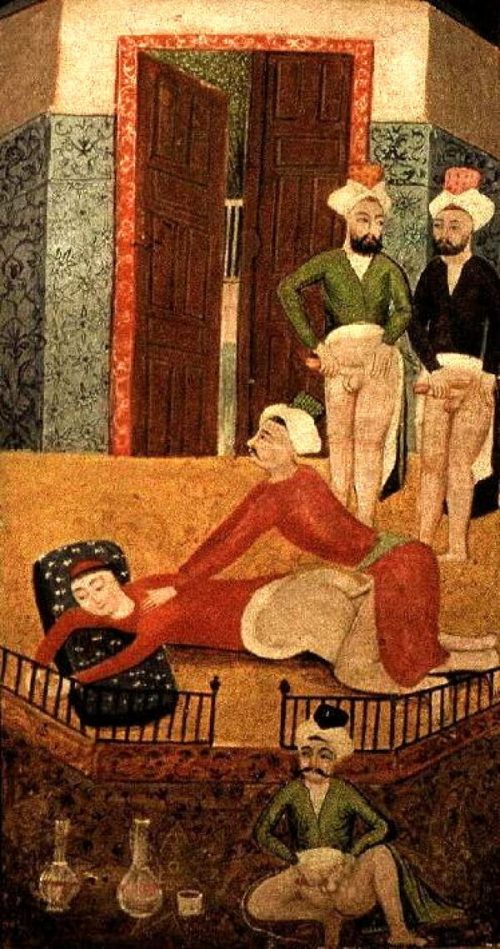
Roger Casement was not the only one whose sexuality did not fit into the European gender norms of the time, not the only one who tried to escape to the “mysterious and wild Orient” from the boredom of bourgeois life and Victorian morality. With the beginning of the colonial era, traveling to the Orient in search of sexual adventures became fashionable among European aristocrats. Novelist Edward Morgan Forster dedicated his book A Passage to India to a local man he was in love with during his time there. His friend, archaeologist T.E. Lawrence, also known as Lawrence of Arabia, who was involved in intelligence activities in Turkey during archaeological expeditions and prepared an Arab uprising against the Ottoman Empire during World War I, was allegedly in a relationship with an Arab young man he met during excavations in Northern Syria.
French writer André Gide became aware of his homosexuality after his trip to Algeria. German traveler Alexander von Humboldt and Russian geographer Nikolai Przhevalsky must have had homosexual adventures in the colonies as well.
Heterosexuals loved the colonies largely for how much they could allow themselves there, being in an alien environment as conquerors. The colonial authorities did not care much about the rights of local population, and the locals themselves were unfamiliar with European morality, therefore they could not judge travelers, and their judgment did not matter to Europeans anyway. Moreover, the locals themselves did not fit into European standards: in some countries the age of sexual consent was much lower than in Europe, in others, people were much more scantily dressed.
That made it easy for travelers like Paul Gauguin to travel to the colonies, get involved with underage girls there, portray local women in paintings that were pornographic by the standards of the time, return to their homeland and sell those paintings as exotic depictions of “noble savages” and their harmony with nature and not be condemned for any of that. Quite the contrary, such travels made many of them famous and rich and often did not cost those travelers anything, because the state was ready to sponsor them as research missions.
For homosexuals, the added motive was the fact that in almost all of Europe homosexuality was if not criminalized then at least extremely frowned upon, and exposed homosexuals were ridiculed and ostracized. For example, even though post-revolutionary France was the first European country to decriminalize homosexuality through the secularization of legislation, the persecution of homosexuals there did not stop.
Police continued to arrest those caught in same-sex relationships and cross-dressing—the difference being that now they were accused not of crimes against God, but of violation of public order and unnatural acts.
No wonder that, despite the absence of anti-homosexual legislation in France itself, it appeared in every third of its former colonies after liberation. Meanwhile, almost everywhere outside Europe, same-sex relationships and gender nonconformity were part of the norm.
Homosexuality and Islam
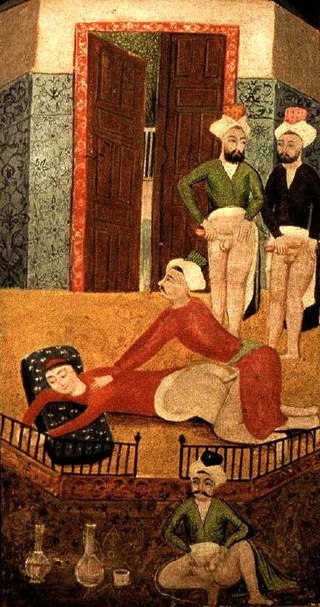
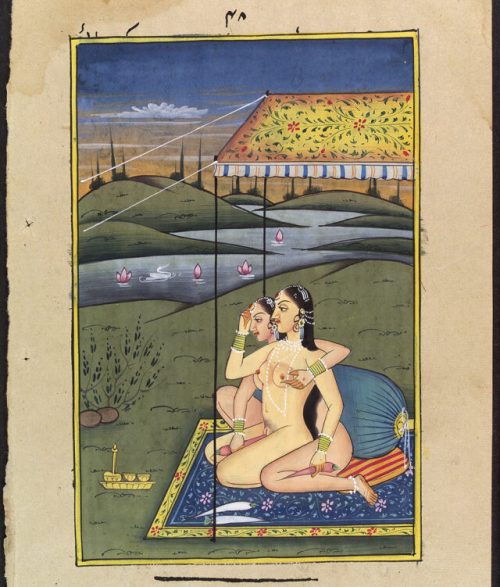
In Islamic countries, the attitude towards same-sex relationships was similar to that in ancient Greece and Rome (which is not surprising, given the fact that they belonged to a single cultural space in the Hellenistic era), so that romantic relationships between adult men and boys were valued almost more than relationships with women. The Quran condemns homosexuality based on the interpretation of the same story about Lot and Sodom as in Christianity and Judaism (although many modern scholars point out that it is not homosexuality that this story condemns). However, it does not specify what punishment should be imposed for this sin. Moreover, some hadiths (sayings attributed to the prophet Muhammad) warn against being distracted by the beauty of beardless youths, because their gaze can be more tempting than houris (virgins waiting for the righteous in paradise).
Despite the fact that homosexual relations were criminalized in most Islamic countries, they were very rarely punished. Nearly all of the known incidents involved same-sex rape or flagrant public disorder.
Punishment for a homosexual act required it to have been witnessed by at least four people respected in the Islamic community, making it nearly impossible to prosecute such cases.
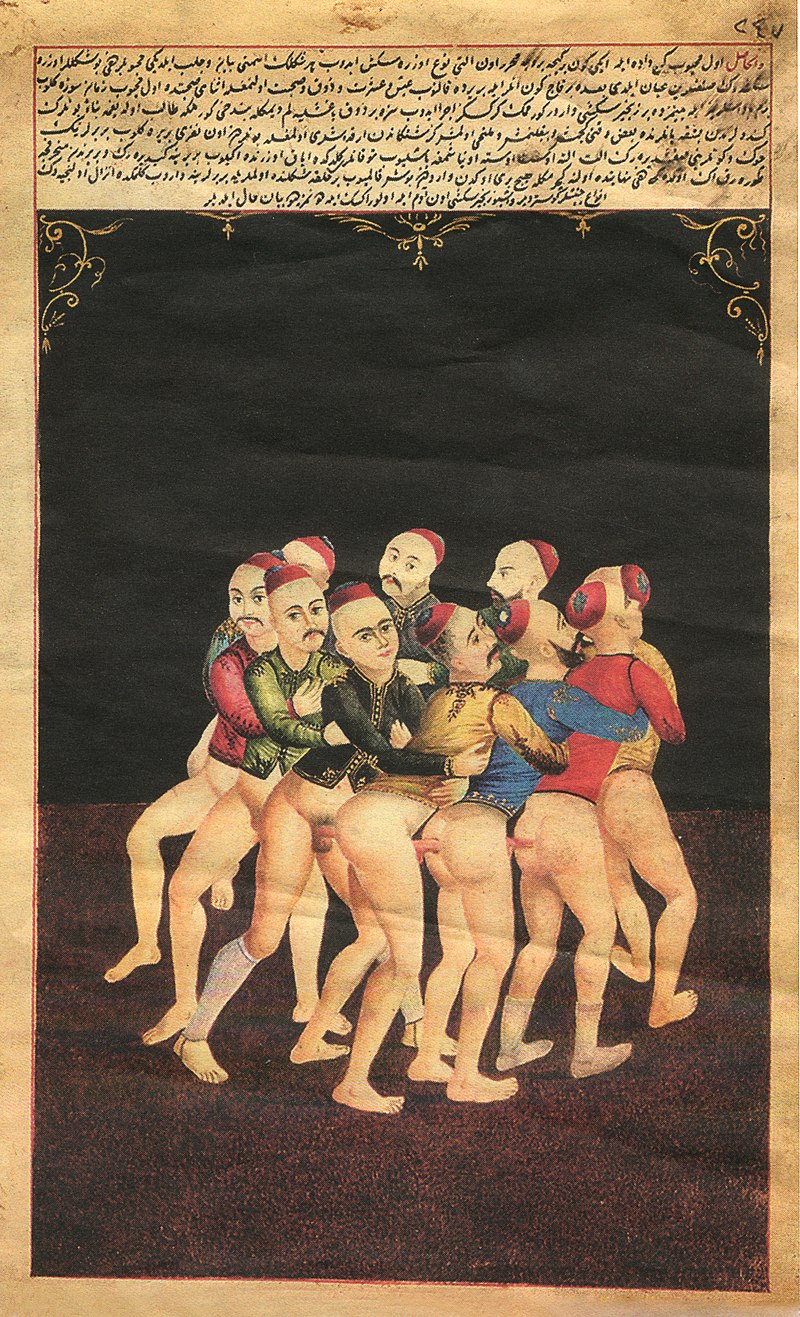
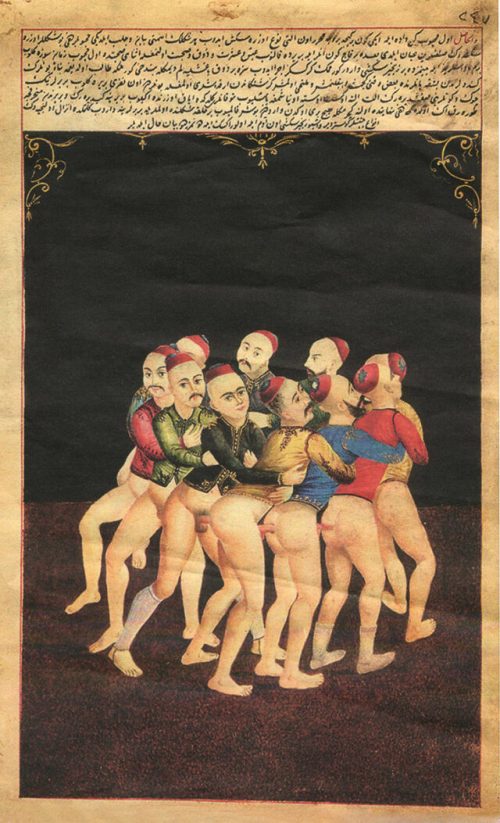
Visiting Paris in the 19th century, Egyptian thinker Rifa’a al-Tahtawi, was surprised that Europeans felt such an aversion to homosexuality that when translating Arabic love poetry, almost half of which is addressed not to women but to beautiful youths, they had to replace the masculine gender with the feminine. Bernadetto Romberti, who visited the Ottoman Empire in the 16th century, said that hundreds of youths sold into slavery and captured in the war lived in the Sultan’s palace guarded by eunuchs. We know of male harems openly kept in the palaces of Al-Mu’tamid, Hisham II, Abd al-Rahman III, Al-Hakam II, who ruled in the 9th-12th centuries. Many musical troupes included young boy dancers—bacha bazi or köçeks, usually dancing in feminine attire; they could be bought for sexual gratification.
While many thinkers of the Islamic world considered sodomy a sin, most of them genuinely did not believe that simply falling in love with a boy or expressing this love through poetry was such.
This is why, for example, nothing prevented the Egyptian religious thinker and poet Abdullah al-Shabrawi, the rector of the most prestigious educational institution in the Arab world, Al Azhar University, for 30 years in the 18th century, from dedicating love poems to a beardless youth named Ibrahim.
In secular society, a man’s desire to have sex with a youth was regarded as completely understandable and even justifiable.
Sexual relations in Eastern societies were hierarchical. That is why it was not improper for women and youths to be on the receiving end in them, as they were lower in rank than adult men, and their youth itself made them unmanly. For example, in the satirical essay “Maids and Youths” by the Arab theologian of the 9th century Al-Jahiz, even the exclusive preference of an adult man for beardless youths is not considered a deviation or a sin. However, men, who wanted to be in this role, were stigmatized socially, so a relationship between a man and a boy would usually end as soon as the latter began growing a beard. In some cases, it could continue or initially occur between two adult men, but it was not customary to discuss such a relationship—just like it was inappropriate to discuss the relationship between husband and wife.
We will also do well to remember that hierarchical sexual relations between men and boys were not considered pedophilia by the standards of the time, because the age of sexual consent was significantly lower than today. Like pederasty in Ancient Greece, they were allowed at the same age at which girls began to be married off—between 12 and 14, when puberty happens. Boys of this age began military training. One of the main goals of such relationships was to redirect boys’ sexual energy so that they did not start a family before they were able to support it, and, most importantly, so that they did not covet someone else’s women. Those who attempted to get involved with young people under the age of consent were punished.
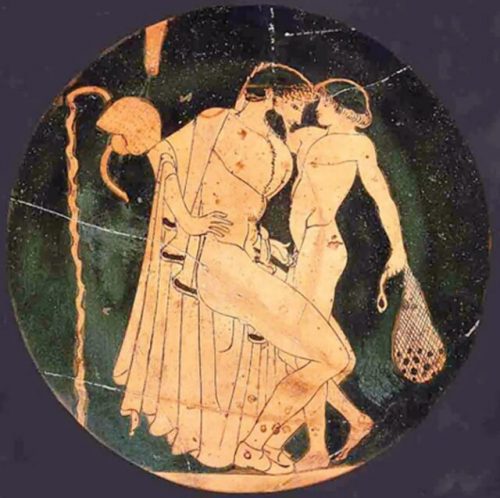
However, both in Greece and in the Middle East, which largely inherited Greek traditions, the very fact that boys and girls could have sexual relations at this age already suggested that they could also do other things adults do: take care of the family, raise children and fight in wars. Girls at this age already had babies and looked after them, and boys could accompany women in public places (in many cultures, women were not allowed to appear in public without a relative or husband) and fight like other men.
In some countries, if there was no boy suitable for this role in the family, then a girl could assume that role. She would take a vow of chastity and, since caring for the family is a male gender role, she would dress and behave like a man, cut her hair short and use a male name.
Such girls were called bacha posh in the Middle East and Central Asia and sworn virgins in the Ottoman-controlled Western Balkans. The most famous example is the Albanian sworn virgin and revolutionary Yanitza, dubbed the Albanian Joan of Arc for her active involvement in the struggle for the independence of Albania.
This practice gave girls the privileges of going to school, working, moving around unaccompanied, playing sports, and even inheriting property. In return, they helped their families avoid social stigma of not having an heir, and sometimes even live without a male head of the family altogether. Some mothers deliberately forced their daughters to live like boys so that they did not have to return to their family or become a servant in their husband’s family.
Outside Abrahamic religions
Across the world, a rigid segregation between male and female spaces, designed to prevent random sexual intercourse and to ensure that women will have children with their husbands and not with anybody else, led to the spread of homosexual relationships. Most Yanomami (Brazil) and Araucanian (Chile and Argentina) teenage boys have homosexual relationships with their peers that usually end after marriage.
In some areas of the Amazon, mutual masturbation and genital petting are normal elements of friendly communication between young single and married men.
In some places, such behavior is also acceptable for young unmarried women; among the Nandi (Kenya) and the Akan (Ghana), it may continue even after marriage.
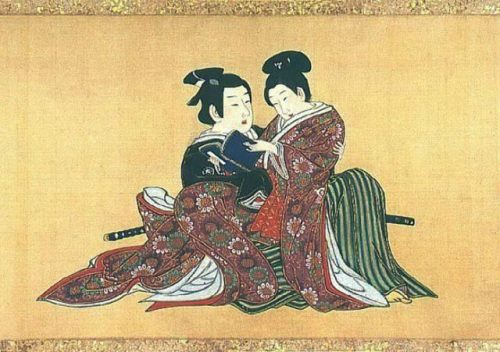
The same hierarchical relationship between men and boys as in the Mediterranean is found in other regions of the world as well. In Indonesia, a teenage boy of 12 or 13 must leave his parents’ house to move in with a maternal uncle and become his concubine until his own marriage. In Papua New Guinea, boys were required to have an older sexual partner, most often their older sister’s fiancé, in order for the brother and sister to receive the same seed. Local tribes believe that in order to mature and grow, boys must regularly drink older men’s seed.
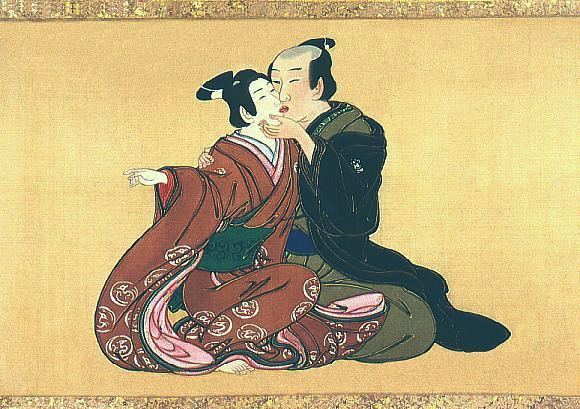
Shudō in Japan, prevalent in the samurai society, was very similar to the tradition of pederasty in Greece: an older man was to take a boy into his care and teach him honor, martial arts, the sense of beauty and sexual skills.
There were also kagema—boy prostitutes, something like bacha bazi mentioned earlier. Typically, these were youths who were trained in kabuki theater or worked in other entertainment establishments such as teahouses.
Upon reaching adulthood, Azande warriors in Sudan temporarily married boys between the ages of 12 and 20, paid the bride price for them, and raised them until they became of age and, in turn, married other boys.
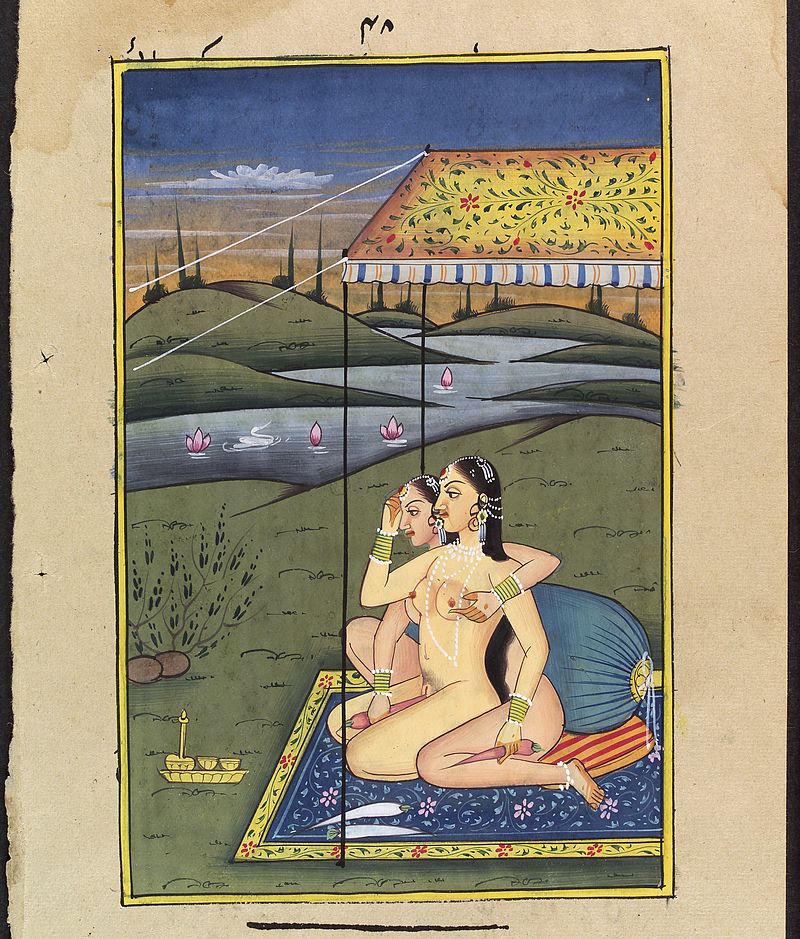
In some places, homosexual relationships were not part of the educational process and did not establish a hierarchy between participants. For example, we know of dozens of communities throughout Africa practicing homosexual marriage, both among men and among women. Ancient Indian texts mention a third sex, which included homosexual and transgender people. Many of them see homosexuality as a natural phenomenon and do not expect those not attracted to the opposite sex to engage in heterosexual relationships or be punished.
The indigenous peoples of North America also developed a complex gender system that had a room for gender nonconformity. To distance themselves from the European binary gender system, modern Native Americans use the term “two-spirit people” for all their traditional identities that do not fit into it.
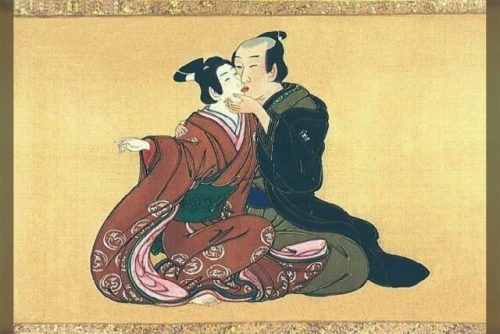
Chinese historiography is full of stories about homosexual relationships between people from all walks of life, first and foremost, of course, aristocrats. Many emperors from the Han dynasty had lovers in addition to wives. However, in most cases, it is impossible to accurately establish even rulers’ sexuality, since only extraordinary cases were documented, and neither homo- nor heterosexuality were considered uncommon. One of the most famous stories is the story of Emperor Ai of Han and his lover Dong Xian, an official in his administration.
This is a rare case in the history of China, when the emperor had only homosexual relations; therefore, having no heirs, he tried on his deathbed to pass his throne to his lover.
However, Dong Xian was so stricken with grief that he failed to prevent the coup organized by the officials who wouldn’t accept the emperor’s last will.
However, this story is remembered not so much for that attempt at transfer of authority, as for an episode showing the power of love between Emperor Ai and Dong Xian. One afternoon, Dong Xian fell asleep on the sleeve of the emperor, and rather than disturb his beloved, the emperor, who had to get out of the bed at some point, cut off his sleeve. The expression “cut off sleeve” in China became a euphemism for homosexuality since then.
Colonial era
The situation in the Islamic world did not begin to change until the 18th and 19th centuries, with the increasing European invasion and the spread of fundamentalist movements such as Salafism and Wahhabism that arose in response to it. These movements emerged on the outskirts of civilization and were largely fueled by those who could not find a place for themselves in urban society, the poor, fleeing the depravity of cities, where they risked ending up in debt bondage and selling themselves or their children into sexual slavery for the gratification of the rich and Europeans. No wonder that they loathed the things that flourished in urban culture—harems, prostitution, homosexuality, Europeanization and secularization—and wanted to return to the supposedly pure traditions of Islam.
After capturing Damascus and Baghdad in the 19th century, these movements forced local women to dress in burqas and actively persecuted people for homosexual relations, something that had not been done previously in Persia and the Ottoman Empire.
However, it was not the fundamentalists, but the Europeans themselves who caused homophobic sentiments to spread in society. European colonial administrations brought with them European laws. Criminalization of homosexuality introduced by colonial administrations still remains in many countries. In modern Uzbekistan and Turkmenistan, the laws on sodomy are inherited from Soviet criminal law. In 57% of all countries still criminalizing homosexual behavior, legislation is based on the British Empire’s Penal Code—that is 70% of the British colonies.
Europeans usually justified their dominance over other peoples with the civilizing mission. They viewed non-white people as less advanced and closer to nature, and therefore incapable of self-governance. By the end of the 19th century, it was widely believed in Europe that homosexuality was practiced everywhere outside its borders. The Turkish ambassador in Paris in 1803-1806 was even surprised that Europeans thought that all Turks were homosexual and saw homosexuality as something shameful. Gender nonconformity of peoples outside Europe was seen as a sign of their savagery, while a rigid sex segregation was considered a sign of a civilized people. For example, Scottish biologists Patrick Geddes and Arthur Thomson write in their 1889 book The Evolution of Sex that “hermaphroditism is primitive”. This allowed Europeans to justify the extermination of the peoples they conquered and the forcible imposition of European norms.
By the early twentieth century, white men became obsessed with the idea that the white race was in danger due to the influx of migrants and the rise of liberation movements among women and people of color.
Thus, homosexuality began to be pathologized not for religious but for medical reasons. The American sexologist William Robinson, who lived in the late 19th and early 20th centuries, wrote that homosexuality is a sign of degeneration, and “every sexual deviation or disorder which has for its result an inability to perpetuate the race is ipso facto pathologic, ipso facto an abnormality”. Scholars were now saying that the genitals of lesbians and gay men are similar to the genitals of black people, and homosexuality and gender nonconformity were seen as an evolutionary regression, a failure in the process of sexual differentiation. To correct this “flaw”, advocates of eugenics subjected homosexuals to chemical castration, forced sterilization, lobotomy, and conversion therapy.
In Soviet Russia, despite the decriminalization of homosexuality after the revolution, the homophobic laws of the tsarist era remained in effect in the Islamic republics. Curiously, in Russia itself, laws criminalizing homosexuality were influenced by the German legislation. Located on the outskirts of Europe and periodically coming to the verge of being colonized, Russia constantly tried to catch up with Europe after the beginning of the reign of Peter I, adopting European traditions and legislation in order to be able to be one of the colonial empires, and not a backward country conquered by foreigners.
However, homophobia in the Russian Empire did not take root: the police were reluctant to deal with those cases, doctors did not want to testify against homosexuals, because they considered homosexuality to innate, and scandals involving the aristocracy were hushed at the emperors’ instigation.
The homosexuality of the composer Pyotr Tchaikovsky and the conservative writer Vladimir Meshchersky, as well as the Grand Dukes Sergei Alexandrovich and Konstantin Konstantinovich, was an open secret at the Russian court, but nothing was done about it.
The biggest homosexuality-related scandal in the Russian Empire broke out around the writer Alexander Shenin, the presumed author of the erotic homosexual poem “The Adventures of a Page”, but he too got off with dismissal from service and expulsion from St. Petersburg. Public sabotage of the law led to a decline in its enforcement, and by the end of the 19th century, the persecution of homosexuals was almost non-existent. At the beginning of the twentieth century, projects were already being developed to decriminalize homosexuality (which would later become the basis of relevant Soviet legislation) involving desecularization and the opinion of doctors on this matter.
At the same time, with the rise of revolutionary sentiments and the danger of the outskirts seceding from the empire, the idea that homosexuality is a product of culture in the Islamic parts of it grew as well. Soviet jurists linked homosexual behavior to both excessive development caused by the decline of bourgeois European civilization and a lack of development caused by its underdevelopment. Therefore, it was subsequently decriminalized only in the Slavic republics of the Soviet Union: the Slavs were considered more civilized, so homosexuality in their case was accepted as an innate condition, and they themselves were worthy of sympathy. The Islamic outskirts were forcibly civilized, and homosexuality was persecuted there because its spread was believed to be due to the backward traditions.
Homosexuality was recriminalized in the USSR in 1934, again under the German influence. This time, however, the law was suggested by the NKVD amid fears that homosexuals were spying for the Nazis— despite the continued criminalization of homosexuality, Weimar Germany was the center of the sexual revolution at the time. They did not yet know in Russia that the Nazis had tightened anti-homosexual legislation, and linked the Nazis’ rise to power a year earlier to homosexuality and sexual depravity. Meanwhile, the Russian secret services themselves used homosexuals for espionage, which after the war provoked paranoia in the United States and Great Britain that all homosexuals were communists spying for the Soviets.
Anti-colonialism and homophobia
The emergence of the LGBT movement coincided with decolonization. Between World War II and the beginning of the 21st century, all colonial empires collapsed, and at the same time, homosexual relations were decriminalized in all Western countries, some even legalizing same-sex marriage. Russia once again stood out. It completely decriminalized homosexuality (even earlier than the United States and Great Britain did) under pressure from the Council of Europe, but did so without a broad public discussion and a formed LGBT movement.
By the end of the twentieth century, Europeans began to position tolerance for homosexual relationships as a sign of development and civilization. Countries in Africa, Asia and the Middle East, which had adopted European gender norms only recently, were now branded as uncivilized precisely because of the prevalence of homophobia there.
The rights of LGBT people and women began to be used in the West as grounds for excluding representatives of the “backward” and “intolerant” cultures of the East, primarily Sikhs, Arabs and Muslims.
In turn, fundamentalist movements began to spread in Eastern countries, seeking liberation from European influence. Now they, too, linked the rights of homosexuals and women to degeneration caused by the effeminacy and excessive civilization among Europeans. This is true of both Islamic and Christian fundamentalists. For example, in Africa, homosexuality, presented by local leaders as imposed by Europeans, is still criminalized in some predominantly Christian countries and was decriminalized in some predominantly Muslim countries because criminalization of it there stems not so much from religion as from colonialism. In Ethiopia, the only African country that was never colonized, homosexuality was criminalized with the arrival of Christianity there in the 13th century and remains criminalized to this day. In Russia, the ban on “propaganda of homosexuality” was inextricably connected with the rise of anti-European sentiments and was presented as a way to combat the corrupting influence of the West.
Paradoxical though it may sound, fundamentalism is the product of modernization, and therefore, any fundamentalist projects of returning to the past are aimed at the moment at which modernization has already taken place. Ironically, by proposing a project to combat Western influence and European tolerance that supposedly has gone too far, contemporary Islamic fundamentalists in the Middle East and Orthodox fundamentalists in Russia are themselves asserting the values only recently imposed on them by Europe.
Aleksandr Finiarel
Knife Media / Aze.Media
If you want to contribute and have specific expertise, please contact us at editor@aze.media