
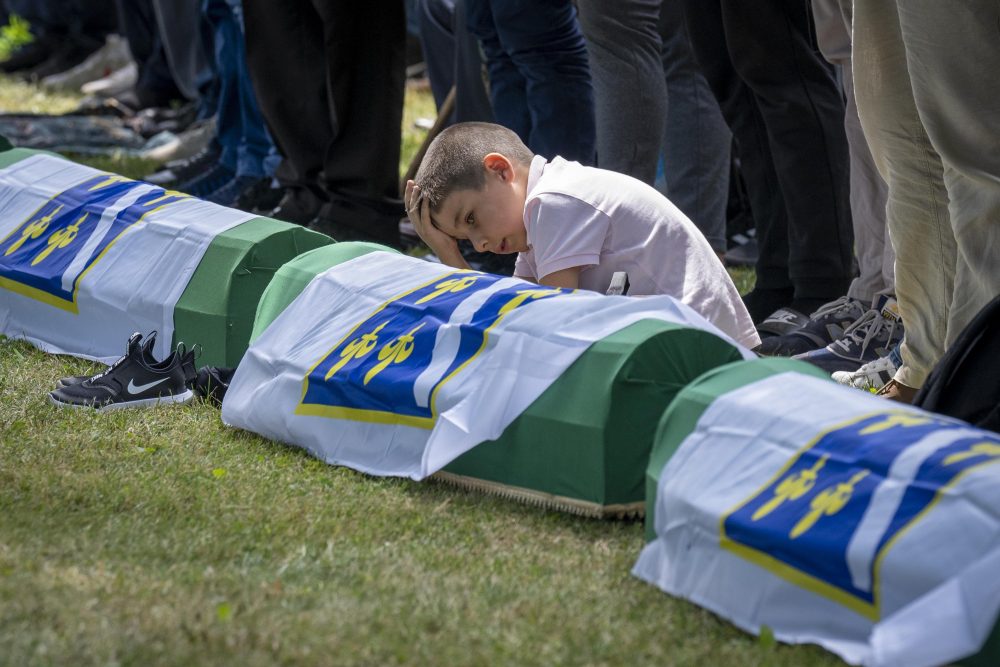
“Israel’s cinematic repentance”, an article of mine posted on Aze.Media a while ago, was devoted to films about the massacre of Palestinians in Sabra and Shatila committed by the Lebanese Kataeb Party with the assistance of the Israeli army. These confession films can also be seen as the Jewish people’s way to share responsibility for the massacre and a testament to the strength of its spirit…
I brought that article up for a reason. Something caught my attention recently, while researching modern war films. The activities of the Dutch armed peacekeepers under the UN command, who were found partly liable for the Srebrenica massacre, are not addressed in the art of either the former Yugoslavia countries or the Netherlands. The Dutch factor is of special interest to me here, because the Dutch peacekeepers, in a sense, created the same situation as the Israeli army. And if we look at their role in the Bosnian massacre, it becomes clear that the fate of the members of the Dutch battalion, who were deeply traumatized by the tragedy, condemned for their involvement in the genocide, and even committed suicide, is in fact rich material for local cinema. I will try to shed some light on the reasons the Srebrenica genocide perpetrated 25 years ago, sometimes called a black stain on Dutch history, is not widely covered in cinema, with the exception of a few films.
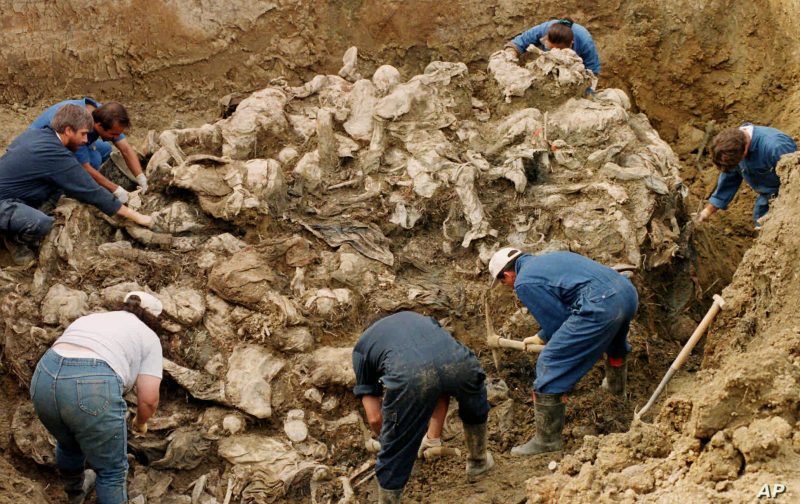
With more than 8,000 Bosniak men and boys killed, the Srebrenica tragedy is the largest massacre in Europe since World War II.
During the Yugoslavian war, the Bosniak-populated town of Srebrenica remained under Serb siege from 1993 to July 1995. The Serbs left the town without water, and the population suffered from hunger and disease. To prevent ethnic cleansing, the UN Security Council declared the enclave (a territory that is entirely surrounded by the territory of another state) surrounded by Serb-controlled territory a “safe area” to be “free from any armed attack or any other hostile act” and deployed a 600-strong Dutch military peacekeeping unit. However, on July 11, 1995, the Bosnian Serb Army led by General Ratko Mladić killed thousands of Bosniaks there.
The role of the Netherlands in the massacre is still a subject of discussions. The response of the Dutch army to the accusations is that the peacekeeping battalion was poorly armed and did not receive air support, even though they requested it from the United Nations. Prior to the events, Bosniaks’ weapons were seized by peacekeepers. As Serbs’ attacks intensified, Bosniaks asked the peacekeepers to return their weapons but their request was rejected.
In 2002, the Netherlands Institute for War Documentation published a report on the circumstances and causes of the Srebrenica massacre. According to the authors of the report, sending the Dutch to Bosnia was a misguided decision. The Dutch government resigned in April 2002 amid heated debate over the report.
According to court rulings (the trials took place in different courts in the Hague and the Netherlands over the 2000s), the Dutch peacekeepers are only partly responsible for the deaths of 350 Bosniaks who sought refuge in the UN compound, as their chances of saving those people were only 30%. The ruling said that the peacekeepers, aware of the dangers facing the Muslims, had failed to protect 350 people and handed them over to Bosnian Serbs. The court also ruled that the families of 350 victims were entitled to compensation. “Mothers of Srebrenica”, a group established by relatives of the victims, demanded that the Netherlands be found guilty not in part but in full.
By the way, the commander of the peacekeeping battalion, Colonel Thomas Karremans, lied in court, saying that he had not thought that the Serbs would attack the Muslims. According to witnesses, the colonel knew in advance that there would be a slaughter but did nothing to prevent it. The peacekeepers simply watched women being raped, people being murdered and killing themselves.
Deutsche Welle has an interesting report on two Dutch servicemen who had witnessed the tragedy and shared their memories of it. The endless pain and remorse in the eyes of one of them, Derk Zwaan, are heart-wrenching.
“People on the compound were committing suicide,” he said. “First they threw their children, then themselves off the building, because they didn’t want to get into the hands of the Serbs no matter what. So, you’re just looking around, and then a wounded child is put in your arms, and you see people jumping. You can never forget it, never. You can’t do anything, your hands are tied and you only watch it happen… There wasn’t a single therapist to ask us about our state of mind, about what we went through. What if we’re confusing dreams with reality, what if we’re addicted to alcohol or drugs to forget?”
Zwaan, 18 at the time, sued the government for what he had experienced in Srebrenica (more than 200 veterans sued the Dutch government for sending them to Bosnia on a difficult mission poorly prepared). He is also seeking an apology from politicians. He found the strength to go back to Srebrenica. “When I was going there, I thought they’d see the Dutch license plates and stone me. But the first Muslim I met greeted me warmly and called me a friend. I consider Bosnia my second home after Holland.” Zwaan, who visits Srebrenica every year, went to therapy for a long time, but therapy did not help. He lives alone and avoids people.
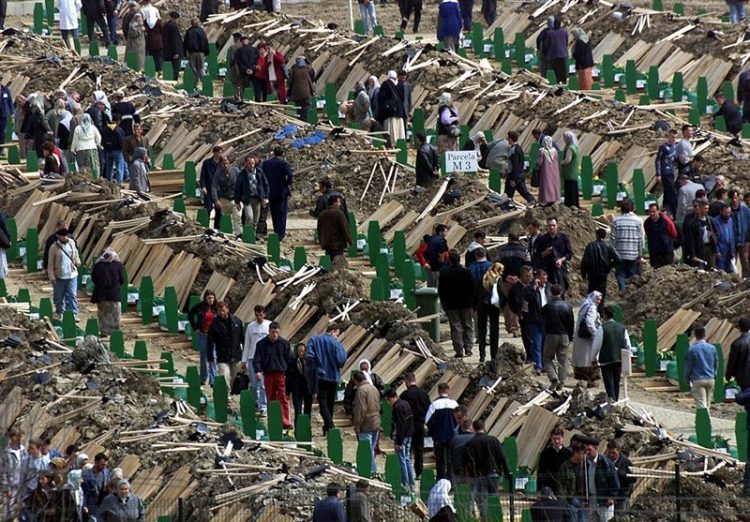
Paul Boomsma, portrayed with his happy family, on the other hand, does not blame himself for the massacre and has no intention to ever go back to Srebrenica: “Not a day goes by that I don’t think about it. But I don’t have any problems with it personally. I can cope with it quite well, luckily.”
It seems that Dutch cinema and society are as selfish as Paul Boomsma in their attitude to the Srebrenica events. By the way, the Dutch government at first denied responsibility for the Srebrenica massacre, but later had to agree with the court ruling. If we add to this the Islamophobic sentiments in the Netherlands, the picture becomes even clearer.
As for the fact that the cinema of the former Yugoslavia countries does not address the massacre… First of all, the Bosnian military also killed civilian Serbs and raped their women. However, the scale of the Srebrenica tragedy is enormous, and no other war crime involved purposeful killing of exclusively male population. There is also a reference to the crimes of the Bosnian military in the film Snow (2008) by Bosnian director Aida Begić. This post-war film depicting the life in a remote Bosnian village has a difficult dialogue between a Serbian man and a Bosnian woman who lost her son and husband:
“What did you do during the war?”
“l fought.”
“You killed my children.”
“We all were killing.”
Most of the characters in the film being female without families also suggests the Srebrenica events. The war films of the former Yugoslavia countries, as a rule, do not focus on national identity, geography, or blame any particular nation. The former republics even make war films together. The untouchability of the Srebrenica massacre may be due to the extreme sensitivity of the matter. Bosnian filmmakers, on the other hand, have a moral dilemma in dealing with such a difficult issue. Bosnian film director Jasmila Žbanić, who brought the tragedy to the screen last year (the Netherlands, too co-produced Žbanić’s Quo Vadis, Aida?), said, “After so many years, we have finally made a film about these events that everyone can watch and experience all those emotions.”
The main character of the film, which premiered at the 77th Venice International Film Festival, works as a translator for the Dutch peacekeepers in Srebrenica. When it becomes clear during the attack of the Serbian forces that the peacekeepers cannot protect the Bosniaks, she does her best to save her family.
Italian director Giacomo Battiato’s Resolution 819, winner of the Best Film Award at the 2008 Rome Film Festival, is based on an investigation into the Srebrenica events. The title of the film refers to the United Nations Security Council resolution calling for the cessation of attacks on Srebrenica.
Aze.Media
If you want to contribute and have specific expertise, please contact us at editor@aze.media