
A nation means, above all, commonality, that is, a nation is a community of people formed on the basis of certain commonalities. Such a community was never based on racial, ethnic or tribal unions. The present-day Italian nation originates from Romans, Germans, Etruscans, Greeks, Arabs. The French nation is “made up” of Gauls, Romans, English and Germans. And by the Azerbaijani nation, we mean a community formed by the union of Lezgins, Tsakhurs, Talysh, Armenians, Turks, Rutuls, Georgians and many other ethnic groups living in the territory of this country. The same can be said about the British and Germans, who came to be as a result of different ethnic groups and tribes uniting into one people.
Thus, the concept of nation should be considered not in the context of ethnic or tribal alliances, but as a union of people connected, as a result of historical processes, by a common life. On the other hand, the peoples ruled by Cyrus II or Alexander the Great, which consisted of various ethnic groups and tribes, cannot be called nations either. They were temporary unions of barely connected communities, uniting or separating depending on the victory or defeat of one or another ruler. So, we must view the concept of nation not as an accidental and temporary conglomerate, but as a solid, stable community of people.
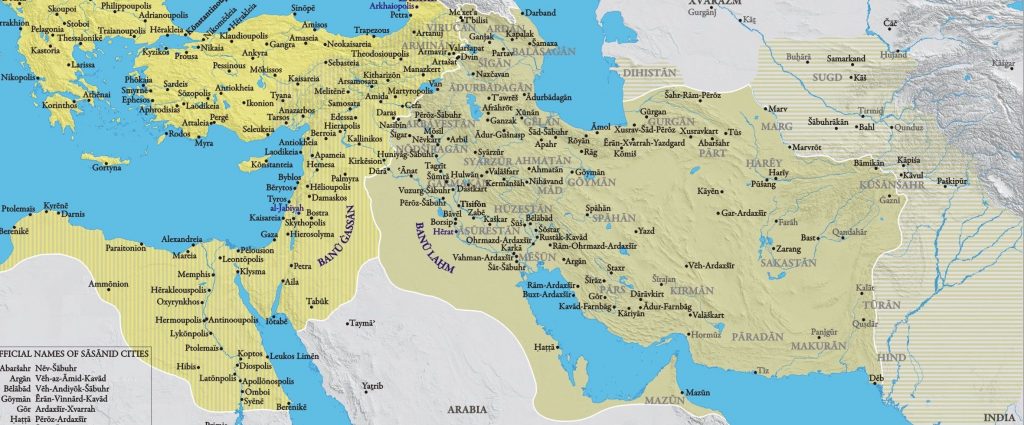
Based on this, it is fair to say that the formation of the concept of nation in modern Azerbaijan began in the era of the Sassanid Empire. It was they who first created a centralized state that covered all of the region of Azerbaijan and existed for three centuries.
Still, we cannot say that any solid, stable union forms a nation. The Austro-Hungarian Empire and the Russian Empire had strong communities that lasted for a long time, but no one classified them as single nations. A similar parallel can be drawn in Azerbaijani history. 90 years as part of Tsarist Russia did not result in the population of Azerbaijan perceiving themselves as “Russians”. The same applies to the 70-year Soviet period.
This begs the question: what is the difference between the national community and the state community?
A national community is impossible without a common language, but a state community can exist without one. For example, the national community of Czechs who lived in Austria-Hungary and Azerbaijanis who lived in the Russian Empire would have been impossible without a common language. But at the same time, the existence of different languages in Russia and Austria did not prevent them from remaining united states for centuries. This gives us ground to say that the commonality of language is one of the characteristic features of a nation. Of course, this does not mean that two nations speaking the same language can form a single mechanism. Each nation has to have a common language, but different nations do not have to have different languages. The impossibility of existence of one nation speaking different languages does not mean the impossibility of existence of two nations speaking the same language. The British and Americans speak the same language, but they are not the same nation. The same goes for Macedonians and Bulgarians, Austrians and Germans, Romanians and Moldovans.
In this context, the Azerbaijani case is especially remarkable. As a result of various historical events and processes, Azerbaijanis now live not only in Azerbaijan, but also in Georgia, Russia, Iran, Turkey, Iraq and Syria. But why, for example, Azerbaijanis living in other countries, such as Iraq, Syria, Iran, Turkey (with the exception of Azerbaijanis living in Russia and Georgia), and Azerbaijanis living in Azerbaijan are not the same nation despite their sharing the same language? First of all, because they live in different places. A nation emerges only as a result of long and constant coexistence and interaction of people across generations. And long-term coexistence is impossible without territorial unity.
Azerbaijanis, Turks and Turkmens used to be one people within the Oghuz state. As the Oghuz began to move south in the 11th century, they changed their name twice. Initially, all Oghuz tribes were called Turkomans, and after the establishment of the Seljuk state in 1038, they began to be called Seljuk Turks. The Seljuk Turks living in the territory of present-day Turkmenistan mingled with the Tajiks and other peoples there and formed the Turkmen people. The Seljuk Turks who settled in the South Caucasus mixed with the local Iranian-speaking and Caucasian-speaking peoples and became the Azerbaijani nation. And the Seljuk Turks who moved to Anatolia mixed with the Greeks, Armenians, and so on, and this is how the Turkish nation came to be.
 Naturally, the migrations that have taken place here since the 11th century due to political conflicts and other reasons have affected the ethnic landscape in the region. However, it did not weaken, but on the contrary, even strengthened the local ethnic hegemony of the Oghuz Turks. It would be appropriate to bring up the British and the Americans here again. Before the British influx to America, there was no such thing as the American nation. Some of the British moved from England to America, where they created the American nation together with immigrants from other European countries. Different territories of residence resulted in the emergence of different nations. Thus, territorial unity is one of the main characteristics of a nation.
But this is not enough either. Territorial unity by itself does not yet form a nation. We also need an internal economic connection that unites separate parts of the nation. There is no such connection between Britain and the United States, and therefore they are two different nations. And if the separate regions of America had not created an economic union—as a result of division of labor, infrastructure development, etc.—then the Americans themselves could not be called a nation. Therefore, Azerbaijanis living in Iraq, Syria, Iran and Turkey are separate nations. They have not had internal economic ties with present-day Azerbaijan for at least 200 years.
It is different with the Azerbaijanis living in Georgia and Russia (Derbent). Both under the Tsarist rule and during the Soviet period, these regions were economically closely linked with Azerbaijan. After the USSR collapsed in 1991, the economic ties between the Borchaly region and Azerbaijan somewhat weakened but were never severed and there are close economic relations between this region and Azerbaijan today. The same, however, cannot be said about the Azerbaijanis living in Lagodekhi, in the north-west of Georgia. The economic relations of this region with neighboring Balakan are weak, and the economic unity that is important for the formation of the nation is, therefore, gradually disappearing. The disappearance of this economic unity interferes with the formation of common mindset and creates alienation. We see a typical example of this in the Azerbaijanis of Derbent. After the collapse of the USSR, Derbent Azerbaijanis began to rapidly integrate into Dagestan, because Russia is economically stronger than Azerbaijan, and the emergence of borders led to a weakening of economic ties. This gives us reason to believe that Dagestani Azerbaijanis, like Azerbaijanis of Iran and Turkey, will eventually be classified as a separate national group.
For a better understanding, let us look at Georgians, another nation living in our region. Before the reforms of 1861 the Georgians lived in the same territory and spoke the same language, and yet they were not a single nation, because they were divided into independent principalities, did not have a common economy and warred with each other. Only in the second half of the 19th century, when the abolition of serfdom and the development of economic life in the country, and the resulting emergence of capitalism created a division of labor between the Georgian provinces, the production capabilities of the principalities weakened and they united—only then did the Georgians become a single nation. The same can be said about other nations who have left the stage of feudalism behind and developed capitalism in their country. Thus, economic unity, economic ties is also one of the primary characteristics of a nation.
 But that is not all. In addition to all of the above, the moral characteristics of the people united as a nation must be taken into account. Nations differ from each other not only in living conditions, but also in the peculiarities of their national culture and morality/spirituality/ethics. If Britain, the USA and New Zealand, who speak the same language, are three different nations, then an important role here belongs to the peculiarities of the mentality, which have been formed by the differences in living conditions over generations. An outside observer will hardly perceive the national character if taken in isolation, but it is manifested in the cultural characteristics of the nation as a whole, and this cannot be ignored. National character is not something permanent, it changes with living conditions, but existing at any period, it affects the face of the nation.
What was the difference between the English nation and the American nation in the late eighteenth and early nineteenth centuries, when North America was still called “New England”? Of course, there could not yet be any differences in national character between them. The English brought to America not only the English language, but also the English character, and they could not lose it quickly, even though a national character of their own was forming under the influence of local environment. But even then, they were already a separate nation, which was due to the different environment and living conditions rather than to a different national character.
Thus, a nation in fact has no distinctive features, only a set of features, and when comparing nations, one of these features—national character, or common language, or territorial/economic unity—is manifested more clearly.
In the case of Azerbaijan, the national character means the total Muslim population living in an area of 86,600 sq. km. Armenians and Georgians living in Azerbaijan do not have such a national character. The main reason is the peculiarities of the psychology of the people formed by Islamic conservatism and creating a certain discrimination both in public life and in public administration. This became especially noticeable during the Karabakh war. Even the Armenians who were loyal to Azerbaijan were forced to leave the country because of discrimination and persecution. Azerbaijani Georgians (with the exception of Muslim Ingiloys) and Udins were not involved in the Karabakh war at all.
The attitude towards the Christian community in the country is still ambiguous today. The Institute of History studies the period of Caucasian Albania only to respond to Armenian claims. And although Norway provides funding for the restoration of some Caucasian Albanian churches in the country and Georgia—for the restoration of Georgian churches, the Azerbaijani government continues to show indifferent to this issue. This is an indicator of the national Muslim character that dominates in the country.
Thus, we have listed all the characteristic features of the nation. A nation is a stable community of people that formed historically on the basis of linguistic, territorial, cultural and spiritual unity. None of these features taken separately is enough to define a nation, but a nation cannot be a nation without even one of them either. We can imagine people sharing the same national character, but if there is no economic connection between them, if they live in different territories, if they speak different languages, we cannot say that they belong to one nation. This category includes, for example, Russian, Spanish, American, Georgian and Dagestani Jews—they are not a single nation. We can imagine people living in the same area and sharing the same economic life, but they are not a nation if they do not share the same language and national character—for example, Georgians and Armenians (Nagorno-Karabakh) living Azerbaijan. The existence of a nation is possible only in the presence of all these essential elements. A nation is a combination of all these characteristics.
The process of formation of national identity in the territory of Azerbaijan can be roughly divided into four periods:
– the first period – from the 3rd to the 7th century;
– the second period – from the 7th to the 16th century;
– the third period – from the 16th to the 19th century;
– the fourth period – from the 19th century (1828) to the present day.
As I said, the first centralized state in the territory of Azerbaijan was the Sassanid state, so the first period of formation of national identity should be counted from the 3rd century. Of course, it would be wrong to look at that national identity in the modern context. The national identity formed by the Sassanid rule was based entirely on the Persian identity. The fact that, despite the spread of Christianity in the region, the majority of the population were fire worshipers, turned Azerbaijan into a union of nations with religious and national identity formed by the Sassanids.
The second period is characterized by the collapse of the Sassanid Empire and the spread of Islam in the region. Although the Arabs conquered Azerbaijan and spread Islam here, they were greatly influenced by the Sassanid culture. This influence did not allow annihilating the centuries-old Persian identity in the region, despite the population’s conversion to Islam. With the arrival of the Arabs, any tribes that migrated to the region were dissolved in this national identity. The Oghuz Turks, who had had governance in the form of a confederation of nomadic tribes in Central Asia, established a centralized Seljuk state after coming to Iran. The Seljuks, who had conquered vast territories, adopted the Persian identity as their supreme identity, just like the Arabs. Thus began the eight-century history of statehood with the army made up of Turkic tribes and Persian as the official language. With the arrival of the Seljuks, the first stage of the formation of modern Azerbaijanis in linguistic aspect was completed.
The third period should be counted from the moment the Safavid state was established. In terms of government and national identity, the Safavid period does not differ much from the Seljuk state. However, it was during that period that some of the characteristic features of the Azerbaijani nation were formed. With the Safavids, the territory of Iran switched from Sunni to Shiite, and this instilled in Azerbaijanis cultural and psychological characteristics that distinguish them from present-day Turks and Turkmens, who remain Sunnis.
The fourth period begins with the 1828 Treaty of Turkmenchay. This stage should be subdivided into two stages:
– from 1828 to 1936;
– from 1936 to the present day.
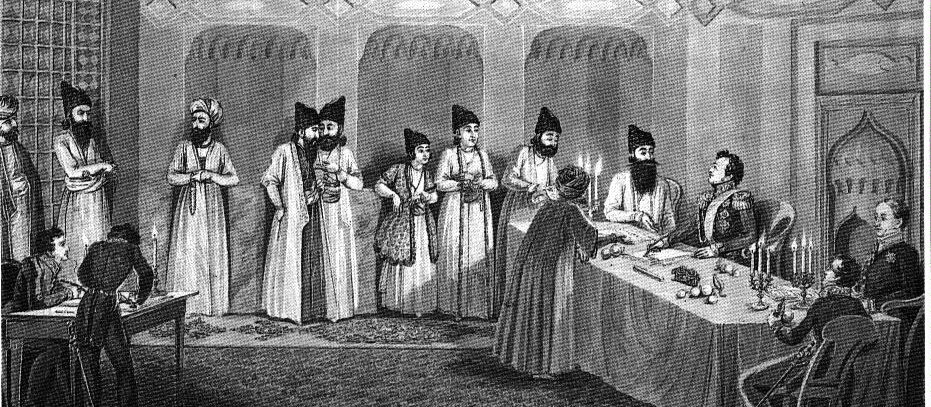
With the signing of the Treaty of Turkmanchay, Northern Azerbaijan became part of the Russian Empire. Starting from that time, Tsarist Russia made some changes to cut ties between the Northern Azerbaijanis and the Azerbaijanis on the other side of the Araz, creating a different national identity. One of those changes was General Yermolov’s decree on the transition of local madrasas from the Persian language to the Azerbaijani language. The abolition of separate Azerbaijani khanates also created conditions for the formation of a single national identity. Economic isolation from Iran and, on the contrary, economic unity with Russia led to a new cultural revolution, as a result of which the inhabitants of the region began to study in Russia and Europe. Thus, the Persian identity that had formed among the Azerbaijanis living in the territory of Northern Azerbaijan since the time of the Seljuk Empire, began to gradually disappear.
The result of this cultural revolution was the emergence of a new Azerbaijani intelligentsia. And this intelligentsia, along with the Russian revolutions, contributed first to the establishment of the Azerbaijan Democratic Republic, which also formed a new national identity, and later to the establishment of the Azerbaijan SSR.
But although the national identity had already taken shape, the question of what to call the nation still remained. During the Tsarist rule, Azerbaijanis were sometimes referred to as Tatars, sometimes as Azerbaijanis, and sometimes as Karapapak Turks. In the early days of the Azerbaijan SSR, the nation was given the name “Turk”, as a generalization of various tribal names. However, in 1923 modern Turkey was formed with a national identity of its own, and the Bolsheviks had to come up with a new, separate name for our nation. Thus, in 1936, the name of the nation was changed to “Azerbaijanis”. In order to form this single national identity, other Muslim nations living in Azerbaijan were included in the Azerbaijani ethnic-national identity. The Muslim national identity currently existing in Azerbaijan is the result of that policy.
Speaking about the “Azerbaijanis” of this country today, we generally mean this Muslim majority. This prevents the formation of a single Azerbaijani identity within the borders of the country. We will be able to say that the formation of the nation in Azerbaijan is complete only if the Armenians of Nagorno-Karabakh and Christian Georgians share our national identity. In the meantime, there is no reason for optimism yet.
Aze.Media