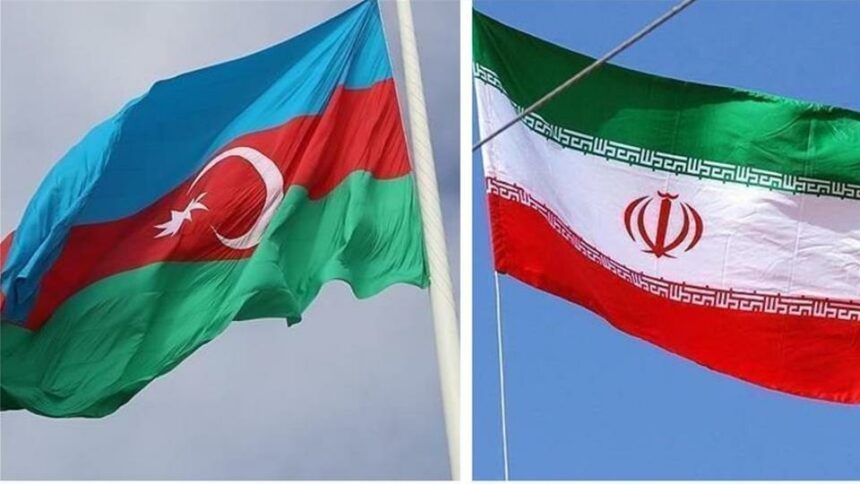
Iran’s official readout of the telephone conversation between Foreign Ministers Jeyhun Bayramov and Abbas Araghchi offers a revealing insight into Tehran’s current strategic messaging. As is typical in such communications, the emphasis is placed not on bilateral substance but on the articulation of Iran’s broader geopolitical narrative. Araghchi framed the ongoing conflict through the lens of external aggression, pointing to alleged attacks by the United States and Israel on civilian and critical infrastructure, while reiterating Iran’s intent to exercise what it defines as its right to self-defense, including against targets located across the wider region.
This formulation carries implications that extend beyond rhetorical positioning. In practical terms, it signals Tehran’s readiness to continue projecting force regionally, with a pattern that historically has not been confined strictly to military installations. Against this backdrop, a more consequential element of Araghchi’s statement emerges: a direct appeal to Caspian littoral states to adopt a “clear and decisive position” regarding recent strikes on Iran’s coastal infrastructure.
This call must be understood in the context of recent Israeli operations targeting Iran’s naval assets in the Caspian Sea, which, according to multiple independent assessments, have significantly weakened Iran’s military presence in that basin. Tehran’s appeal, therefore, is less about normative concerns over regional security architecture and more about mobilizing political—if not broader—support from neighboring states. In effect, Iran is testing the extent to which the Caspian framework can be leveraged for strategic alignment under conditions of external pressure.
However, such expectations encounter clear structural limits, particularly in the case of Azerbaijan. Baku’s regional posture has been consistently defined by an emphasis on sovereignty, non-alignment in external conflicts, and pragmatic engagement with neighboring states. While Azerbaijan maintains a declared commitment to good-neighborly relations, including with Iran, this does not extend to participation in conflicts or endorsement of escalatory agendas. Since the outset of the current crisis, Azerbaijan has adhered to a position centered on de-escalation and dialogue, avoiding entanglement while maintaining channels of communication.
This calibrated approach is informed not only by principle but also by accumulated strategic experience. Historical precedents—including disputes over Caspian delimitation, episodes of military signaling, and broader regional dynamics affecting Azerbaijan’s security environment—have reinforced a cautious approach to Iranian initiatives that extend beyond bilateral cooperation. Even in periods of relative normalization, underlying asymmetries in expectations and behavior have persisted.
In this context, Tehran’s current signaling appears to underestimate both the institutional and political constraints shaping regional responses. The Caspian is not a cohesive security bloc but a legally and politically fragmented space, where alignment is conditioned by national interests rather than collective positioning. Azerbaijan, in particular, has demonstrated a consistent unwillingness to translate geographic proximity into strategic alignment under external pressure.
At the same time, Iran’s position exposes a deeper institutional contradiction. The Convention on the Legal Status of the Caspian Sea, signed in Aktau, was intended to provide a comprehensive legal framework governing the region. Yet Iran’s continued failure to ratify the Convention undermines the very normative order it now implicitly invokes. Without full legal commitment from all littoral states, the Caspian regime remains incomplete, limiting its capacity to function as a basis for coordinated political or security responses.
This gap between declaratory policy and institutional behavior complicates Tehran’s appeal for solidarity. Calls for a “clear and decisive position” from neighboring states lack credibility in the absence of reciprocal adherence to agreed legal frameworks. As a result, Iran’s current outreach is unlikely to generate the level of alignment it appears to seek.
Ultimately, the situation in the Caspian illustrates a broader dynamic: regional actors are increasingly operating within narrowly defined strategic boundaries, shaped by both post-conflict realities and evolving geopolitical constraints. For Azerbaijan, this translates into a continued emphasis on neutrality, sovereignty, and controlled engagement—an approach that sets clear limits on external expectations, regardless of their source.