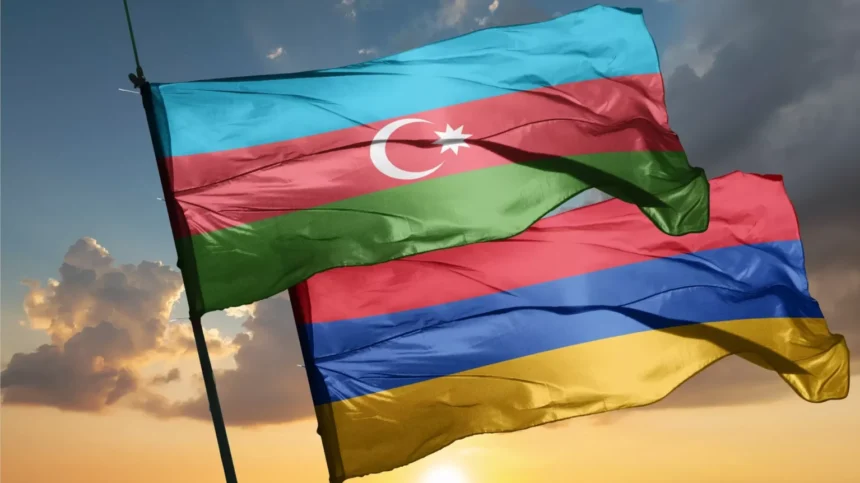
The cessation of active hostilities between Armenia and Azerbaijan has not fully eliminated the discursive and political legacies of the conflict. Rather, some of these dynamics have been transposed beyond the region, where diaspora networks continue to engage in advocacy shaped by historical grievances and contested interpretations of the past. In the current context of a fragile and evolving peace process, such external activism raises questions about its impact on stabilization efforts.
Over the past three decades, the conflict has carried significant economic and geopolitical costs for the South Caucasus. Regional connectivity initiatives remained underdeveloped, and cross-border economic integration was largely absent. Armenia, in particular, experienced prolonged limitations in regional transport and trade frameworks, while Azerbaijan’s Nakhchivan Autonomous Republic remained geographically isolated from the mainland. These conditions reflected a broader pattern of fragmentation that constrained the region’s development potential.
The post-2023 period has introduced a qualitatively different environment. Developments following Azerbaijan’s military operation in Garabagh have altered the balance on the ground and shifted the parameters of negotiation. Legal proceedings initiated against detained individuals are being conducted within Azerbaijan’s judicial system, with Baku asserting compliance with its international obligations. At the same time, differing interpretations persist, particularly among diaspora actors, some of whom continue to frame developments primarily through humanitarian or rights-based narratives that do not always engage with the full legal and political context.
Recent developments in Switzerland provide a relevant case study. On March 20, the Swiss National Council rejected a cantonal initiative titled “Canton of Geneva 24.321: Annexation of ‘Nagorno-Karabakh’. Release of political prisoners in Azerbaijan” by a vote of 108 to 33. This decision followed an earlier rejection by the Council of States, effectively concluding parliamentary consideration of the proposal. From an institutional perspective, the outcome reflects a cautious approach within Swiss policymaking circles toward initiatives that may intersect with ongoing conflict-resolution processes.
Deliberations preceding the vote indicate a broader concern among Swiss policymakers about the potential unintended consequences of external political interventions. Parliamentary discussions emphasized the importance of not undermining direct negotiations between the parties. This position aligns with Switzerland’s broader diplomatic tradition, which prioritizes facilitation and neutrality over normative intervention in unresolved conflicts.
At the same time, diaspora organizations have remained active in the Swiss public sphere. A press conference held on March 18 at the Geneva Press Club brought together several advocacy groups, including Christian Solidarity International and the Swiss Armenian Association. The event reiterated a number of established claims, including allegations concerning corporate actors such as SOCAR. While such claims contribute to public debate, they have not, to date, translated into formal legal findings or policy shifts at the institutional level in Switzerland.
The timing of these activities is also noteworthy. Armenia is approaching a politically sensitive electoral period, and domestic debates on foreign policy and peace negotiations remain contested. In this context, diaspora engagement may interact with internal political dynamics, potentially reinforcing more maximalist positions or complicating the policy space for compromise.
An additional observation concerns the level of political participation in such events. The limited presence of Swiss elected officials at recent diaspora-organized forums suggests a degree of distancing by mainstream political actors. This may indicate an increasing preference for supporting structured diplomatic processes over engagement with advocacy initiatives perceived as polarizing.
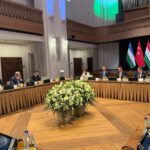
Similarly, earlier discussions around a proposed multilateral “peace forum” in Switzerland—envisaged to include not only Armenia and Azerbaijan but also representatives of the former separatist entity—did not materialize. Both Baku and Yerevan opted instead for more direct negotiation formats, including those facilitated by external partners such as the United States. This shift underscores a broader trend toward pragmatism and state-centric diplomacy.
A key tension emerges between evolving political realities in the region and segments of diaspora discourse that remain anchored in earlier conflict paradigms. While the Armenian government has signaled, albeit cautiously, a willingness to engage in normalization, external narratives do not always reflect this repositioning. This divergence has the potential to introduce additional complexity into an already delicate process.
None of this diminishes the structural challenges facing peacebuilding in the South Caucasus. The legacy of conflict, displacement, and mutual distrust continues to shape perceptions on both sides. However, the costs of renewed confrontation—economic, political, and humanitarian—are well established. For regional actors, the incentives for pursuing connectivity, economic integration, and stability are increasingly evident.
The Swiss case illustrates a broader international pattern: a gradual shift toward privileging pragmatic engagement over symbolic or confrontational initiatives. As normalization efforts proceed, the influence of narratives centered on zero-sum outcomes may diminish, particularly where they are not aligned with on-the-ground developments or diplomatic trajectories.
Ultimately, the sustainability of the peace process will depend on the ability of both Armenia and Azerbaijan to maintain momentum in negotiations while managing internal and external pressures. Diaspora actors will likely remain part of this landscape. The critical question is whether their engagement will adapt to support stabilization and reconciliation—or continue to reflect positions that risk complicating an already fragile transition.