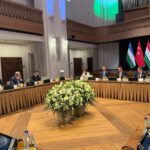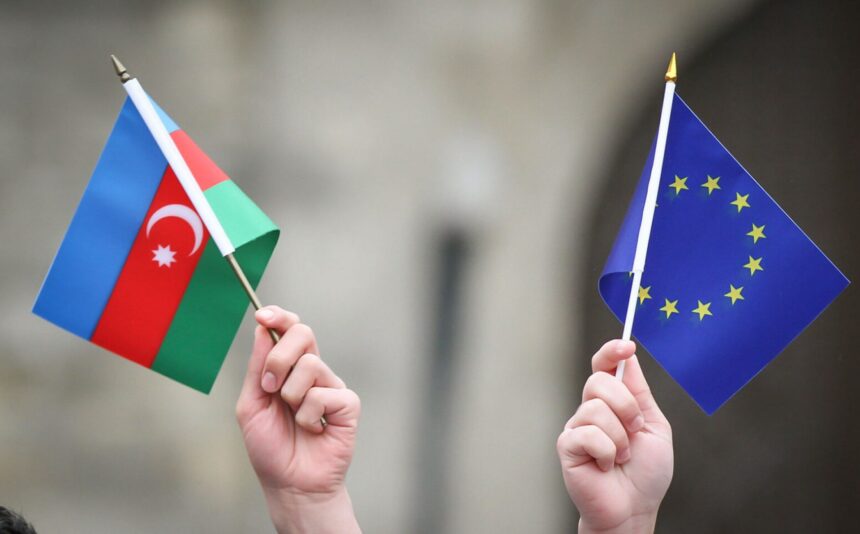
The visit of the President of the European Council, António Costa, to Azerbaijan and his negotiations with President Ilham Aliyev have been described by many analysts as a turning point in the development of relations between Azerbaijan and the European Union. Particular attention has been drawn to the Joint Press Statement issued by the President of the Republic of Azerbaijan Ilham Aliyev and the President of the European Council António Costa. In essence, it is a programmatic document that signals the transition of Azerbaijan–EU relations to a new stage.
Naturally, such important and multifaceted documents with long-term implications do not emerge from a single meeting or negotiation round. The foundations for the new political realities reflected in the Joint Statement had already been laid during constructive meetings between the leaders of Azerbaijan and the EU in May 2025 in Tirana and later in October in Copenhagen.
Mutual visits by Azerbaijani and EU officials last year also played a role. Equally important were the successfully organized dialogues in the areas of security, energy, and transport. All of these diplomatic contacts contributed to the gradual strengthening of relations with the European Union. Today, this positive dynamic has created favorable conditions for elevating cooperation to a new level.
Azerbaijan–EU relations are now entering a new phase. The key message of the Joint Statement lies precisely in the high-level confirmation of this new stage and the strategic nature of the relationship between Azerbaijan and the European Union. The document, signed at the highest level, emphasizes that relations between Azerbaijan and the EU represent strategic cooperation reflecting shared interests and based on the principles of mutual respect, equality, and mutual benefit.
Another important aspect of the document is its reference to the Washington summit and the process of normalization between Azerbaijan and Armenia, as well as the ongoing reconstruction and restoration work in Karabakh and Eastern Zangezur. This reflects recognition of Azerbaijan’s peace policy and the new realities that have emerged in the region. Attempts to reinterpret peace agreements or return the situation to a conflict framework are effectively set aside. Equally significant is the acknowledgement of the new regional realities formed following Azerbaijan’s decisive military victory.
Another key message of the Joint Statement is the recognition of Azerbaijan as a reliable energy supplier for the European Union. In reality, Azerbaijani energy resources have been reaching European markets for several years. However, Azerbaijan’s role in ensuring Europe’s energy security has become particularly important in light of developments in the Middle East. The risks are not limited to oil shipments through the Strait of Hormuz; gas exports from Qatar are also facing potential disruption. In this context, Azerbaijan’s oil and gas supplies acquire even greater strategic significance.
There is also another dimension to the issue. The document officially recognizes Azerbaijan’s leading role in regional connectivity and transport corridors. Expanding cooperation in this area—including the Middle Corridor, the modernization of the railway in the Nakhchivan Autonomous Republic, and the TRIPP project—creates conditions both for deepening practical cooperation between Azerbaijan and the EU and for broader regional integration. The realities are clear: as a result of the war in Ukraine, many traditional transport routes have been disrupted. Against this backdrop, communication routes passing through Azerbaijan have gained increased importance. Moreover, Azerbaijan approached these new circumstances fully prepared. The modernization of railways and highways, the construction of a new trade port, ferry infrastructure, and new railway lines—projects often described in Azerbaijan as Ilham Aliyev’s “infrastructure revolution”—have enabled the country to assume its current role in global connectivity.
Finally, another outcome of the negotiations is that the document signed in Baku demonstrates that the partnership between Azerbaijan and the EU is not limited to energy and transport. Baku and Brussels also express their intention to expand cooperation in areas such as defense and security, digital transformation and innovation, trade and investment, humanitarian demining, renewable energy and climate policy, education, culture, and youth engagement. The wide range of partnership opportunities outlined in the statement opens new prospects for cooperation and demonstrates the determination of Azerbaijan and the EU to develop their relations on a long-term and sustainable basis.
In conclusion, the Joint Statement clearly carries not only a bilateral dimension along the Baku–Brussels axis but also broader regional significance. It highlights the importance of the strategic partnership between Azerbaijan and the European Union, providing a foundation for strengthening existing cooperation and expanding it into a wider spectrum of important areas.