With the outbreak of the American-Israeli-Iranian war, the military-political situation in the region has deteriorated markedly. Although the epicenter of the fighting has been Iran itself, the country’s leadership almost immediately began implementing previously declared objectives, seeking to turn the Persian Gulf states into a theater of military operations as well. Thus, while coming under strikes from Israel and the United States, Tehran simultaneously provoked sharp dissatisfaction among its closest neighbors, effectively drawing some of them into the conflict on Washington’s side.
Several EU countries also responded by declaring their readiness to support their Arab partners militarily in the event of further escalation and if such assistance were requested.
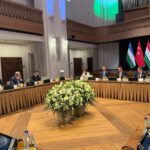
On March 5, the foreign ministers of the member states of the Gulf Cooperation Council and the European Union held an urgent online meeting. Following the meeting, it was stated that the Gulf states possess the inherent right to individual and collective self-defense in accordance with Article 51 of the UN Charter and may take the necessary measures to protect their security, territories, and populations.
The GCC has collective defense mechanisms. The Joint Defense Agreement signed in 2000 provides for coordination of military policy and the possibility of mutual assistance in the event of an external threat to one of the member states. The practical instrument of this cooperation is the Peninsula Shield Force. At the same time, defense commitments within the Council are less rigid than NATO’s collective defense mechanisms and largely depend on the political decisions of member states regarding the extent of their participation in possible military actions. However, under the current escalation these mechanisms could theoretically be activated to provide collective protection for the Gulf states.
If NATO countries were also to become involved in this process, the development of events could take on a qualitatively different and far larger scale. A formal trigger for such a scenario could be a missile strike on the territory of another country neighboring Iran — Türkiye. It is assumed that an Iranian ballistic missile intercepted by Turkish air defense systems may have been aimed at the American air base in Incirlik. Such an incident could theoretically become a trigger for collective action within NATO, including the possible invocation of Article 5 of the Treaty, if Ankara were to make such a request. However, the Turkish leadership has demonstrated restraint, warning Tehran that it reserves the right to respond to any hostile actions.
Another Iranian strike targeted Azerbaijan on March 5, when infrastructure at Nakhchivan International Airport was damaged. This prompted a firm reaction from Baku, which demanded that Tehran conduct an investigation, identify those responsible, and assume responsibility for the incident. Azerbaijan also stated that it reserves the right to take retaliatory measures to protect its national interests.
Tehran’s actions were condemned by the leaders of several states. In particular, the leaders of Türkiye and the United Arab Emirates, in conversations with President Ilham Aliyev, emphasized the importance of exchanging views, implying the possibility of cooperation in the event that similar incidents occur again in the future.
As a result, through strikingly short-sighted actions, Iran has not only failed to unite Islamic countries around itself but has also seriously complicated its relations with most neighboring states, effectively leading to the closure of borders along a significant part of its perimeter and further worsening its own geopolitical position. Even countries that had previously taken a critical view of Israel’s and the United States’ actions toward Iran are now forced, under the current circumstances, to adopt positions that objectively coincide with their line.
In this context, it cannot be ruled out that if escalation continues in the region, a new configuration of forces may begin to emerge — a kind of defensive coalition aimed at deterring Iran. How beneficial such a configuration would be for Tehran itself remains an open question, since in that case it is Tehran that risks becoming the principal strategic loser.
Ilgar Velizade