War near a country’s borders is always a risk factor. Among other things, it increases the likelihood of accidental incidents — stray missiles, artillery shells, or unmanned aerial vehicles crossing into neighboring territories. Yet not every such episode can be explained as a simple accident. It is precisely in this context that the recent incident amid the ongoing military crisis around Iran should be examined.
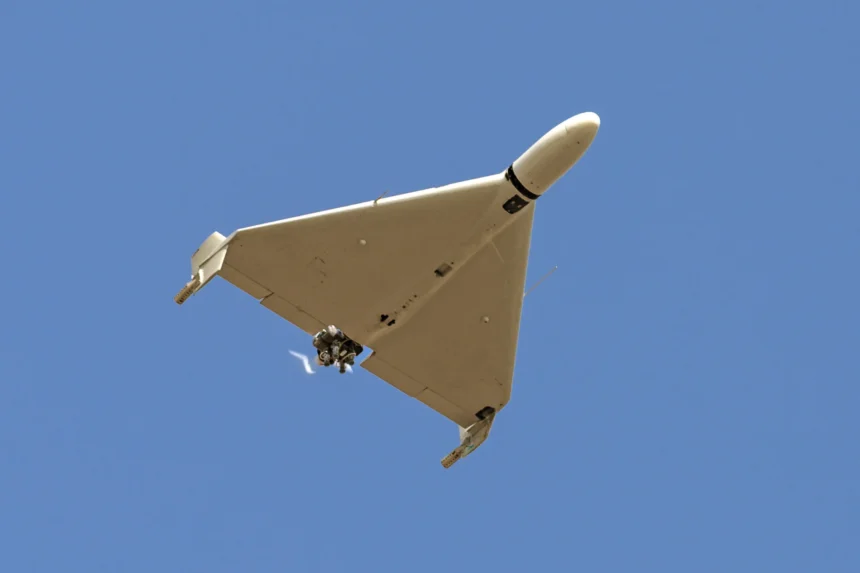
Unmanned aerial vehicles launched from Iranian territory fell in Azerbaijan’s Nakhchivan Autonomous Republic. One of the drones struck the terminal building of Nakhchivan Airport, while another crashed near a school building in the village of Shekarabad. As a result of the incident, several people were reportedly injured.
The episode has already raised serious questions regarding Tehran’s actions. Indeed, it is worth recalling how restrained and balanced Azerbaijan has been since the very beginning of the Iranian crisis. From the outset, Baku called on all parties to respect international law and refrain from the use of force. Azerbaijan adopted a neutral position from the first day of the war and has consistently maintained it, avoiding involvement in the conflict and refraining from any steps that could further escalate tensions.
Azerbaijan’s foreign policy has long been built on a clear principle: not allowing the country to be drawn into other people’s conflicts, regardless of the potential political dividends such involvement might promise. Another cornerstone of Azerbaijan’s diplomacy has been the effort to build constructive and friendly relations with neighboring states. These principles have been evident throughout the current crisis.
Moreover, following the death of Iran’s Supreme Leader, President of Azerbaijan Ilham Aliyev personally visited the Iranian embassy in Baku to express his condolences.
This was not merely a gesture of diplomatic courtesy. The president’s visit to the Iranian diplomatic mission carried a very clear message: Baku has no interest in confrontation and supports restraint even amid a severe regional crisis.
Finally, Azerbaijani officials at the highest levels repeatedly emphasized that the country’s territory would not be used for any anti-Iranian actions. These statements were not empty words. It is also worth recalling that Iran has not always demonstrated the same level of consideration toward Azerbaijan. One only needs to remember how, on the eve of and during the 44-day war, weapons were supplied to Armenia through Iranian territory.
And what has Azerbaijan received in return?
The answer, at the very least, raises questions. An Iranian drone falls on the territory of Nakhchivan, an autonomous republic of Azerbaijan. Is this how Tehran interprets neutrality and restraint?
Let us be realistic. It is difficult to imagine such a mistake occurring twice. Iran has been actively using drones to attack targets in Israel, the Persian Gulf states, and Iraq. Yet all of those targets lie in directions entirely different from where Azerbaijan is located. Moreover, targeting airports has become a familiar tactic for Iran. Since the beginning of the current conflict, Iranian strikes have targeted airports not only in Israel but also in several Arab countries, including Dubai and Kuwait, and there have even been attempts to strike the airport in Doha, the capital of Qatar. If one recalls recent years, Iranian proxies — the Yemeni Houthis — have repeatedly attacked airports in Saudi Arabia.
All these circumstances inevitably lead to an uncomfortable question: was the Iranian drone that struck Nakhchivan Airport the result of an accident, or is it a sign of a dangerous policy whose consequences are already spilling beyond Iran’s borders?
That question still awaits an answer. But one fact remains undeniable: a drone launched from Iranian territory ended up on Azerbaijani soil.
And in Baku, explanations will certainly be expected.