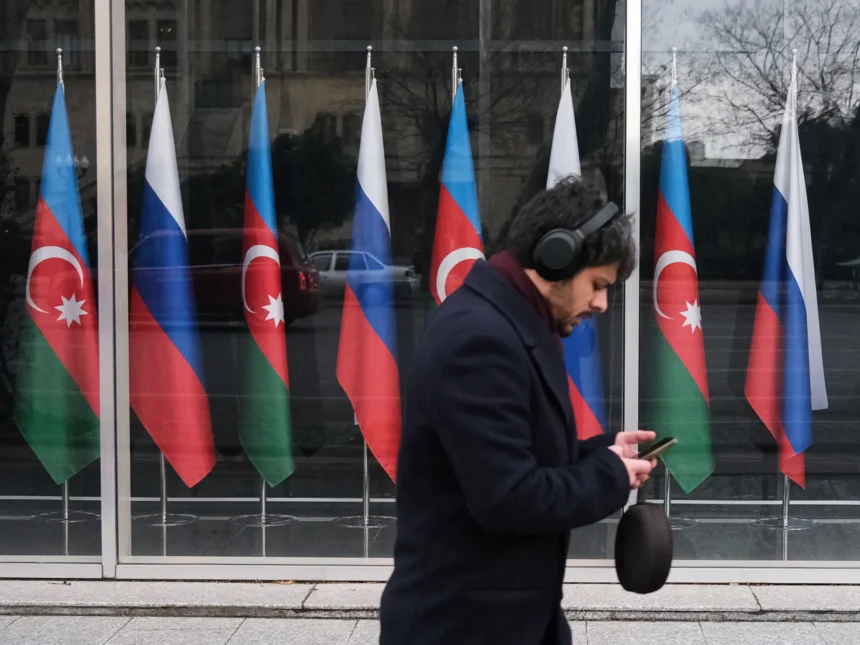
Emotions are a poor adviser in politics. Whether the Kremlin understands this is open to debate. What has been happening in recent months in Azerbaijan–Russia relations — more precisely, in Russia’s behavior toward Azerbaijan — can no longer be dismissed as a “misunderstanding” or as the result of isolated publications.
Russia has intensified a hybrid campaign against Azerbaijan. And this campaign increasingly resembles not geopolitics, but a personal vendetta.
The strikes are no longer directed only at the country — personal attacks against the leadership have begun.
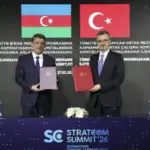
The reason is obvious and uncomfortable for the Kremlin: Azerbaijan is pursuing an independent policy and strengthening its international position. The activation of relations with the United States, the personal contacts between Ilham Aliyev and Donald Trump, the TRIPP format, and the signing of the Strategic Partnership Charter are all changing the balance.
At the same time, Baku is deepening ties with Central Asia and the Middle East, transforming itself into an important political and transport hub of the region. Azerbaijan has clearly outgrown the framework that Russian “great-power strategists” once assigned to a “former Muslim republic.”
Strictly speaking, irritation in Moscow has been building for a long time. In 2020, Azerbaijan achieved a decisive victory in the 44-day Patriotic War, and in autumn 2023 it fully restored its state sovereignty. Moscow lost a key lever of pressure — Karabakh. Numerous “settlement plans,” under which Azerbaijan was expected to join the CSTO and the Eurasian Economic Union in exchange for assistance in liberating parts of its territory occupied by Armenia, were effectively discarded.
Against this backdrop, another important development took place — the arrest and prosecution of Vardanyan, who had been sent to Karabakh by Russia to launch a new political project, as well as Bako Sahakyan, Arayik Harutyunyan, and others whom the FSB had reportedly prepared in 2022–2023 for a new initiative. Vardanyan was not sent to Karabakh as a tourist. It was an attempt to relaunch a controlled crisis and create a new pressure point on Baku. Moscow’s strategists tried to nullify the results of Azerbaijan’s November 2020 victory, revive tensions in Karabakh using the Russian peacekeeping contingent as a “shield,” and freeze the conflict. Moreover, there were numerous signs that preparations for a revanche were underway in Karabakh under the protection of Russian peacekeepers. Otherwise, it is difficult to explain the presence there of a 15,000-strong Armenian military grouping with hundreds of tanks and other armored vehicles. The project, however, failed. Attempts to launch a “guerrilla war” and a campaign of terror against Azerbaijan — something the Kremlin-linked oligarch-provocateur Ruben Vardanyan had openly promised — also collapsed.
Now Vardanyan’s potential testimony is becoming a sensitive issue for Russia itself. His figure is perceived as a possible threat to parts of the Russian elite, including in matters related to financial assets and networks. This is causing anxiety in Moscow. Many understand how many revealing details about Moscow’s plans regarding Karabakh after the war Ruben Vardanyan could disclose. This is particularly unsettling given that during the Troika Dialog era he was accused of involvement in money-laundering schemes tied to segments of the Moscow elite.
Another source of irritation is President Ilham Aliyev’s firm stance regarding the AZAL tragedy. Moscow has yet to fulfill promises reportedly made in Dushanbe last year. In Baku, this is remembered — and repeatedly highlighted.
For the Kremlin, such principled behavior came as a surprise. The familiar formula of “sweep it under the rug and forget” did not work. Russian power circles simply were not prepared for this approach. Azerbaijan is demonstrating a principled position on the international stage that is difficult to challenge from the standpoint of international law. Moreover, the country is pursuing its policy with a strong sense of dignity — something Moscow appears unaccustomed to.
One should not forget the internal front either. In Azerbaijan, a pro-Russian “fifth column” was dismantled and exposed. The Russian House closed. The Sputnik network associated with Margarita Simonyan ceased operations. Revelations emerged regarding former presidential administration chief Ramiz Mehdiyev and other figures. Plans for a state coup — allegedly aimed at pushing Azerbaijan into the CSTO — were disrupted. The so-called “Eurasian movement” suffered a serious blow. A mechanism of influence built over years began to malfunction.
At this point, Moscow turned to its familiar toolkit: large-scale cyberattacks, coordinated hybrid operations, waves of disinformation on social media, false narratives and smear campaigns targeting the country’s leadership.
Azerbaijanis living abroad have also become involved in this process. Pressure on the diaspora has intensified. Arrests, financial seizures, and cases of violence have been reported.
Such instruments were used in the 1990s as well — minus social networks, which did not yet exist. Hybrid attacks were then carried out through traditional media. Little in the Kremlin’s arsenal appears to have changed. Most troubling is the absence of readiness to build normal relations with Azerbaijan. Instead, there are persistent attempts to drag the situation back to the early 1990s.
Some of these hybrid operations are reportedly being implemented on Armenian territory as well. At the same time, Moscow continues to encourage revanchist sentiments among Karabakh Armenians now residing in Armenia. The logic is clear: disrupt the peace process, reignite the conflict, and use it as leverage against both Baku and Yerevan.
Russian networks in Europe are also becoming more active. The goal is to complicate the normalization of relations between Baku and the EU. For this purpose, pro-Russian structures in the European Parliament and the Parliamentary Assembly of the Council of Europe are allegedly being utilized. The alignment of certain Western circles with Russian narratives about Azerbaijan appears too synchronized to be purely coincidental. Over the years following the end of the Cold War, Russia used financial influence to build extensive networks across Europe — figures such as former German chancellor Gerhard Schröder are often cited as illustrative examples. More recently, materials linked to the Epstein case have fueled renewed scrutiny of certain European political figures. Among those whose names have surfaced in discussions about Russian influence is Thorbjørn Jagland, the former Secretary General of the Council of Europe and former Prime Minister of Norway.
His tenure at the Council of Europe coincided with the EU’s growing energy dependence on Russia. Decisions made during that period contributed to developments that later fed into migration pressures and the rise of far-right pro-Russian forces, including the AfD. Jagland was also known for his harsh criticism of Azerbaijan. Today, his parliamentary immunity has reportedly been lifted and investigations into corruption allegations are underway — suggesting that the story is far from over.
Following patterns reminiscent of the 1990s, Moscow is once again attempting to inflate the theme of “ethnic confrontation” inside Azerbaijan. The long-standing narrative of a so-called “Lezgin issue” is being revived. Similar attempts were made in the past, including efforts to raise the matter at the United Nations in 2012.
At the same time, Russia — which sends Lezgins, Tatars, Buryats, and representatives of other peoples to the front in Ukraine, where they suffer heavy losses — is searching for an “ethnic conflict” inside Azerbaijan, a contrast that many observers find paradoxical. Comparing the situation of Lezgins in economically underdeveloped regions of Russia with conditions in Azerbaijan, including development projects such as the Shahdag mountain resort, is hardly convincing. Yet it seems that Moscow still underestimates the ability of Azerbaijani citizens to draw their own conclusions.
According to available information, a new phase of provocative activity may now be beginning. The campaign is not slowing down — it is escalating. Reports suggest that in the coming days another wave of attacks will be launched, targeting both Azerbaijan as a whole and members of the state leadership personally.
In this scheme, one representative of a well-known Azerbaijani family living in Russia is allegedly expected to be used. And the more aggressive the attacks and provocations become, the more evident it appears that Moscow is acting out of nervousness.
The key point, however, is that the train has already left the station. Azerbaijan is no longer a country that can be intimidated by hybrid tactics. It has become a strong and genuinely independent state with a stable political system. The era of “imported revolutions,” externally inspired unrest, and engineered coups has passed. The political responsibility for such games, however, will remain with Moscow.