The collapse of Bashar al-Assad’s government in late 2024 reshaped Syria’s foreign policy. Damascus gravitated toward Gulf monarchies and NATO members, while Iran’s influence in post-regime-change Syria diminished sharply. These developments created unique opportunities for Azerbaijan. Over the next 14 months, Syrian President Ahmed al-Sharaa and his Hay’at Tahrir al-Sham-dominated government have engaged with Baku, indicating their interest in establishing a more substantive bilateral relationship.
For Syria, deepening ties with Azerbaijan helps diversify external partnerships and offers brighter prospects for internal stability, reconstruction and meeting energy needs. For Azerbaijan, it provides an opportunity to expand its strategic footprint in the Middle East – a region where Baku’s impact has, at least so far, remained somewhat limited.
The historical arc of Azerbaijan-Syria relations
Azerbaijan and Syria established diplomatic relations in March 1992. Azerbaijan opened an embassy in Damascus in May 2008, but Baku severed formal ties in 2012 amid Syria’s civil war. Because of a large Armenian diaspora in Syria with anti-Azerbaijani and anti-Turkish sentiments, Damascus aligned predominantly with Yerevan in the disputes between Armenia and Azerbaijan.
For example, Syria, despite being a member of the Organisation of Islamic Cooperation (OIC), did not vote with most members of the body in recognizing Azerbaijan’s sovereignty over Nagorno-Karabakh. This region was under the de facto control of the self-declared Republic of Artsakh from 1991 to 2023. While Syria avoided direct military involvement in the 2020 Karabakh conflict, it provided political and symbolic support to Armenia. In contrast, Turkiye reportedly mobilized Syrian mercenaries from the opposition to fight for Azerbaijan in the 2020 war.
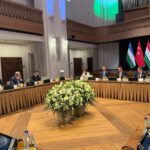
With the fall of Mr. Assad’s regime, an opportunity arose to reset the bilateral relationship between Baku and Damascus. Throughout 2025, important engagement occurred between high-ranking officials from both countries. Notably, Mr. Sharaa visited Azerbaijan on July 12, 2025. During his meeting with Azerbaijani President Ilham Aliyev in Baku, discussions focused on deepening bilateral ties, enhancing economic cooperation and expanding energy-sector collaboration. The two governments signed a memorandum of understanding outlining plans to export Azerbaijani natural gas to Syria via Turkiye, marking a significant step toward solidifying their emerging partnership.
Two months prior, Azerbaijan’s Deputy Prime Minister Samir Sharifov led a delegation to Damascus to discuss Baku’s support for the reconstruction of the war-torn country and to explore opportunities for bilateral cooperation across various areas, including the economy, energy and education. During Mr. Sharifov’s visit to Syria, President Sharaa expressed the new Damascus government’s support for Azerbaijan’s territorial integrity and congratulated Baku on its success in reclaiming Karabakh from Armenian separatists during the 2020-2023 period. He even suggested that Azerbaijan’s actions could serve as a model for Syria’s recovery of territories beyond the government’s control.
Baku’s expanding footprint in Syria
Syria, after enduring years of conflict, now faces a costly reconstruction. Azerbaijan, a gas-rich country with expertise in logistics and infrastructure, is well-equipped to provide assistance. Given Syria’s location along the Eastern Mediterranean, it has the potential to become a transcontinental hub for energy and trade.
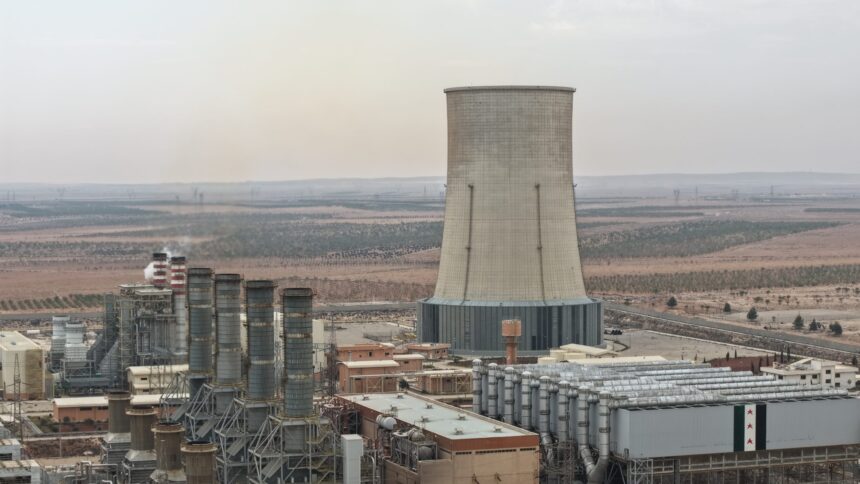
In July 2025, a landmark memorandum of understanding was signed between Syria and the State Oil Company of Azerbaijan (SOCAR), outlining plans to export natural gas from Azerbaijan’s largest gas field, Shah Deniz, located in the South Caspian Sea, to Syria via Turkiye. The first phase of this agreement began in August 2025, allowing Syria to receive approximately 3.4 million cubic meters of gas per day. This supply is earmarked for Syria’s gas-powered plants, with Energy Minister Mohammad al-Bashir estimating that it will boost the country’s electricity generation by about 750 megawatts, enabling some regions to receive up to four additional hours of electricity daily.
This collaboration is part of Azerbaijan’s broader strategy following the 2020 Karabakh war. It aims to enhance Baku’s global energy partnerships and strengthen its influence in the Middle East, particularly amid the region’s evolving geopolitical landscape. While most of Azerbaijan’s natural gas exports currently go to Europe, the new gas flow to Syria diversifies Baku’s export portfolio and creates new avenues for energy partnerships in the Middle East.
Syria could serve not only as a consumer of Azerbaijani gas but also as a transit country, allowing Azerbaijan to export gas to Egypt via Syria. This cooperation secures Azerbaijan a position in Middle Eastern energy discussions and boosts its role as a bridge between the Middle East and Central Asia.
Iran’s fears of strategic isolation intensify
The Islamic Republic of Iran views the prospect of an expanding Azerbaijani-Syrian partnership with considerable apprehension. Tehran has long been unsettled by Azerbaijan’s close strategic alignment with Israel, interpreting Baku’s foreign policy as a direct and increasing threat to its national security. These worries have only intensified following accusations from Tehran that Azerbaijan provided assistance to Israel during the 12-day War in June 2025.
From Tehran’s perspective, this cooperation underscores a broader pattern of geopolitical encirclement. Iran’s feeling of being encircled has become more pronounced following the Washington-brokered preliminary deal between Armenia and Azerbaijan in August 2025. This agreement outlines plans for a 42-kilometer Trump Route for International Peace and Prosperity, which effectively replaces the Zangezur Corridor. It grants the United States development rights for a passage connecting mainland Azerbaijan to Nakhchivan, located along the Armenian-Iranian border.
Azerbaijan’s 2020 Karabakh victory, aided by Turkiye and Israel, heightened Iran’s anxiety and reshaped the dynamics in the South Caucasus. As the new regime in Damascus increasingly aligns itself with Ankara and the West, Tehran views this shift as a further erosion of its traditional sphere of influence.
Syria allowing Israel access to its airspace during the June 2025 conflict – and Damascus’s decision to not condemn Israeli actions against Iran – has been interpreted in Tehran as a disturbing consequence of Mr. Assad’s fall. These developments, taken together, have made Syria’s shifting posture appear less like a simple rebalancing and more like an emerging regional configuration.
What may represent pragmatic cooperation and regional integration for Baku and Damascus is, for Tehran, a deeply unsettling reordering of alliances that further undermines its already fragile regional position.
Azerbaijan’s delicate diplomacy in Syria
Azerbaijan’s close relationship with Israel plays a key role in assessing Baku’s potential role in shaping the future of Syria. As Israel and Turkiye pursue competing visions for Syria’s political and territorial landscape, tensions between these two regional powers have become increasingly evident. Their interests in Syria are fundamentally incompatible, raising the possibility – albeit remote – of direct military confrontation if their rivalry escalates. Against this backdrop, Baku has cautiously positioned itself as a possible bridge between Tel Aviv and Ankara, a role that could grow in importance over time.
This diplomatic nuance matters all the more given Israel’s intensified military activity in Syria following Mr. Assad’s ouster in December 2024. Israel’s hundreds of incursions, along with its seizure of Mount Hermon and additional Syrian territory beyond the Golan Heights – territory it has occupied since 1967 – have created severe challenges for the Sharaa government. Faced with an expansionist Israel, Damascus finds itself with limited options to deter Tel Aviv’s pursuit of a “Greater Israel” vision. With little leverage over Israel, President Sharaa has turned to Washington for support, though U.S. intervention is uncertain, prompting Damascus to explore alternative strategies.
An emerging partnership between Azerbaijan and Syria may prove unexpectedly beneficial. If Azerbaijan increases its investments in Syria’s reconstruction and infrastructure, Israel might find it prudent to temper its hostility toward Syria, given its strong and strategically valuable relationship with Baku. Moreover, Azerbaijan’s unique position – maintaining close ties with Israel while also engaging pragmatically with key regional players – could allow it to quietly facilitate future dialogue between Tel Aviv and Damascus or at least establish communication channels for de-escalation. Reportedly, during President Sharaa’s July visit to Baku, Syrian and Israeli officials met in the Azerbaijani capital.
However, it is crucial to avoid exaggerating Baku’s ability to restrain Israeli ambitions. While Azerbaijan’s influence could be useful, it is not absolute or guaranteed. At best, it may help foster an environment that supports diplomatic engagement, but it cannot single-handedly alter Israel’s strategic considerations. Nevertheless, even a small role in reducing tensions would represent a meaningful contribution to the fragile and evolving post-Assad landscape in Syria.
Opportunities and risks in a volatile region
Azerbaijan’s growing engagement with the “New Syria” reflects a convergence of strategic interests driven by the region’s rapidly shifting geopolitical landscape. For Damascus, cooperation with Baku provides access to energy supplies, investment opportunities and diplomatic diversification, particularly as the country seeks to stabilize a fragile political transition. For Azerbaijan, deepening ties with post-Baathist Syria presents an opportunity to broaden its influence beyond the South Caucasus and Europe, diversify its energy export routes and position itself as a significant actor in Middle Eastern affairs.
Yet, this emerging partnership is unfolding within a complex regional environment marked by Iranian anxieties, Israeli military actions and an intensifying Turkish-Israeli rivalry. These dynamics both create opportunities for Azerbaijani diplomacy and impose constraints on Baku’s ambitions.
It is uncertain whether Azerbaijan can ease tensions, but the partnership between Baku and Damascus will increasingly influence the Middle East’s geopolitical landscape, offer potential advantages and possibly alter existing roles.
Scenarios
Most likely: A lasting but constrained Azerbaijani footprint in Syria
As Syria’s post-regime transition unfolds and President Sharaa’s government consolidates power with support from Turkiye, the Gulf states and the West, Azerbaijan is poised to assert itself as an increasingly influential actor in Syria’s recovery, focusing primarily on energy exports and reconstruction. However, it is unlikely to become a dominant player in the region. Countries with stronger historical ties and greater influence in Syria, such as Saudi Arabia, Qatar, Turkiye and Russia, will constrain Baku’s sway.
Persistent instability, fueled by Israeli military incursions, ongoing local tensions and the lingering effects of years of civil war, will compel Baku to take a cautious and measured approach to investment in Syria. Additionally, Azerbaijan’s ability to tackle the root causes of domestic instability in Syria – such as fragmented local governance and socioeconomic grievances – will be significantly limited.
Less likely: Coup or sectarian breakup in Syria
The possibility of Syria permanently fragmenting along ethnic and sectarian lines or a coup overthrowing Mr. Sharaa cannot be dismissed, given the country’s ongoing political fragility and complex social fabric. Years of conflict, entrenched local militias and competing external influences have left the country vulnerable to sudden shocks, making the consolidation of central authority a challenging endeavor.
Should such deep fragmentation or political upheaval occur, Syria could quickly transform into a collection of semi-autonomous regions, each controlled by different groups. In this scenario, governance, security and economic coordination would likely deteriorate, leading to chronic instability, fragmented authority and an increased risk of local conflicts.
Azerbaijan’s investments and influence in Syria would face limitations, as the absence of a unified central government would complicate both the negotiation and enforcement of agreements. Infrastructure and energy projects could be stalled or undermined by competing authorities, while security threats to personnel and assets would escalate. In a highly fragmented Syria, Azerbaijan would be forced to navigate a complex network of local power brokers, a challenge that could stretch its diplomatic and operational capacities.
Giorgio Cafiero is the CEO of Gulf State Analytics.