The Trump administration has made no secret of the fact that it sees stability and security in the Western Hemisphere as a priority. This emphasis has been outlined in multiple strategic documents, including the most recent National Security Strategy. But even with this focus on regions closer to the homeland, there is another area — thousands of kilometers from the US — that is receiving far more attention than it has in the past: Central Asia, which includes the countries of Kazakhstan, Kyrgyzstan, Turkmenistan, Tajikistan and Uzbekistan.
In just the past fortnight, Washington has taken several notable steps to bolster engagement in the region. This week marked the launch of the B5+1 Forum in Bishkek, Kyrgyzstan. The B5+1, the business counterpart to the C5+1 political platform between the US and the five Central Asian states, brought more than 50 US business leaders into the heart of the Eurasian landmass to explore opportunities for expanding American investment in the region. The initiative reflects a growing recognition that economic engagement will be central to any sustainable US approach to Central Asia.
Also this week in Washington, the US State Department hosted a Critical Minerals Ministerial, convening leaders from dozens of countries to discuss supply chain resilience and security-related challenges tied to the critical minerals that are becoming increasingly important to modern life. Central Asia was well represented, underscoring the region’s growing importance as a potential source of rare earth elements and other strategic materials at a time when global supply chains remain vulnerable.
Meanwhile, last week, the US secretary of the army paid a rare visit to Turkmenistan. While unusual, the visit makes sense in light of broader regional dynamics, particularly given Turkmenistan’s long border with Iran. The visit was followed by a phone call between Secretary of State Marco Rubio and the president of Turkmenistan, reflecting Washington’s heightened awareness of the country’s geopolitical significance.
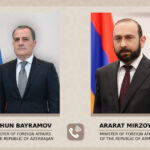
These are only the most recent examples of the Trump administration’s renewed focus on Central Asia. Over the past year, additional initiatives have highlighted the region’s rising importance in US strategic thinking. Last August, President Donald Trump helped bring long-lasting peace between Armenia and Azerbaijan, unlocking the potential for expanded transport, trade and transit between the US, its partners and Central Asia.
The South Caucasus serves as a critical gateway to the region, offering Washington access to Central Asia that bypasses Russia, China and Iran. Azerbaijan, in particular, is so central to Central Asia’s global connectivity that the original C5 format was expanded into a C6 framework to include Baku in regional discussions.
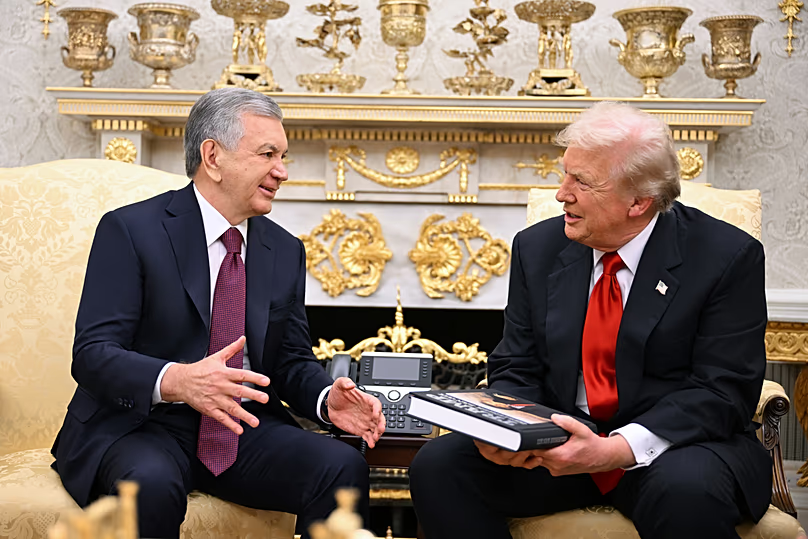
In October, the US hosted a historic C5+1 summit to mark the 10th anniversary of the initiative. For the first time, all five Central Asian heads of state were welcomed to the White House. Trump also appointed one of his closest advisers, Sergio Gor, to serve as the first US special envoy to Central Asia, institutionalizing Washington’s engagement in a way previous administrations had not.
The logic behind this renewed focus is straightforward. Central Asia sits at the heart of the Eurasian landmass, a region that is becoming increasingly important in a more multipolar world. It is rich in natural resources, including oil, natural gas and rare earth elements, and it contains some of the most important transit corridors across Eurasia, many of which trace their origins to the ancient Silk Road.
The region also matters from a security and energy perspective. The US has a long history of working with Central Asian governments on combating transnational terrorism and cooperating on energy-related issues. These relationships have contributed to regional stability and served broader US security interests for decades.
The timing of Washington’s renewed engagement could hardly be better. After the Sept. 11 attacks, almost a quarter of a century ago, the US engaged deeply with Central Asia, largely because of operations in Afghanistan. As US involvement in Afghanistan waned, so too did attention on the broader region. Today, however, Central Asia is shaped by the growing influence of multiple external actors, including Russia, China and Turkiye — and, to a lesser extent, Iran and India. It is only logical that the US reassert itself as a meaningful player.
A defining feature of Central Asian foreign policy is balance. Governments across the region seek to manage relations with multiple powers simultaneously, avoiding overdependence on any single actor. As the US expands its engagement, it should pursue policies that help these countries balance their external relationships more effectively while strengthening their ties to the West. US policy should aim to enhance regional sovereignty by enabling governments to resist malign influence without forcing them into zero-sum choices.
One reason Washington has made rapid inroads in the region is Trump’s business-oriented instincts and transactional approach. The administration has largely abandoned the lofty and often unrealistic objectives pursued by previous administrations — goals that were frequently outside US control — and instead focused on achievable outcomes such as economic growth, political stability and sovereignty. This pragmatic approach has resonated in Central Asia.
There are also several quick policy wins Washington could pursue to build on recent momentum. Trump could visit Central Asia to signal his personal commitment to the region — no sitting US president has ever done so. The administration is also due to publish a new Central Asia strategy. The last was released in 2020 and both the region and the world have changed dramatically since then.
Transactionalism alone is not sufficient. As the US develops a reinvigorated approach to Central Asia, it must begin laying the foundation for a durable, long-term relationship. The region’s importance will only grow over the course of the 21st century.
Luke Coffey is a senior fellow at the Hudson Institute.