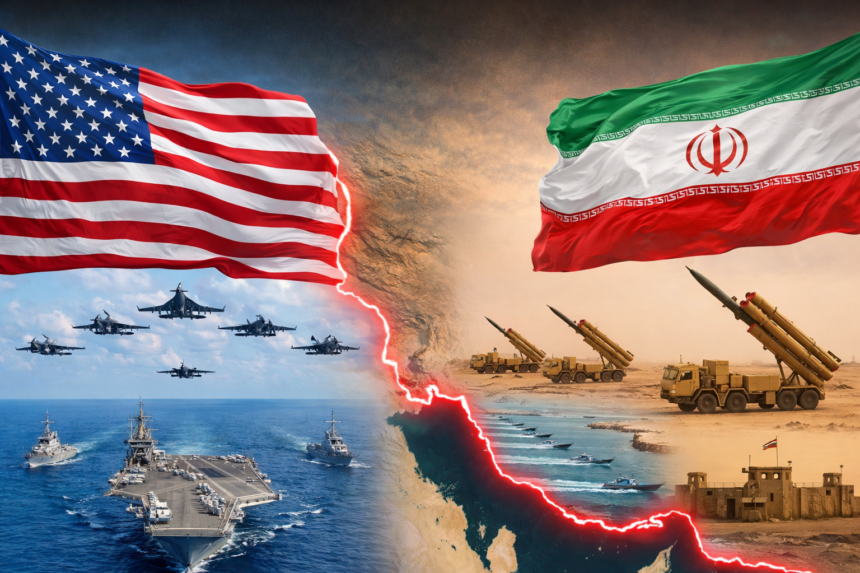
Against the backdrop of rising tensions around Iran, undesirable scenarios that could materialize in the event of a large-scale war initiated by the United States are being discussed with increasing frequency. These scenarios are no longer confined to expert circles; they are now voiced by politicians and appear in the media of neighboring countries as well. In this context, a statement made within the walls of the Milli Majlis is particularly telling: Azerbaijan’s state bodies and security services are closely monitoring developments in Iran and are preparing in advance for possible consequences.
The essence of this position is that it is important for Azerbaijan not to wait for a crisis to unfold, but to understand in advance what risks it may face. First and foremost, this concerns humanitarian threats and a potential increase in the number of refugees. In Iran’s northwestern regions, in close proximity to the Azerbaijani border, millions of ethnic Azerbaijanis live. If the situation in these areas were to deteriorate sharply—due to military operations, strikes on infrastructure, or general chaos—many people might try to escape by heading toward Azerbaijan.
In such a situation, Baku would hardly be able to simply turn a blind eye to what is happening. Yes, Azerbaijan’s land borders are currently closed, a decision taken against the backdrop of instability around the country. However, if tens or even hundreds of thousands of people connected to Azerbaijan by shared history, language, and culture were to seek help, the room for rigid and purely formal decisions would be extremely limited.
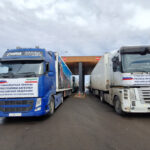
It is therefore logical to assume that the Azerbaijani authorities are already considering various courses of action in the event of a humanitarian crisis in Iran. This is less about the mass admission of refugees and more about forms of humanitarian support—supplies of food and medicine, temporary assistance through international organizations. Baku already has experience in this regard. Azerbaijan has been providing humanitarian assistance to Ukraine despite the considerable geographical distance.
In the case of Iran, the factor of proximity and shared historical roots plays an even more important role. Azerbaijani society has traditionally been sensitive to the fate of Azerbaijanis living on the other side of the Araz River, and in the event of a serious crisis, expecting complete indifference would be unrealistic. That is precisely why discussing potential risks today is not about stoking fear, but about preparing in advance for a situation that, under unfavorable circumstances, could directly affect the country.
If the situation in Iran were to deteriorate sharply, Azerbaijan’s southern neighbors might need the most basic humanitarian assistance. First and foremost, this includes medicines, tents, warm clothing, blankets, and generators. It is important to bear in mind that during the winter months many regions of Iran are quite cold, especially mountainous and northwestern areas. In conditions of war and mass shelling, people are often forced to flee their homes in haste, without the ability to take essential belongings with them.
A separate and serious risk is the possibility of disruptions to electricity supply. Damage to power plants, substations, or transmission lines could leave entire areas without electricity, heating, and communications. This would automatically lead to hospitals shutting down, disruptions in water supply, and a sharp deterioration in sanitary conditions. In such circumstances, generators, fuel, and mobile energy sources become critically important elements of humanitarian assistance.
If such a crisis were to unfold near the Azerbaijani border, pressure on border regions could increase dramatically. People would seek safer places, temporary shelters, and evacuation routes. Even if borders were to remain formally closed, it would be virtually impossible to completely isolate oneself from the humanitarian consequences of such a crisis.
That is why Azerbaijan is likely considering not only scenarios for responding to a possible influx of people, but also preventive assistance—to reduce the very need for mass population movements. Deliveries of medicines, warm clothing, and equipment could help stabilize the situation on the other side of the border while simultaneously reducing risks to Azerbaijan’s own security.
God forbid that such scenarios ever materialize; however, practice shows that it is necessary to be prepared for them in advance. At present, an important positive signal remains the agreement between the United States and Iran to continue negotiations. This offers hope that the most severe and fatal scenarios can be avoided and that the crisis will not escalate into an open military confrontation.
Not only the parties to the negotiations are interested in this outcome, but all countries in the region. Any large-scale war in Iran would inevitably affect its neighbors—through refugee flows, humanitarian crises, economic shocks, and growing overall instability. These are not theoretical considerations, but real experiences the region has already faced.
The examples of Syria, Afghanistan, and Iraq clearly demonstrate that any major war is almost always accompanied by severe humanitarian consequences. Millions of refugees, destroyed infrastructure, the collapse of healthcare systems, and long-term social trauma become realities not for months, but for decades.
That is precisely why preventing such scenarios at the negotiation stage is far more important than attempting to address humanitarian problems after hostilities have ended. Experience shows that dealing with the consequences of war is always more difficult and more costly—both in human and political terms—than preventing its outbreak. In this context, Azerbaijan’s cautious position, its attention to risks, and its readiness for potential humanitarian challenges appear not as signs of alarmism, but as a sober and responsible approach.
Ilgar Velizade