Even historians today struggle to pinpoint who first injected the punchy phrase “If they’re afraid, it means they respect you” into the Russian political lexicon. Yet Moscow has built—and continues to build—its influence across the post-Soviet space almost exclusively on fear. While other states actively rely on so-called “soft power,” the Kremlin prefers very different methods. As a result, in recent years Russia has transformed from a “big brother” in the post-Soviet world into a genuine tyrant—one that pressures its neighbors instead of extending a helping hand. Partnership? Forget it. It has been replaced by crude coercion, threats, and backstage blackmail.
The problem is that this policy no longer works in the post-Soviet space. To varying degrees, almost all states in the region are distancing themselves from Russia, including those Moscow until recently considered its own strongholds. Political ties are collapsing like a house of cards, humanitarian connections are evaporating, and xenophobia inside Russia is flourishing—migrants are harassed, and neighbors are blamed for every conceivable sin. The CIS, a relic of the 1990s, has long since become an empty formality with no real benefit or value.
Some explanation is needed here. The gradual weakening of Russia’s political ties with the newly independent states was, frankly, to be expected. In the immediate aftermath of the USSR’s collapse, many former republics simply lacked mature state institutions in numerous areas—from diplomacy to the security sector. They also did not have independent systems for exporting their products to global markets. As a result, they were forced to pursue a “one-window policy,” orienting themselves toward Moscow on most issues. Over time, however, as their own independence consolidated, diversification began. Moscow could not have fully preserved its former influence even in theory. Yet even under conditions of growing competition, much could have been retained—if Moscow had chosen cooperation. Instead, it chose pressure.
Humanitarian ties have fared no better—and that is putting it very mildly. In principle, humanitarian cooperation threatens no one—until the moment when entirely different activities begin under the guise of “humanitarian ties.” And what happened in practice? From the earliest stages after the USSR’s collapse, Moscow demanded that former republics grant the Russian language a “special status.” Any attempt to use national languages in official administration—something entirely natural for independent states—triggered political hysteria and cries of “Russophobia,” “oppression of Russian speakers,” and so on. With the outbreak of the war in Ukraine, another dimension emerged: Moscow actively pushed for tours by artists who openly supported the aggression, which, to put it mildly, met with little understanding. Finally, there was the use of “Russian Houses” for far from humanitarian purposes—from recruiting mercenaries for the war in Ukraine to serving as cover for intelligence services. In Azerbaijan, the “Russian House” even organized pseudo-academic “geographical events” promoting Russian territorial claims—not against Ukraine, but, for example, against Norway, targeting the Svalbard (Spitsbergen) archipelago.
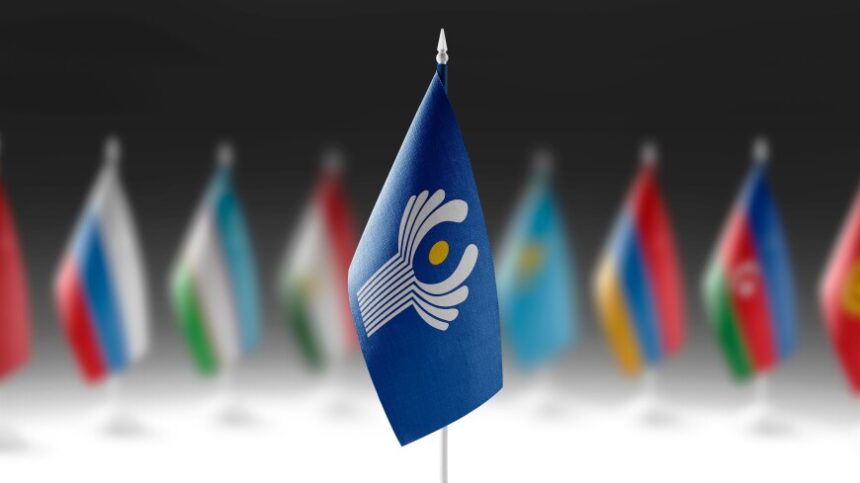
So what is the result? Let’s look at the statistics—they scream collapse. This is especially evident in the case of the Commonwealth of Independent States. The CIS, created in 1991 as an instrument for a “civilized divorce” after the USSR’s breakup, has already lost key players. Georgia slammed the door in 2009, immediately after the 2008 Russian-Georgian war—Moscow invaded, occupied Abkhazia and South Ossetia, and Tbilisi said, “Enough.” The reason was Russian aggression, which destroyed all illusions of “brotherhood.” Ukraine formally withdrew in 2018 but had effectively ceased participation back in 2014 after the annexation of Crimea and the war in Donbas—by unleashing a bloody conflict and accusing Kyiv of “Nazism,” the Kremlin lost its neighbor for good. Moldova announced a gradual withdrawal in 2023 and by 2026 had exited most agreements—its pro-European course, Moscow’s gas pressure, and Transnistria became the final straw. Even Armenia is distancing itself from the Kremlin. The numbers are relentless: of the original 12 members, only 9 remain nominally active, and even then with caveats—Turkmenistan is associated, while others, such as Kazakhstan and Uzbekistan, are increasingly looking West. Alliances built on the dominance of a single country are doomed to reach an “end of history”—they are as outdated as the idea of eternal fear of a “big brother.”
And that is not all. Moscow’s high-profile scandals with its CIS neighbors are off the charts. Recall Russia’s war with Georgia in 2008: the Kremlin accused Tbilisi of “genocide” against Ossetians, while propagandists like Vladimir Solovyov and Margarita Simonyan railed about “fascists” in Georgia to justify the occupation. The result? A global scandal: Georgia left the CIS, and Russia was left isolated. With Ukraine, the failure is total—Crimea’s annexation in 2014, the war in Donbas, and Kremlin mouthpieces like Dmitry Kiselyov and Sergey Mardan ranting about “Nazis” and “Satanists” in Kyiv while calling for “denazification” (the latter, incidentally, also called for an attack on Kazakhstan). And Moldova? Moscow uses gas blackmail, supports separatists in Transnistria, while propagandists accuse Chisinau of “Russophobia” and “color revolutions.” With Kazakhstan, statements about “northern Kazakhstan” being Russian land—again from figures like Solovyov and Mardan—sparked a diplomatic scandal and further erosion of influence.
Even Azerbaijan has not been spared. After Russian air defense shot down a civilian AZAL aircraft, Kremlin media tried to shift the blame to a “technical malfunction,” a “Ukrainian drone,” or even “bird strikes.” But the truth emerged, and a scandal followed, in which the rhetoric of “we are not guilty” only intensified tensions. Time and again, these propagandists’ aggressive chatter has boomeranged back at Moscow, undermining what little trust and respect remained.
There is an old rule: a system is defined not by its mistake, but by its reaction to it. Air defense systems can make errors—even with dozens or hundreds of victims. But when, instead of holding those responsible accountable, authorities launch blatant fakes, shield the perpetrators from responsibility, and the Investigative Committee even terminates the criminal case—that is no longer an error. It is policy. A policy that has already led Azerbaijan’s President Ilham Aliyev to twice refuse participation in CIS summits.
The conclusion is simple. The CIS is a useless structure in which Russia’s leadership brings neither respect nor benefit. Official Baku has long since built effective bilateral mechanisms with its neighbors and the wider world—from Turkey to the EU and the United States. If Moscow offers no answers, it should not be surprised when Baku says, “Goodbye.” The era of such “empires of fear” is long over. The future belongs to free nations that choose partnership over coercion and imperial tone. So it is time to act.