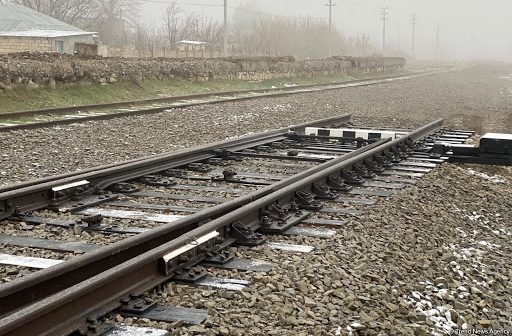
Ankara broke ground for the construction of a new 224-kilometer (140-mile) rail link from Kars to the border of the Azerbaijani exclave of Nakhchivan following the August 2025 U.S.-brokered agreement between Armenia and Azerbaijan that calls for the reopening of traffic between Azerbaijan and its Nakhchivan exclave. This project is scheduled to be completed before 2030 (Caspian Post, August 25, 2025).
The route could displace Baku–Tehran–Kars as the primary east–west rail line through the South Caucasus. It would present a geopolitical challenge to Russia, Armenia, Georgia, and Iran by dramatically expanding Türkiye’s links with Azerbaijan, Yerevan, Tbilisi, and Tehran (see EDM, September 19, 2024). Türkiye’s progress in the construction of the rail line—along with the work that Baku has done in Azerbaijan proper and in the Nakhchivan exclave—mean that Russian and Iranian concerns are growing into alarm. Moscow and Tehran worry about losing influence, and Yerevan and Tbilisi are concerned about how to make the best of the new situation. There is also speculation that one or more of the negatively affected states could take radical moves to slow the completion of the Turkish project (Jnews, March 25, 2025; Zdmira, March 26, 2025; Eurasia Today, August 16, 2025; Amnews, August 22, 2025; Rail Target, August 27, 2025; Jam-News; Nikkei Asia, January 16).
Türkiye has long indicated a desire to expand links with Nakhchivan to strengthen its alliance with Azerbaijan and bolster ties with the Turkic states of Central Asia and the People’s Republic of China (PRC). In 2021, Turkish President Recep Tayyip Erdoğan and Azerbaijani President Ilham Aliyev committed themselves to building a rail line between their capitals, something that Ankara mentioned as early as 2012 and Turkish commentators dubbed “the rail silk road.”
In the same year, Ankara built a pipeline to Nakhchivan (see EDM, August 10, 2021). In early 2025, the Turkish authorities announced that they had finalized plans for the construction of a new railway between Kars and Nakhchivan, one that would involve the building of five new stations (Caspian Post, February 7, 2025). Azerbaijan and the PRC welcomed these moves, which unsettled the other South Caucasus countries, Russia, and Iran (Caspian Post, August 25, 2025). (On such difficulties in that region and the ways that much-ballyhooed plans there have been repeatedly postponed or even killed off as a result, see EDM, May 16, 2022.)
Türkiye, however, has shown itself committed to meeting its goals, views the construction of a rail line as essential to promoting its Turkic world agenda and opposing Iran, and enjoys the support of the PRC, which would benefit from the reduced time for cargo passing through the region by a week or more (Nikkei Asia, January 16). Perhaps especially important in Ankara’s calculations, however, is just how much its ally Baku has already invested in the corridor project.
Azerbaijan has been working for more than five years to rebuild and modernize its rail line from Baku to the border of Armenia’s Syunik oblast, which forms the eastern portion of the Azerbaijani–Turkish route through Nakhchivan (see EDM, April 5, 13, 21, 2021). In August 2025, Aliyev announced that Baku had completed a feasibility study for the modernization of the Azerbaijani railway in Nakhchivan, passing from the eastern border of the exclave to the western border with Türkiye. The rail line was kept alive, albeit less active, during the Armenian–Azerbaijani war by supporting trade with Iran to the south (Caspian Post, August 25, 2025; see EDM, October 15, 2025). Any Turkish delay in completing this corridor, now that the Washington accord has made it possible, would at a minimum annoy Baku and could raise questions about Türkiye’s commitments to Azerbaijan.
All of the countries with interests in this region have begun to respond as construction of the new Turkish line has taken off. Georgia—through which the Baku–Tbilisi–Kars route passes, currently the main east–west rail transit corridor—is clearly concerned about the potential loss of cargo and transit fees if the PRC and others shift to the Nakhchivan route. So far, at least, most officials in Tbilisi appear to believe that there will be so much trade that they will not suffer much (Eurasia Today, August 16, 2025; Zdmira, March 26, 2025).
Armenia and Iran are more troubled by what they see as an expansion in Turkish and thus Western influence in the region. Armenia fears that the rail line represents yet another step toward Baku’s seizure of the Zangezur corridor, although some in Yerevan are exploring how Armenia could benefit from the corridor by breaking with Moscow (Amnews, August 22, 2025; Jam-News, January 16). Iran is concerned that the new route opens the way for the West to put more pressure on Tehran and would kill off plans for an alternative east–west route through Iran (Window on Eurasia, September 24, 2024, August 12, 2025).
Moscow is the most alarmed by the Turkish construction effort. It sees the corridor as representing the expansion of U.S. influence in the South Caucasus, reducing Moscow’s ability to keep rail lines open to Iran. The Kremlin believes the route eliminates one of the last levers the Russian government has in Armenia, given the problems with Russian Rail, which has controlled Armenia’s railways since 2008 but is currently in a fragile position (Window on Eurasia, July 19, 2025; Rail Target, August 27, 2025; RITM Eurasia, January 8, 18; Jam-News, January 16). Moscow would come closer to losing its influence across the South Caucasus if it loses control over trade routes, something it would be hard-pressed to recover except by the use of force or threat of using force (RITM Eurasia, January 18). Some Azerbaijanis now fear this possibility, especially given the recent deterioration in relations between Moscow and Baku (Minval Politika, January 19).
Russian commentators are playing up how this latest expansion of Turkish influence in the South Caucasus will work against Armenia, Iran, and the “Russian World” that Russian President Vladimir Putin has made the centerpiece of his national strategy (RITM Eurasia, January 18). Russian observers have found this easy to do, given the expansive, even hyperbolic, interpretations Turkish writers have put on the meaning of the new railway and the possibilities it opens for Turkish and Azerbaijani dominance over Zangezur, which they call Armenia’s Syunik oblast (Daily Sabah, August 15, 22, 2025). Such Russian concerns will undoubtedly grow as Türkiye continues to make progress in building its rail line to Nakhchivan, particularly if it receives assistance from the PRC. This concern could lead to Russian actions to prevent the August 2025 Armenian–Azerbaijani accord from being realized and to block any further expansion of U.S. and Turkish influence in the South Caucasus.
Paul Goble is a longtime specialist on ethnic and religious questions in Eurasia. Most recently, he was director of research and publications at the Azerbaijan Diplomatic Academy.