Celebrating a diplomatic coup is a happy occasion, particularly for the countries of Central Asia, which seem to produce one international success after another. After years of lobbying and diplomatic wrangling, Washington finally hosted the five Central Asian presidents from Kazakhstan, Kyrgyzstan, Tajikistan, Turkmenistan, and Uzbekistan at the White House for a November C5+1 Summit. Their US success came on the heels of similar recent forays with China, the European Union, India, Japan, Germany, and Russia.
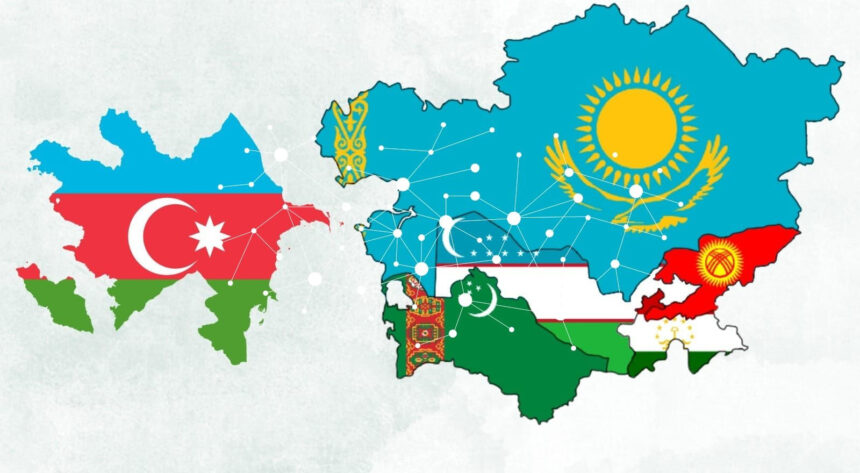
So where did the Central Asians go from here? They held a Tashkent summit that welcomed Azerbaijan as a “C6” member and laid down markers to solidify trans-regional connectivity and cooperation. In both cases, the C5 countries appear to be moving from ceremony to substance, highlighting deals and diplomacy that reorient and elevate regional autonomy.
Coming at a time of deepening US-China strategic competition and escalating sanctions on Russia, the Washington C5+1 meeting holds a significant promise for Central Asia’s efforts to diversify away from dependence on its overlarge neighbors. It also represents a step forward in the region’s efforts to woo the United States to develop its individual economies. For Washington, the Summit was a needed win for US economic diplomacy and a way to garner new partners to help reduce US rare-earth dependency on China.
The Tashkent summit codified the reality that already binds Central Asia’s westward connectivity to Europe via the port of Baku. The growing Trans-Caspian partnership already fuels the Middle Corridor’s success in independently moving freight across Azerbaijan and Georgia to and from European markets. A C6 configuration also builds impetus for greater connectivity through Washington’s Trump Route for International Peace and Prosperity (TRIPP) corridor that seeks to stabilize peace between Armenia and Azerbaijan and promises to more than double the region’s freight throughput to Europe.
The Return of US Economic Statecraft
Beneath the pomp of the Washington summit’s red carpets and burnished signing tables was a hard geopolitical reality: the United States is now directly challenging China’s control of strategic mineral processing and supply chains, as well as Russia’s post-Soviet influence in what is regarded in both Moscow and Beijing as a shared economic backyard. Despite an eleventh-hour rush to pull together the high-level event in the midst of a federal government shutdown, Washington could not have been clearer in its bold messaging.
Deputy Secretary of State Christopher Landau opened the parallel C5+1 Business Forum at the Kennedy Center with a blunt statement: “The purpose of foreign policy is to increase the prosperity of the American people by finding opportunities for mutually beneficial economic and commercial interchange.” This line encapsulates an invigorated Trump administration philosophy of commercial diplomacy. It is an “America First” variant that pairs foreign policy with market access and private-sector partnership.
The summit’s mega-billion-dollar deal portfolio, announced jointly by the US Departments of State and Commerce, encompassed critical minerals, aviation, energy, and digital infrastructure. While high-profile pledges ostensibly from Uzbekistan drew early headlines, as President Trump claimed Uzbekistan would invest $100 billion in the American economy over the next decade, those figures come close to the country’s entire GDP and have yet to be confirmed in Tashkent. Nevertheless, President Mirziyoyev’s comprehensive bilateral investment plan, spanning multiple economic sectors, was mirrored by far-reaching agreements with each of the other C5 leaders.
Though summit totals among the C5 leaders may wind up contrasting inflated deal promises with actual contracts, the United States embraced the mood of exuberance and the summit’s dual character. On one level, political theater played out before the cameras, demonstrating the resolve of the C5 leaders to diversify their partnerships and explore new avenues of global connectivity. On a different level, the Washington summit revealed an increasingly practical and institutionalized effort to establish an American presence in the region through economic investment and long-term mutual partnerships.
Tashkent Is the Next Step to Central Asian Connectivity
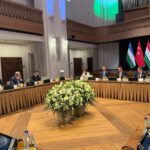
Following closely on the US high-level meetings, the Tashkent summit further elevated Central Asia’s geostrategic recalibration by including Baku in the C6 structure. While Russia will remain a significant trade partner, and though China dominates much of the region’s infrastructure financing, this new grouping de jure articulates a conscious move toward regional agency and autonomy.
By institutionalizing a “Community of Central Asia,” as suggested by Uzbekistan’s President Mirziyoyev, the six states are asserting their independence as sovereign actors charting their own course across economic, environmental, and security strata. Recognizing Azerbaijan for its critical role as a partner, as well as a transit and energy hub linking Central Asia to the South Caucasus and onward to Europe, thus reinforcing the region’s strategic relevance beyond the shadow of its larger neighbors.
In Washington, the United States affirmed a strong commitment to Central Asia with a focus on critical minerals, infrastructure, and more structured multilateral engagement. Yet the C5’s quick move afterward to regionalize with Azerbaijan suggests that the Central Asian states are not content to align with Western strategic supply chains. It appears that they also seek to formalize a regional architecture that goes beyond dependence on external patronage. Instead, Central Asian leaders have implicitly signaled in Tashkent that their ambitions are longer-term and aim to institutionalize connectivity and cooperation to advance regional sovereignty.
Though Russia and China are deeply invested in Central Asia’s infrastructure and resource sectors, the Tashkent meeting creates a regional cooperation platform that further complicates external dominance. Increased partnerships, resource pooling, and fostering cross-border connectivity can help de-risk dependence on Beijing and Moscow. Building economic bridges westward as a more integrated regional bloc gives all six countries greater leverage when negotiating with all potential partners. The C6 constellation speaks to a shared vision that is anchored in cooperation that can particularly build on increased engagement with the United States.
The US’ Long-Term Investment in Central Asia
The centerpiece of the Washington summit was the announcement of a $1.1 billion Tungsten Mega-Project in Kazakhstan, with 70 percent US equity and a commitment of $900 million in Export-Import Bank financing. Once operational, the site will become the world’s largest tungsten producer, crucial for aerospace and defense manufacturing. This project is emblematic of Washington’s new approach, favoring public-private partnerships over direct state lending to build strategic mineral supply-chain sovereignty. Kazakhstan’s President Tokayev described the summit agreements as “a testament to the growing trust and mutual opportunity that define our partnership.”
Parallel initiatives across the region were concluded in Washington for uranium, copper, lithium, and rare-earth development, designed to reduce dependence on Beijing-dominated supply chains and secure access to essential inputs for semiconductors, weapons systems, and artificial intelligence applications. Coincidentally, the US government added ten new materials, including copper, to its list of critical minerals, explicitly noting Central Asia’s supply potential.
However, these moves are not purely extractive. In Central Asia, building a more advanced mining sector creates supply-chain resilience, significantly increases the value of extracted ores, and diminishes reliance on China as a single-source market. US technology transfers to local processing facilities and integration into global capital markets should foster long-term economic stability for the region.
In an echo to US Deputy Secretary Landau’s argument that economic engagement is again central to US foreign policy, the Washington Summit secured a significant number of other agreements. Boeing re-emerged as a major US commercial aircraft champion in the region, securing orders for up to 37 aircraft valued at over $9 billion. In finance, with $40 billion in fundraising for Kazakhstan, Citi arranged Eurobond issuances for Kyrgyzstan and Tajikistan, and helped Uzbekistan raise its credit rating. Freedom Holding, a Kazakhstan-based Nasdaq-listed group, is expanding its ties with US fintech and data center firms. Chevron underscored its $48 billion Tengiz expansion as proof of a trusted 30-year partnership. Together, these ventures indicate the potential for massive industrial cooperation beyond resource extraction, becoming the next pillar of a more highly developed relationship.
Ironically, the Washington summit’s great success leaned heavily on bilateral engagements and thereby mirrored Chinese and Russian approaches of individualized influence beneath a regional umbrella. While the US C5+1 was originally conceived to foster regional coordination, Washington’s 2025 format witnessed each of the five presidents secure separate memoranda with the Trump administration. In great measure, the modified approach addressed Central Asian concerns over US inattention by engaging with all five of the region’s leaders in a collective grouping, but also working to meet and strike deals with each individually.
The Washington summit’s transactional focus was outwardly defined by highly individualized partnerships around critical minerals, technology, aviation, and investment facilitation. But this engagement model carried undeniable advantages for Central Asia: access to American capital markets, partnerships in advanced technologies, and the prospect of integrating regional supply chains with Western markets. Blending bilateral and regional approaches underscored the US’ long-term interests in Central Asia, which run in parallel with its efforts to foster peace and connectivity across the Caspian in the South Caucasus.
The Tashkent summit proved to be more than just an engagement to recognize existing trans-Caspian connectivity formally. The C6 initiative builds obliquely on the US C5+1 initiative, as the Central Asian countries and Azerbaijan are working to catalyze connectivity that would also help foster the TRIPP corridor and link the two American initiatives. Extra rail and energy conduits traversing the South Caucasus and linking to Turkey and the Mediterranean hold significant economic and diplomatic promise.
Accelerating the coupling of the two American engagements would likely have a multiplier effect of encouraging greater investment across the entire corridor. International economists already project that the current $500 billion regional GDP will grow 5 percent in 2025 and beyond, driven by higher investment, trade, and energy exports. If sustained, this could turn the entire trans-Caspian area into one of the most dynamic emerging regions of the next decade.
The US and Central Asia’s Shared Stakes
The 2025 C5+1 summit juxtaposed an American model of market-based partnerships alongside China’s state-driven development and Russia’s legacy energy-security nexus. The Washington summit signaled US recognition of the region’s modernization trajectory, including efforts to repeal Jackson-Vanik legislation that impedes the region’s securing permanent normal trade relations with the United States.
For Washington’s America First approach, immediate success will be gauged by whether commercial promises translate into visible progress: critical minerals secured, refineries opened, planes delivered, and so forth. For Central Asia, there are offers for diversification, technology, and an expanded sense of sovereignty. But the successive summits also confirm that Central Asia has decided that its future will no longer be limited to relics of bygone policies. In welcoming Azerbaijan to an emerging C6, the region underscored that it is also building its own architecture of long-term cooperation and connectivity.
In that sense, the C5+1 and Tashkent Summits should be seen less as diplomatic endpoints than as blueprints for a new, integrated geopolitical marketplace, one in which the expanded region’s long-sought sovereignty finally becomes a reality. Ultimately, the two summits signify a region testing new forms of agency at a moment when the broader regional order is fracturing as Russia and China can no longer demand the same fealty.
The United States can become an enduring pillar of the trans-Caspian diversification strategy by deepening and expanding its investment and commercial presence across the region. However, Washington will need to adapt to a new trans-Caspian landscape in which sovereignty is expressed through the region’s emerging institutions and its determination to balance neighbors, networks, and new opportunities on its own terms. In the end, trans-Caspian and Washington leaders will judge each other by outcomes, not promises. Partnerships on both sides must demonstrate reliability and deliver visible, compounding gains.
Dr. Eric Rudenshiold served for four years as the US National Security Council’s Central Asia Director under presidents Donald Trump and Joe Biden. He is currently a senior fellow at the Washington office of the Caspian Policy Center.