While Russia has its attention squarely focused on Ukraine, tectonic geopolitical changes are unfolding on its southern border. Azerbaijan, after years of speculation and declarations, has joined the Central Asian (Kazakhstan, Kyrgyzstan, Tajikistan, Turkmenistan, and Uzbekistan) bloc (commonly referred to as the C5). This creates a more practically engaged multilateral actor straddling even more of Russia’s southern border, which can now reach the West via the Caucasus and interdict Russian transit to Iran. More importantly for the Kremlin, this bloc is reaching out to the West, and for the first time in many years, the West is reciprocating as part of its wider focus on energy, critical minerals, and containing Russia and China.
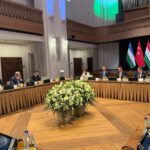
On November 6, U.S. President Donald Trump met with the leaders of the (then) C5, where he discussed energy and trade relations. He also traveled to Asia in October to meet with elected leaders and senior government officials. During these meetings, the American president discussed the importance of access to rare earth elements, oil and gas, and trade. At the conclusion of his trip, Trump secured a rare earth elements deal with Japan, gained access to rare earth deposits in Malaysia, signed a comprehensive deal for critical mineral resources in Thailand, and established a rare earths agreement with Australia. Trump even discussed a potential Alaskan crude oil deal with China.
Trump’s Work Toward Accessing Rare Earth Elements
It is no secret that the second Trump administration is strategically focused on rare earth minerals and access to oil and gas as the U.S. is actively working to challenge China’s monopoly on REEs. For example, Trump signed a deal with Ukraine in May for rare earth minerals and another in June with Rwanda the Democratic Republic of Congo as part of a U.S.-brokered ceasefire between the two African nations. The U.S. president has also considered similar agreements with leaders from Central Asia, a region rich in REEs.
Despite America making headway, the Chinese still maintain their dominant position on REEs. To date, China’s mines account for two-thirds of the world’s rare earth ores. The U.S. is in distant second place, accounting for only 12% of global rare earth production. China also processes close to 90% of rare earths. This is a stark difference.
As the Trump administration continues to work toward securing a better position for the U.S. in these strategically vital sectors, Congress may help by opening U.S. companies’ access to mineral resources and transportation arteries of the Caucasus, a strategic region between the Caspian and the Black Sea which connects Europe and Asia. Congress could consider doing this by repealing Section 907 of the Freedom for Russia and Emerging Eurasian Democracies and Open Markets Support Act.
The FREEDOM Support Act, Section 907, And U.S.-Azerbaijani Relations
Signed into law in 1992, the FREEDOM Support Act provided guidance on bilateral economic assistance, business development, nonproliferation programs, agricultural trade, and other strategies for the 15 states emerging from the then-collapsed Soviet Union. The legislation was also intended to promote capitalism and democracy in the 15 newly established republics in Eastern Europe and Eurasia.
When the Act was passed, Section 907 was included to prohibit any direct U.S. aid to Azerbaijan. This was in response to Azerbaijan’s blockade of Armenia during the first Nagorno-Karabakh War, which began in 1988 and ended in a ceasefire in 1994. Congress subsequently passed an amendment stating that a U.S. president could waive Section 907. It has been waived repeatedly since, first by President George W. Bush as Azerbaijan helped and cooperated with the U.S. during the Global War on Terror, and then by President Joe Biden, who extended the waiver, arguing that the action was necessary to support American efforts against international terror.
These waivers encountered stiff resistance from the Armenian-American community. Its members argued that Azerbaijan was a perpetrator of the Nagorno-Karabakh conflict, and waiving Section 907 rewarded Azerbaijan for its aggression against Armenia. Armenian-Americans also claimed that Section 907 has not been enforced, due to the repeated waivers.
Similarly, following an Azerbaijani offensive in Nagorno-Karabakh in the autumn of 2023, the Senate introduced and passed the Armenian Protection Act of 2023. This bipartisan legislation sought to block U.S. military assistance to Azerbaijan. Had it been passed by the House and become law, it would have barred the U.S. president from signing a waiver of Section 907 in 2024 and 2025.
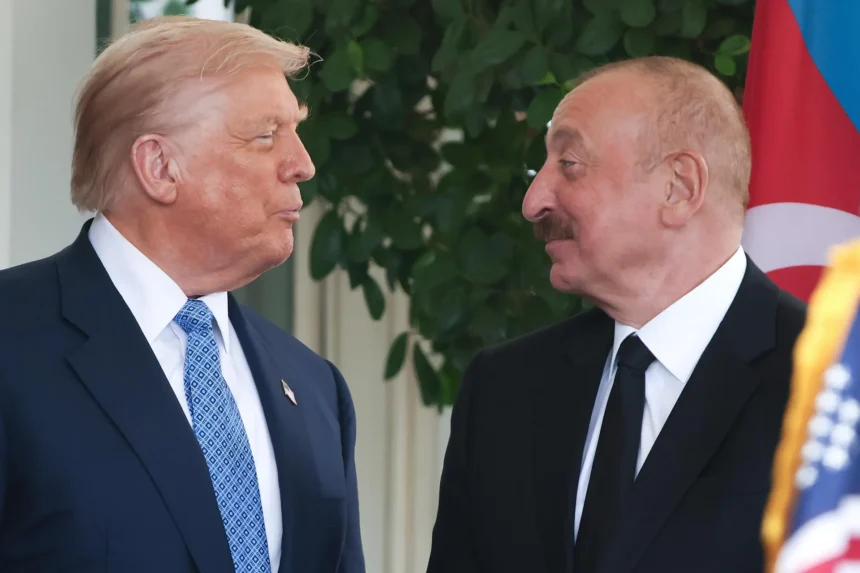
Since then, Trump has been the latest U.S. president to waive the provisions of Section 907, having announced his intention to do so during his meeting with Azerbaijani President Ilham Aliyev and Armenian Prime Minister Nikol Pashinyan at the White House in August. During the event, Azerbaijan and Armenia also signed a declaration intended to end their decades-old Nagorno-Karabakh conflict.
Additionally, the August meeting brought the announcement of the Trump Route for International Peace and Prosperity. Under this agreement, the U.S. will be permitted to construct rail, oil, gas, and fiber optic lines along a route between Azerbaijan and Armenia. The deal also grants the U.S. exclusive rights in the corridor for a period of 99 years. Since then, this deal has boosted the creditworthiness of Armenian and Azerbaijani state debt, showing that these benefits are not hypothetical.
Azerbaijan is well-known for its crude oil exports and substantial oil reserves. According to the International Energy Agency, the country has “one of the highest energy self-sufficient ratios in the world as a major crude oil and natural gas producer.” Azerbaijan also possesses significant deposits of rare earth minerals. These resources make it a highly sought-after energy partner. Most recently, the European Union doubled its trade efforts with this country in the Caucasus, as the Europeans seek to distance themselves from Russia’s energy market due to Moscow’s ongoing war against Ukraine.
As the U.S. pursues a relationship with Azerbaijan similar to its counterparts in the EU, it would give Americans access to yet another region with significant energy capabilities. Pursuing a greater energy and REE relationship with Azerbaijan would give the United States a much-needed edge in the region. As countries in Eurasia look to distance themselves from Russia due to the ongoing invasion of Ukraine, and as they hope to avoid being pulled into China’s sphere of influence, and trying to avoid the extremist Iranian regime, establishing a stronger relationship with the United States would offer countries in Eurasia an opportunity to boost their economies, increase trade, and have greater access to democratic institutions. Additionally, enhancing an American presence in Azerbaijan and Armenia, and throughout the Caucasus means making the region more independent and secure.
At a time of great power competition between the United States and China, countries are forming new trade and energy relationships with the Americans to offset China’s monopoly on REEs. Adding Azerbaijan to this list of American partners may present the U.S. with additional natural resources while undermining China’s global monopoly on REEs. At the same time, Azerbaijan can look to establish itself as America’s important trade and energy partner in the region. To bolster this emerging relationship, and as the Trump administration continues to establish energy relationships with countries around the world, Congress could consider repealing Section 907 of the FREEDOM Act.
By Mark Temnycky