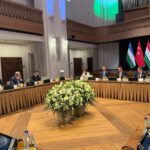
The rapid transformation of the geopolitical landscape across Southwest Asia, driven by complex political processes in the South Caucasus, the Near East, and the Middle East, is becoming part of daily reality. A vivid confirmation of this came with the speech of U.S. Ambassador to Ankara and Special Presidential Envoy for Syria Thomas Barrack at the “Manama Dialogue 2025” conference in Bahrain.
This address marked a significant adjustment in U.S. foreign policy toward this sensitive region. Noting that “Azerbaijan, Armenia, and Turkey are on a path toward rapprochement,” Barrack effectively outlined Washington’s intention to shape a new regional architecture in which the United States positions itself as the coordinator of emerging intergovernmental relations. He directly linked these developments to President Donald Trump’s initiatives, emphasizing that the current administration “has changed the configuration of the chessboard,” and announced plans to build an alliance stretching from the Caspian Sea to the Mediterranean—replacing the old strategy of pressure and regime change with a policy of mutual agreements and pragmatic mediation.
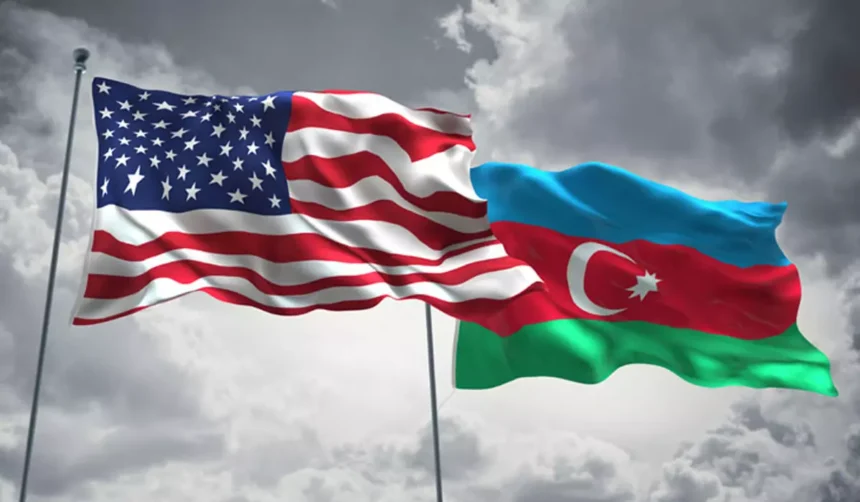
In essence, these remarks embody a new logic in American diplomacy. Whereas in the 2000s the U.S. relied on coercive instruments of influence—military interventions in Afghanistan and Iraq, attempts at forced democratization in Syria and Libya—today the focus is on confidence-building measures and economic integration. The Washington-mediated agreements between Azerbaijan and Armenia in August of this year became the first example in many years where U.S. diplomacy achieved results without exerting direct pressure on the conflicting sides. These accords laid the groundwork for a framework document on ending hostilities and reopening communications, including the establishment of rail links connecting the Nakhchivan exclave with mainland Azerbaijan through Armenian territory.
Another illustration of this new course was the peace agreement on Gaza signed in Egypt’s Sharm el-Sheikh with U.S. participation. It helped halt the escalation and opened the way for Gulf Arab countries to take part in the reconstruction of the Gaza Strip. According to Barrack, steps such as mediation, infrastructural integration, and economic incentives should form the basis of the emerging system of relations stretching from the Caspian to the Mediterranean.
Washington now seems intent on unifying several strands of its regional policy into a single strategic framework.
At the same time, Barrack did not limit himself to announcing a new agenda but offered a critical assessment of the old one. His statement—“we have witnessed the fall of twenty-eight regimes and twenty-eight disasters”—sounded like an admission that the policy of violent democratization led to state collapse and waves of radicalization. He recalled that attempts to bring “freedom” through regime change produced chaos: in Iraq—an eruption of regional conflicts; in Libya—the disintegration of the state; in Syria—a protracted civil war and humanitarian catastrophe; and in Yemen—the destabilization of the entire Arabian Peninsula.
These examples became arguments in favor of revising the principles of U.S. presence. The new strategy envisions abandoning the imposition of institutions and ideological models in favor of a “partnership for development”—supporting energy, transport, and technology projects that foster long-term mutual dependence. In this sense, U.S. support for connectivity initiatives linking the South Caucasus and the Middle East, including the Middle Corridor and the Zangezur Route, fits into the broader vision of creating a corridor “from the Caspian to the Mediterranean.” Turkey, as a key transit hub, becomes the natural conduit of this strategy, while Azerbaijan emerges as its energy and infrastructure center.
In a broader context, Barrack’s statement should be seen as part of an ideological shift in U.S. foreign policy: a move away from the “intervention for democracy” doctrine toward a strategy of “influence through development.” His call to abandon “template democracy” and focus on economics and infrastructure effectively formulates a new model of American leadership—one grounded not in military presence but in diplomatic mediation and investment engagement.
Thus, Barrack’s rhetoric is no mere diplomatic gesture. It reflects deep changes—a U.S. effort to preserve its leading role on new foundations, primarily through economic alliances, energy security, and transport corridors. In this model, the South Caucasus becomes a key link, where Azerbaijan, Turkey, and Armenia—supported by the U.S. and the EU—may serve as an example of a new type of post-conflict stabilization built on mutually beneficial projects and infrastructural connectivity. If this approach proves effective, it could mark the beginning of a shift in U.S. foreign policy toward a more pragmatic model—one in which influence is measured not by military presence but by participation in the economic and infrastructural development of entire regions.
Ilgar Velizade