One of the manifestations of wisdom is the ability to stop in time when current events cause concern and anxiety. In Russian-Azerbaijani relations, a critical period has come when everything is sliding downhill. This is abnormal because the emerging crisis is becoming irreversible. It undermines both relations and the trust on which ties are based. Moscow is to blame for the deepening antagonism. It has been needlessly increasing its pressure, threatening Baku with its geopolitical and economic superiority.
If one analyzes the genesis of the cooling trend, it is not difficult to see that even in the past—when relations inspired optimism—an anti-Azerbaijani trend steadily persisted within the Russian establishment. It was carefully nurtured by politicians and public figures far from the bottom tier.
In the State Duma, in Kremlin circles, and among the expert community—not to mention the mass media—there were always hostile individuals and groups in offensive positions. Without reason or cause they criticized Azerbaijan’s political leadership, waging a never-ending campaign of black PR against the southern neighbor and its people, who had given no grounds for hostility or animosity.
It is enough to recall the history and evolution of the Karabakh conflict, which turned out to be the creation of the malignant genius of Russian military-political circles. Since tsarist times, in the ancient region of the Azerbaijani Turks, Russian circles had sown the seeds of discord, giving rise to bloody clashes between the indigenous population and resettled Armenians. This artificially nurtured conflict grew into a serious internecine war. Russia invariably took a pro-Armenian position, preferring treacherous incitement.
The change of political system with the coming of Soviet power did not alter Moscow’s approach to the Karabakh problem. The Bolsheviks’ policy in the Caucasus always followed the paradigm of “divide and rule.” Russian military-political elites, both in the Soviet period and in the post-Soviet era, engaged in sustaining inter-ethnic escalation, leading to violent clashes between Azerbaijanis and Armenians.
After Azerbaijan restored its independence in 1991, it was none other than Russia that, by supporting Armenian separatism, imposed on the region a series of military clashes. Moscow openly armed Armenia and its Karabakh satellites, providing them not only with military but also political support. As a co-chair of the OSCE Minsk Group, Russia consistently torpedoed Baku’s peace efforts, denying Armenia’s leadership the opportunity to negotiate and reach compromises for the peaceful settlement of an artificially created conflict.
Without the Russian factor, Azerbaijan would long ago have dealt with Armenian aggression. At a minimum, in April 2016, in response to a series of border provocations by Yerevan, Azerbaijani units counterattacked and broke through the occupier’s defensive lines. But due to Russia’s intervention, Baku was forced to halt the offensive. The northern neighbor’s involvement saved the aggressor from defeat.
Only in 2020 did the Armenian military’s provocations escalate into a full-scale war, which Azerbaijan won. And once again, Moscow exploited the situation to impose on Azerbaijan the stationing of a peacekeeping contingent on its ancestral lands—with far-reaching consequences. This was entirely unnecessary, because Azerbaijan was acting within the framework of international law and posed no threat to the civilian population of Karabakh.
The arrival of the peacekeepers only complicated the situation, giving carte blanche to a ten-thousand-strong contingent of Armenian militants and terrorists who barricaded themselves in Khankendi and surrounding areas, threatening Azerbaijan’s security.
They possessed heavy equipment, artillery, communications systems, and other military-technical assets necessary to perpetuate security threats. The separatists who refused to surrender enjoyed unlimited support from the Russian peacekeepers, receiving all kinds of strategic resources and weapons from them. Moreover, the peacekeepers’ command entered into criminal commercial collusion with local Armenian bosses, setting up the smuggling of Azerbaijan’s valuable natural resources from the conflict zone. All this took place under the escort of Russian troops, who did everything but fulfill a peacekeeping mission.
This lawlessness continued until September 2023, when the situation reached a breaking point and Azerbaijani civil society intervened. A large group of environmental and civil activists staged a picket along the communications illegally used by separatists and their patrons—the Russian peacekeepers—for unlawful activity. The climax came on September 23. After landmine explosions planted by Armenian separatists in already-liberated areas of Karabakh killed Azerbaijani civilians and police officers, President Ilham Aliyev authorized anti-terrorist operations.
Precision strikes by the Azerbaijani military against the separatists’ illegal military infrastructure led to the complete liberation of Karabakh. The operation took 23 hours. The cleanup put a long-awaited end to the unlawful presence of Armenian troops and saboteurs on Azerbaijani lands. It marked the long-desired conclusion of the Second Karabakh War, confirming Azerbaijan’s absolute victory. The continued presence of Russian peacekeepers lost any sense. They were forced to return home.
But even after this logical outcome, the Russian establishment continued to harass Azerbaijan, displaying incomprehensible arrogance and nitpicking, though Baku and Azerbaijani society gave no grounds for escalation or political speculation. Moscow kept weaving plots to maintain tension around a conflict that had already ended.
Even before the anti-terrorist operations, it was dispatching its dubious emissaries to sow unrest. One of them was the notorious Ruben Vardanyan, a banking fraudster and businessman, whom Moscow had lined up for the post of so-called “state minister” of the nonexistent Nagorno-Karabakh Republic.
Russia’s actions showed that it did not want peace in the South Caucasus and continued to build destructive plans for new confrontation. One cannot forget how Vladimir Putin, who called Azerbaijan’s leader Ilham Aliyev his friend, tirelessly tried to impose on him the idea of postponing the status of already-liberated Karabakh until some indefinite future.
Recently, Putin’s aide Vladimir Medinsky suddenly declared in Russia’s official media that the Karabakh problem remained unresolved, resurrecting a question that had already gone into history. All this demonstrates that in high Russian circles the post-imperial syndrome still rages, preventing them from coming to terms with reality. Azerbaijan is not someone’s fiefdom but a self-sufficient sovereign state with a strong leader, a powerful army, and a clear policy aimed at developing international security and integration.
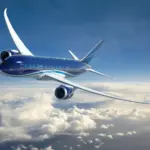
Baku never sought confrontation; it sought open and honest dialogue, something Russian politicians cannot allow themselves. After the crash of the AZAL aircraft, Moscow took a destructive position, refusing to admit its guilt for the tragedy that claimed lives. Instead of apologizing, the Russian side spins conspiracies and resorts to slander and obscenities against a country that merely demands sensible explanations from the culprit of the escalation.
In an interview with Al Arabiya television, Ilham Aliyev precisely highlighted the historical, legal, and political aspects of Azerbaijani-Russian relations. The logic of the Azerbaijani leader was marked by sober assessments reflecting both historical and new realities.
They leave no room for distortion or manipulation. Nevertheless, some Russian media outlets attempted to challenge obvious truths, creating grounds for doubt and worsening relations. Claims such as “there was no Azerbaijan within the Russian Empire on the territory of today’s republic, it was called the Baku Governorate” are an attempt to falsify history.
The author of this strange opus, publicist and historian Alexander Shirokorad, peddles pseudo-scientific and anti-historical nonsense. After all, before World War I, were there states called the Czech Republic, Hungary, or Romania on the map? Of course not. Nation-states emerged after the collapse of empires. The Russian Empire also fragmented, and new states arose on its peripheries. Azerbaijan was among them, alongside Finland, Poland, the Baltic states, and the South Caucasus. With the collapse of old systems, they brought many new things into the world.
The birth of new state formations is inseparable from wars, inter-ethnic conflicts, and other geopolitical upheavals. As the saying goes, war is the midwife of history. Azerbaijan did not fall from the sky. It was part of Qajar Persia (Iran). As a result of the Russo-Iranian War of 1826–1828, Russia annexed the territories north of the Araz River. There is no room for dispute here, only the realities of the early 19th century, in which the political map of the Caucasus changed. To say that Azerbaijan did not exist is to display banal ignorance.
The Azerbaijan Democratic Republic, which opened the world’s eyes after World War I, was the result of the heroic political struggle of national classics who did not want to be vassals under Russia’s contradictory circumstances. The collapse of the empire was painful, and peoples saw salvation in declaring national independence.
The Azerbaijani people, led by their ideological vanguard, were no exception. The First Republic was a truly democratic entity that successfully addressed problems of institutional formation. To call it a nationalist formation is to propagate meaningless falsehoods.
Already then, great powers contended for Azerbaijan, drawn by the natural wealth of the young republic. There were contacts with then-Turkey; Russian political circles led by the Bolsheviks could not bear being cut off from Azerbaijan’s oil fields. Many dreamed of being present within the borders of the new country: the British, the Germans, and others. There was nothing new in this.
President Ilham Aliyev gave an accurate definition of how the young republic was strangled. The “Bolshevik takeover” was brazen and played a grim role in the history of the Azerbaijani people. Shirokorad is inaccurate in claiming that “the population quickly sided with the Red Army” after the arrival of armored trains from the north. On the Caspian coast, where the Russian flotilla arrived, it was only a handful of local Bolsheviks—who had sold out—that met the invaders. There were no masses of people singing “The Internationale.”
Today’s Republic of Azerbaijan is a worthy successor to the Azerbaijan Democratic Republic, which left an indelible mark on the nation’s history. The legacy of the classics lives on in the good deeds of present generations of Azerbaijanis, who pursue policies with historical depth, in a spirit of non-confrontation and openness to the community. Fortunately, they have much to be proud of.
Magsud Salimov
Translated from minval.az