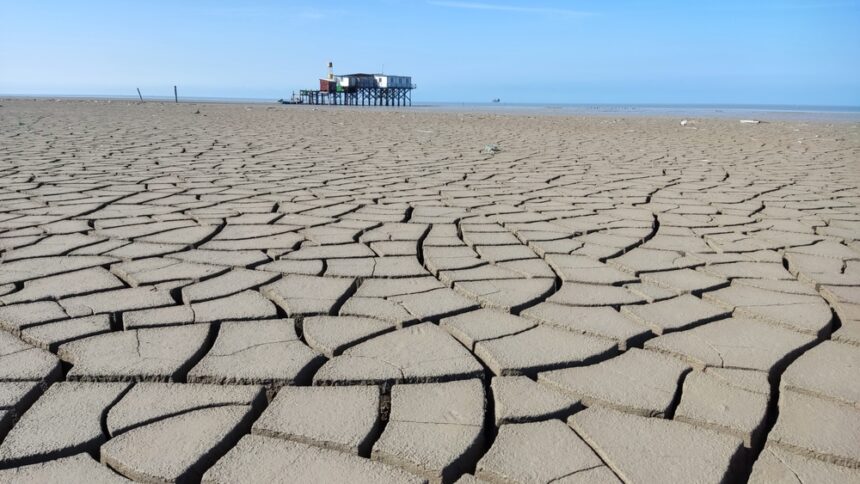
The dredging of the Volga–Caspian Sea Shipping Canal (VCSSC), combined with shallowing and the expansion of land areas, is redirecting the Volga’s flow toward the Middle Caspian, bypassing the eastern parts of the Northern Caspian. In addition, the development of global logistics routes is contributing to the intensive spread of invasive species into the Caspian Sea basin.
This was reported to TASS by the Volga–Caspian branch of the Caspian Fisheries Research Institute.
Researchers conventionally divide the Caspian Sea into three parts, each with its own hydrological and hydrochemical regime. The Northern Caspian has the greatest biological productivity, primarily due to the significant inflow from the Volga River.
“The retreat of the sea, the advance of land, as well as the dredging of the Volga–Caspian Sea Shipping Canal, are increasingly channeling the Volga’s flow directly into the Middle Caspian, depriving the eastern areas of the Northern Caspian of its beneficial influence. The factor of the sea’s shallowing, combined with climate variability, warming of the Caspian waters, and their salinization, alongside the expansion of global logistics routes and certain types of business, is leading to the intensive spread of invasive species into the Caspian Sea basin,” the branch noted.