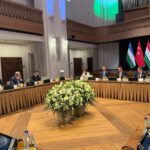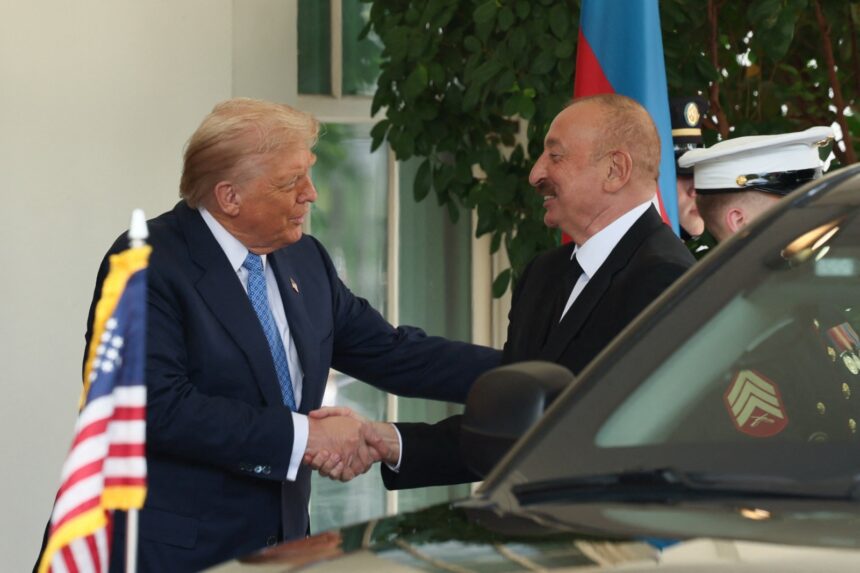
The latest Washington meeting of Azerbaijani President Ilham Aliyev and Armenian Prime Minister Nikol Pashinyan at the invitation of the US president is a milestone in the changing geopolitics of the region. The signing in the United States capital of a joint declaration, intended to expand dialogue and underpin the foundation for durable peace, represents both a realignment of the mediation framework and a broader realignment of the balance of influence.
The area has been characterized for decades by competing spheres of interest, from Russia’s longstanding geopolitically dominant presence to Turkey’s growing footprint, from the European Union’s cautious diplomacy to the United States’ selective engagement. However, the Washington talks underscore a shifting reality: the South Caucasus is no longer merely a post-Soviet periphery but a pivotal crossroads in broader global strategic calculations, where Russia’s traditional dominance is increasingly contested by regional actors and external powers.
Washington’s Engagement and the Expanding Mediation Landscape
The US-hosted meeting is not just symbolic. It reflects a growing American interest in not letting the region’s conflicts spin out into broader instability with worldwide repercussions. The joint declaration, cautious in language, highlighted principles of sovereignty, territorial integrity, and mutual recognition, cornerstones of any lasting agreement.
For Washington, this involvement reflects a broader strategic pattern across contested regions, where conflict prevention aligns with securing trade routes, safeguarding energy supplies, and reinforcing allied stability. The South Caucasus occupies a critical position in this calculus, serving not only as a gateway to Central Asia but also as a strategic corridor for energy exports that bypass traditional chokepoints. Russia’s attempts to reassert influence in the region contrast sharply with these developments, as Moscow seeks to maintain leverage over transit routes and political alignments, even as regional actors assert greater autonomy.
The US move also adds a new layer to the diplomatic architecture of the Armenia–Azerbaijan peace process. While the EU has long convened rounds of talks, the Washington meeting signals recognition that a coordinated plurality of mediators can accelerate progress. This multi-track diplomacy, strategically orchestrated, offers the parties increased leverage and flexibility, reducing dependency on any single actor and countering Moscow’s traditional dominance in regional mediation. By asserting its presence, the U.S. challenges Russia’s historical role as the chief arbiter and underscores the shifting balance of influence in the South Caucasus.
Regional Power Balances in Transition
The geopolitics of the South Caucasus is being quietly but decisively remapped. For decades, Russia held near-absolute dominance as the region’s security actor. Yet, shifting regional realities, recalibrated priorities, and evolving economic imperatives have opened space for other actors to assert influence and play a more consequential role in mediation. Moscow’s traditional monopoly on regional security is increasingly contested, signaling a structural realignment in which Baku, Ankara, Washington, and Brussels can advance their interests and shape outcomes previously dominated by Russian leverage. Turkey‘s regional role has increased substantially, particularly in its strategic partnership with Azerbaijan. This partnership extends beyond defense collaboration to economic integration, energy projects, and transportation initiatives such as the Middle Corridor, a trade path from east to west that reduces dependency on northern routes.
The choice of Washington as the venue for the latest announcement is a clear demonstration of the West’s assertive and expanding role in the South Caucasus. This move underscores the diminishing influence of Moscow and Tehran, whose traditional dominance is increasingly challenged by a more proactive Western engagement. The development signals a decisive shift in the regional balance of power, marking the rise of diversified international involvement at the expense of former unilateral actors. It also signals the Trump administration’s willingness to play a more active role in the region, in contrast to the comparatively restrained approach of the Biden administration.
For Azerbaijan, engagement via Washington supplements its existing partnerships by diversifying its foreign policy portfolio, entrenching its role as a vital energy exporter and strategic bridge between Asia and Europe. For Armenia, a seat at a US-hosted table provides both symbolic visibility and concrete opportunities to diversify its political and economic alliances beyond their traditional limits.
Peace Prospects and the Global Context
The Washington Declaration alone cannot erase decades of mistrust and intermittent warfare. However, the newly signed joint declaration is a genuine game-changer for the entire region. Stability in the South Caucasus would, in turn, unlock the development of regional commerce and energy projects, benefiting not only Armenia and Azerbaijan but also neighboring nations and the global market. The South Caucasus is situated strategically at the crossroads of energy routes connecting the Caspian to Europe, and it must play a role in energy supply diversification and reduction of vulnerabilities in the global energy security environment. Moreover, regional connectivity potential is more than pipes and rails. Sustained efforts to link the South Caucasus more directly with Central Asia and the Middle East would create new trade patterns, enhance regional resilience, and place it at the center of new Eurasian supply chains in development.
Peace would also open space for cross-border infrastructure and people-to-people cultural exchanges, especially between Armenia and Azerbaijan that could slowly heal old wounds. The international context serves to reinforce the urgency of these activities. The struggle for influence in strategic regions is intensifying, and the South Caucasus, although geographically small, has great strategic weight. The Washington conference is consequently a regional milestone and a reminder that in today’s globalized world, local peace processes are generally embedded in larger geopolitical flows.
A Moment of Opportunity
The Washington developments represent more than a symbolic gesture. They amount to a decisive turning point in the geopolitical development of the South Caucasus. The United States has shifted from selective engagement to active impact on the shape of peace and security in the region by hosting and mediating high-level negotiations. This recalibration directly contests Moscow’s fading monopoly on mediation and undermines Tehran’s already limited leverage, rendering Washington and its allies’ essential stakeholders in the region’s future. The ensuing tilt is not merely tactical; it is structural, with long-term implications for the alignment of regional power centers and the strategic corridors that tie Eurasia together. In an era when influence is increasingly contested, Washington’s strong re-entry into the region speaks volumes: the South Caucasus’ geopolitical map is being redrawn, and America wants to be the one doing the cartography.
Dr. Yunis Gurbanov