For decades, establishing lasting peace in the South Caucasus has been one of the most persistent challenges for regional states and international actors alike. Straddling vital geostrategic lines of Eurasia, this region has long been a geopolitical “shatter belt” — a zone where the interests of great and regional powers collide. External actors have repeatedly sought to exploit these divisions, employing “divide et impera” strategies that, rather than resolving disputes, have often exacerbated tensions. Not without reason, renowned scholar Thomas de Waal describes the South Caucasus as “the lands in between,” emphasizing its role as a crossroads of competing powers. According to Barry Buzan’s ‘overlay’ concept, the weakening and decline of great powers paves the way for the resurgence of past conflicts that had previously been de-escalated under the authority of the dominant power. Indeed, the collapse of the Soviet Union reopened the Pandora’s box of frozen conflicts, none more consequential than the Armenia–Azerbaijan conflict.
That conflict lasted nearly 30 years, during which Armenia occupied 20% of Azerbaijani territory, displacing close to a million refugees and internally displaced persons. The Second Karabakh War in 2020, followed by counter-terrorism measures in 2023, brought a decisive end to years-long separatism in Azerbaijan. Azerbaijan restored its territorial integrity and sovereignty, creating not just new geopolitical realities but also new opportunities for a long-awaited peace.
Since then, Baku has proposed five principles for peace and sought to advance the process through multiple mediation platforms – Brussels, Moscow, and Washington among them. Yet geopolitical maneuvering by mediators and Yerevan’s intermittent obstructionism have slowed progress. By March 2025, however, Azerbaijani and Armenian foreign ministers had reached agreement on the articles of a peace treaty. Subsequent leader-level meetings in Tirana and Abu Dhabi signaled momentum. But the real turning point came in early August with the Washington summit initiated by U.S. President Donald Trump.
A Landmark Meeting in Washington
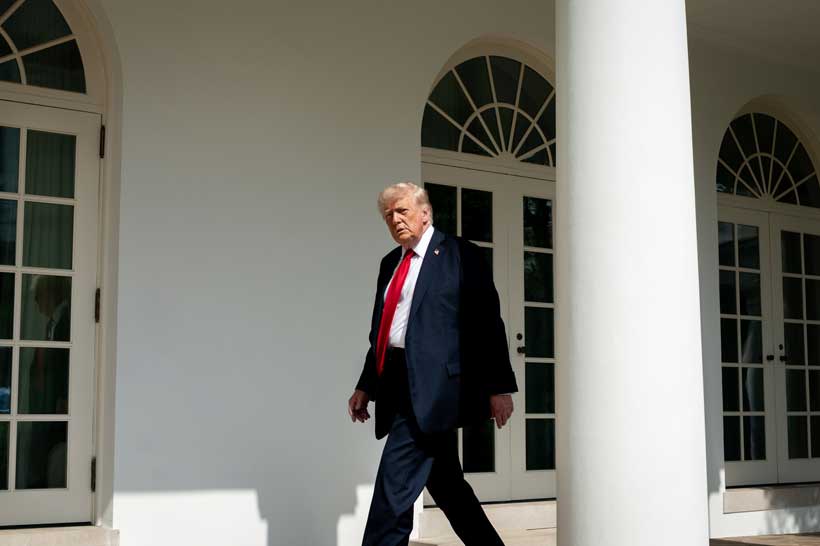
On August 7–8, at the invitation of U.S. President Donald Trump, Azerbaijani President Ilham Aliyev and Armenian Prime Minister Nikol Pashinyan met in Washington, D.C. The result was a seven-article joint declaration that could mark the beginning of durable peace in the South Caucasus. The meeting’s importance lies on multiple levels. First, it revitalized U.S.–Azerbaijan relations, which have seen fluctuations since Azerbaijan’s independence. While the 1992 adoption of Section 907 by the U.S. Congress which banned any kind of U.S. assistance to Azerbaijan dealt a severe blow to bilateral ties, Heydar Aliyev’s 1997 visit to Washington brought relations to a high point, with major energy agreements signed with Chevron, Exxon, and Mobil. Under the Biden administration, however, a perceived pro-Armenian tilt in U.S. policy – including the reactivation of Section 907 by Senate and critical statements from Secretary of State Antony Blinken – strained relations with Baku.
Against this backdrop, the Washington summit served as a diplomatic reset. A key deliverable was the signing of a Memorandum of Understanding between the Government of the Republic of Azerbaijan and the Government of the United States of America on the Establishment of a Strategic Working Group for the Advancement of the Charter on Strategic Partnership between the Republic of Azerbaijan and the United States of America. According to the memorandum cooperation between the countries will span energy, trade, connectivity, digital transformation, artificial intelligence, and the defense industry. Most symbolically, Trump’s decision to waiver Section 907 removed a long-standing irritant, signaling Washington’s recognition of Azerbaijan’s strategic importance.
Another cornerstone of the summit was the joint declaration between Armenia and Azerbaijan, with the U.S. as a witness which can be regarded as an important step toward peace between the parties and in the entire South Caucasus region. The declaration confirmed that both sides had initialed the peace treaty text, encompassing all 17 agreed articles, and committed to taking further steps toward final signature. The declaration also enshrined a joint appeal from both Foreign Ministers to the Chairperson-in-Office of the OSCE for the disbanding of the now-defunct OSCE Minsk Group. This special institution of the OSCE was established in 1992 to address the Armenia-Azerbaijan conflict, though it ultimately failed in its mission. The only serious hurdle to signing a final peace treaty is the requirement for Armenia to amend its constitution to remove its territorial claims against Azerbaijani lands – a move reminiscent of the Republic of Ireland’s constitutional amendment in 1998 following the Good Friday Agreement. Prime Minister Pashinyan recently stated that a referendum on constitutional amendments might be held in Armenia in 2027. If this happens, it would require Pashinyan to secure re-election in 2026 and then win approval of the amendments in a national referendum. This won’t be politically easy, as resentment toward both the Washington process and the proposed Zangezur Corridor is growing in Armenia, with hardline factions framing them as concessions.
Importance of the Trump Route for International Peace and Prosperity (TRIPP)
Perhaps the most forward-looking element of the Washington declaration was agreement on the Zangezur Corridor, rebranded as the Trump Route for International Peace and Prosperity (TRIPP). This transport link between mainland Azerbaijan and its Nakhichevan exclave has been on the table since the signing of trilateral declaration between Azerbaijan, Armenia and Russia in 2020. Far from being a mere bilateral project, TRIPP is set to become an essential part of the Middle Corridor – a transcontinental trade route connecting Europe and China via Türkiye, the South Caucasus, and Central Asia. According to the deal, TRIPP will be managed by a U.S. company for 99 years, with foreign investment pouring into infrastructure development along its path. For Azerbaijan, TRIPP represents both a strategic route to Nakchivan, Türkiye and Europe and a path toward integration of the region through trade and connectivity. For the U.S., it offers a new geopolitical lever in the South Caucasus at a time when Russia’s regional clout is waning due to its war in Ukraine and its declining ability to project influence in its “near abroad.” For Armenia, the corridor could boost economic diversification and reduce dependence on Russia and Iran. But TRIPP’s significance extends beyond economics. For Iran and Russia, it is a geopolitical affront. Both see it as a direct competitor to their preferred North–South Corridor, which links Russia to the Persian Gulf via Iran. Tehran fears the corridor will sideline it as a transit hub, diminish its regional role, and – perhaps most concerning to its leadership – facilitate deeper U.S. and even Israeli influence in its northern neighborhood. Moscow, meanwhile, interprets the U.S.-brokered project more cautiously. Even though official statement of the Ministry of Foreign Affairs of the Russian Federation held a softer tone with respect to the Washington meeting, Russian commentators and strategists have warned that if the Kremlin tolerates Washington’s growing footprint in the South Caucasus, it will lose credibility not only in the region but across the former Soviet space. Russian Duma member Kostantin Zatulin, for example, said that the agreement aimed to “squeeze Russia out of the Caucasus.” Some political strategists went even further, calling it a “geopolitical blow” and humiliation for Moscow.
Geopolitical Recalibration of the South Caucasus
The outcomes of the Washington meeting might reflect a significant recalibration of strategic alignments in the South Caucasus. Azerbaijan, long adept at pursuing a multivector foreign policy, has in recent months demonstrated growing frustration with Russia’s posture. The deterioration of relations can be traced to December 2024, when a Russian anti-air missile system downed an Azerbaijani civilian aircraft over Grozny. Rather than providing redress, Moscow not only refrained from taking formal responsibility but intensified political pressure through pro-Russian media outlets. These measures were compounded by an escalation in harassment against members of the Azerbaijani diaspora in Russia, culminating in July with the detention of dozens of Azerbaijanis by Russian security forces, torture of several detainees, and the deaths of two individuals in custody. Such actions underscored Moscow’s dissatisfaction with Baku’s independent course, which has consistently resisted incorporation into the Russian sphere of influence.
For decades, Azerbaijan’s foreign policy has been characterized by a diversified engagement strategy, maintaining strong relations with Europe, China, Central Asia, the Middle East, and the broader Global South. In recent years, however, Moscow has grown increasingly uneasy with the deepening of Azerbaijani Turkish strategic cooperation, particularly in the aftermath of the Second Karabakh War. Ankara’s expanding influence in the South Caucasus and Central Asia presents a dual challenge for Russia: Türkiye is not only a NATO member, but also, alongside Azerbaijan, a principal driver of the Organization of Turkic States—an organization viewed with suspicion by both Russia and Iran. Nevertheless, Baku remains committed to engaging constructively with all regional and global stakeholders. As President Ilham Aliyev has emphasized, the proposed opening of the Zangezur Corridor is not directed against the interests of any state but rather aims to enhance regional connectivity and cooperation.
Armenia, for its part, has been distancing itself from Moscow for several years. Disillusionment with Russian security guarantees – especially during and after the 2020 war – has driven Yerevan to diversify its security and economic partnerships, strengthening ties with the European Union and the United States. The Washington meeting thus served less as a sudden pivot than as the formal consolidation of long-standing trends.
For the United States, this evolving geopolitical environment offers a rare window of opportunity. With Russia preoccupied in Ukraine and Iran facing mounting domestic and external pressures, Washington has an opening to entrench itself more deeply in a region it has historically approached in episodic fashion. By anchoring its strategic ambitions to concrete economic initiatives such as the Trans-Caspian International Transport Route and the TRIPP project, the U.S. signals an intent to move beyond ad hoc diplomacy toward sustained, structured engagement in the South Caucasus.
Risks and Challenges Ahead
While the Washington summit represents a significant diplomatic breakthrough, its outcomes remain far from assured. Several risks could undermine the process:
Domestic Political Backlash in Armenia – Efforts to amend the constitution to remove territorial claims are likely to prove politically contentious. Such reforms may provoke resistance from opposition forces, who could seek to delay, dilute, or reverse the process, thereby stalling broader normalization efforts.
Iran’s Countermoves – Tehran’s strategic concerns over shifting regional alignments may drive it closer to Moscow in coordinated efforts to undermine the Washington process. Such measures could include diplomatic pressure, economic disruption, covert operations, or the mobilization of proxy networks in the region. Although Azerbaijan has consistently maintained that the opening of the Zangezur Corridor is not directed against any country and could even yield benefits for Iran, certain factions within Tehran’s military-political establishment continue to view the initiative with skepticism.
Russia’s Hybrid Tactics – Despite its military entanglement in Ukraine, Moscow retains substantial leverage in the South Caucasus. Armenia’s growing estrangement from Russia has not completely eroded Moscow’s entrenched presence, which includes a military base, border guards, and control over key energy and infrastructure projects. Georgia, for its part, remains reluctant to confront Russia, given Moscow’s occupation of Abkhazia and South Ossetia. While Russia’s sway in Azerbaijan has largely diminished, it retains the capability to disrupt emerging regional alignments. Hybrid tactics—such as cyberattacks, disinformation campaigns, targeted economic measures, and pressure on Azerbaijani and Armenian diasporas—could be deployed to erode trust between Baku, Yerevan, and Washington.
A Defining Moment
Despite the risks, the Washington summit represents a pivotal event in post-Soviet Caucasus diplomacy. For Azerbaijan, it provides a pathway to consolidate peace, deepen strategic ties with the United States, and enhance its role in global connectivity. For Armenia, it offers opportunities for economic revitalization and the diversification of foreign policy. For the United States, the summit constitutes a chance to redefine its engagement in a region it has historically approached in a sporadic and episodic manner.
The ultimate success of this initiative will depend on whether all parties can translate declarations into durable action: Armenia amending its constitution; Azerbaijan and Armenia finalizing and signing the peace treaty; the TRIPP project being implemented without obstruction; and the United States committing to sustained, balanced engagement.
As the South Caucasus enters this new phase, one reality is clear: the Washington process has the potential to supplant cycles of conflict with an enduring architecture of cooperation. Realizing this potential will require not only the political will of leaders in Baku and Yerevan but also Washington’s capacity to navigate the inevitable geopolitical headwinds from regional actors opposed to the process. If fully implemented, the agreements reached in Washington could mark a transformative moment, turning the South Caucasus from a historical fault line of global competition into a hub of sustainable peace and international connectivity.
Sultan Zahidov