More than a week after the signing of the historic Washington agreements, which in particular provide for the long-term lease of the Armenian section of the Zangezur Corridor to an American company, debates persist over whether Yerevan will actually be able to deliver on its commitments. This remains one of the most vulnerable points of the entire arrangement. Formally, Armenia confirmed its readiness to ensure “unimpeded communication” from Azerbaijan’s western regions to Nakhchivan. However, the wording of the agreement emphasizes that the transit is to take place under Armenian sovereignty and national legislation.
Legally, Armenia has indeed undertaken to open the route, but the political practice of implementation will depend on many factors.
Several circumstances argue in favor of honoring the agreements. First, for the current Armenian leadership, the unblocking of communications is the only chance to escape transport isolation and attract Western investment, particularly American and European, which should serve as economic compensation for painful concessions. Second, the very logic of U.S. involvement in managing the route provides Yerevan with an additional “insurance”: the government can present the deal not as a concession to Baku, but as a strategic project under an international umbrella, guaranteeing security and sovereignty. Third, refusal or delay in fulfilling the commitments would damage relations with Washington and Brussels, on which Pashinyan has staked his foreign policy after cooling ties with Moscow. This creates a tangible diplomatic cost for Armenia in case of non-compliance.
At the same time, there are serious risks. The domestic political environment in Armenia is extremely fragile: the opposition views any form of “corridor” as a threat to statehood and may exploit the TRIPP issue to mobilize protests. Under these conditions, it will be difficult for the government to move swiftly and fully toward implementation without strong external support. Another risk factor stems from pressure by Iran and Russia. Tehran perceives the route as a restriction on its own transit potential and, despite conciliatory rhetoric, may use economic or even coercive levers. Moscow, having lost its role as chief arbiter, will likely seek to stall the process through diplomatic channels and support for the Armenian opposition.
Thus, while the likelihood that Yerevan will formally comply with the agreements and ensure connectivity is high — the stakes with the U.S. and EU are simply too great — in practice, delays, bureaucratic hurdles, and periodic crises along the route cannot be ruled out, reflecting both internal resistance and external pressure.
Implementation of TRIPP “in full” will only be possible if the U.S. and EU assume the role of guarantors, providing Yerevan with economic dividends and political support sufficient to offset the costs on the domestic and external fronts. Otherwise, the corridor risks becoming a long-term “frozen construction site,” vulnerable to Armenia’s shifting internal agenda.
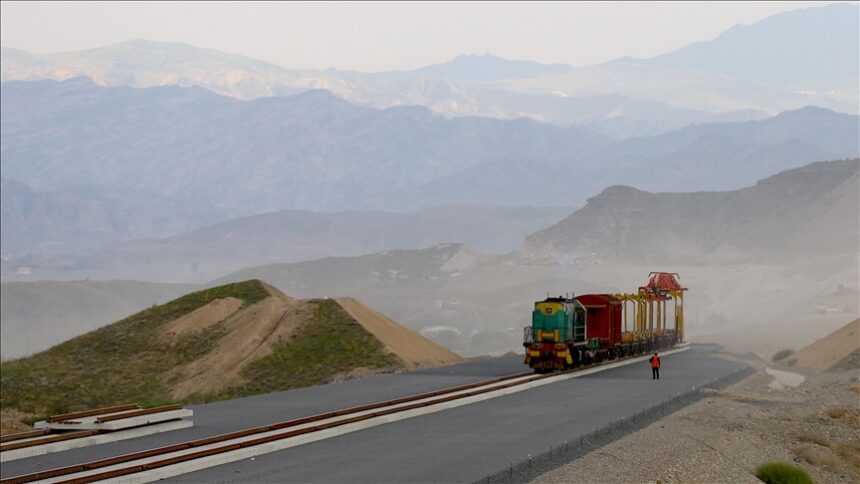
Meanwhile, the prospects for the TRIPP corridor — the so-called “Trump Corridor” — are emerging as one of the key storylines in the new geopolitical architecture of the South Caucasus. The signing of the Washington agreements between Azerbaijan and Armenia cemented the idea of creating a transport route to link mainland Azerbaijan with its Nakhchivan exclave and, further, with Turkey through southern Armenia. Unlike in previous years, when Yerevan preferred to speculate on the issues of “sovereignty” and “extraterritoriality,” the current arrangement removes the room for manipulation around “preserving Armenian sovereignty,” since the operation and development of the route have been transferred for a long term to an American operator. This factor — the U.S. institutional umbrella — sets a new framework for regional competition while simultaneously offering Armenia opportunities to integrate into broader Eurasian transport chains.
For Baku, TRIPP represents not only a strategic linkage with Turkey and a bypass of the Iranian route but also the consolidation of its role as the main transit hub on the Caspian–Europe axis. Costs are reduced, cargo turnover is accelerated, and most importantly, Azerbaijan demonstrates its ability to turn military victories and diplomatic gains into long-term economic projects. For Yerevan, the corridor is twofold: on the one hand, it offers the prospect of unblocking, infrastructure investment, and escape from transport isolation; on the other, it generates domestic political tension, as any “corridor” deal is perceived skeptically by a revanchist segment of society as a risk to sovereignty. U.S. participation allows the Armenian leadership to frame the project as a guarantee of independence from Russia and a step toward diversifying foreign policy anchors, but this argument remains vulnerable to opposition criticism.
Turkey sees TRIPP as the logical continuation of its Eurasian logistics ambitions and as strengthening the Ankara–Baku axis. This route ties into the already operational Baku–Tbilisi–Kars railway and creates a new transport reality, allowing Ankara to position itself as the hub of the “Middle Corridor.”
For Iran, however, the project has become a symbol of strategic threat: the American presence at a transport hub on its northern border and the diminished importance of Iranian transit are seen in Tehran as a challenge it is ready to counter diplomatically, economically, and, if necessary, by force. Russia also finds itself in a difficult position: having lost its status as the chief guarantor and being pushed out of institutional control over the process, Moscow is turning to alternative formats, including attempts to revive the “3+3” mechanism and to intensify media pressure on Armenian society.
One way or another, the coming years will be decisive for the fate of the project. The first stage will involve solidifying the legal framework, fine-tuning security mechanisms, and finding a compromise between the interests of Armenia, Azerbaijan, and the international operator. The next step will be integrating the route with existing infrastructure and embedding it into regional transport corridors. Success will only be possible if the agreements are fully implemented and the missing segments of the route are constructed at a tangible pace.
Ilgar Velizade