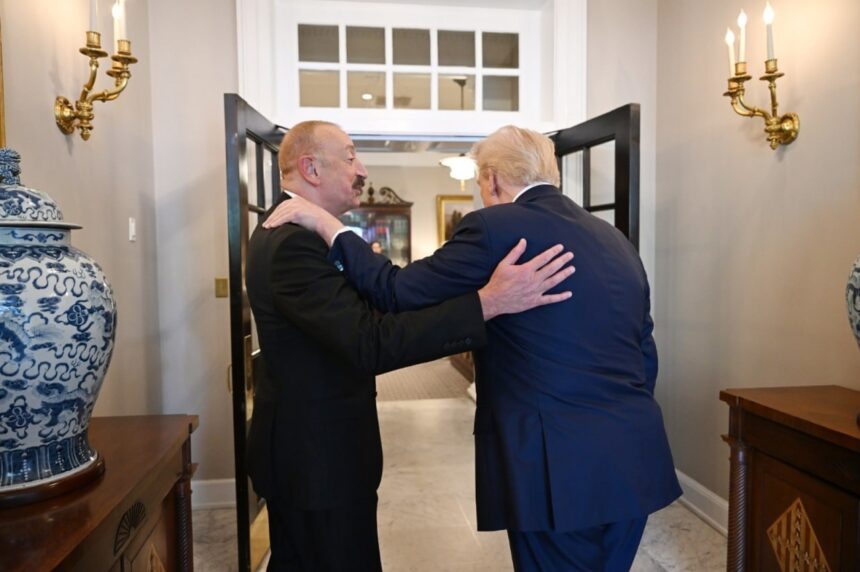
It not only cemented a new stage in Azerbaijani–American relations but also marked a turning point in the long-running peace process with Armenia. The visit’s agenda was divided into two key areas — strengthening bilateral ties with the US and advancing a peaceful settlement with Armenia.
Months before the US presidential election, Ilham Aliyev demonstrated political foresight. In July 2024, answering a question about the elections at the Global Media Forum in Shusha, he spoke diplomatically yet clearly in positive terms about Donald Trump, then a candidate. This gesture can be seen as a signal of readiness to deepen cooperation in the event of Trump’s victory.
After Trump’s election, Baku–Washington relations began to develop rapidly. There were personal phone calls, exchanges of letters, and discussions on cooperation prospects in key areas. The very fact that Aliyev’s visit took place so soon after Trump’s inauguration underscores Azerbaijan’s priority status in the new US administration’s foreign policy.
The main document of the visit was the Memorandum of Understanding on the creation of a Strategic Working Group to draft a Strategic Partnership Charter. This format envisions systematic cooperation in three areas:
Regional connectivity — energy, trade, transit, and transport corridors;
Economic investment — including projects in artificial intelligence and digital infrastructure;
Security — cooperation in defense, counter-terrorism, and intelligence sharing.
Of particular importance was Donald Trump’s decision to suspend the application of Section 907 of the “Freedom Support Act,” imposed by the US Congress in 1992 under pressure from the Armenian lobby. This step removes formal restrictions on direct assistance to Azerbaijan and paves the way for large-scale American investments. It is worth noting that the Biden administration and Secretary of State Blinken had, in recent years, attempted to use Section 907 as a tool of pressure on Baku.
The Peace Agenda: Consolidating Azerbaijan’s Conditions
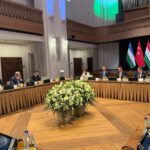
The Washington meeting between Aliyev and Pashinyan, mediated by Trump, resulted in the signing of a Joint Declaration, which confirmed the fulfillment of Azerbaijan’s key conditions for a peace treaty:
Abolition of the OSCE Minsk Group — the parties will jointly appeal to the OSCE Secretary General to dissolve the body, ending its more than 30-year history as a structure that failed to resolve the conflict and was often used to delay negotiations.
Constitutional changes in Armenia — the necessity of removing provisions containing territorial claims against Azerbaijan was acknowledged.
Zangezur Corridor — Armenia agreed to establish unobstructed land transit between mainland Azerbaijan and Nakhchivan, with the United States acting as guarantor.
Initialing of the peace treaty — the foreign ministers of the two countries agreed on the text; signing is expected after Armenia’s constitutional referendum in 2026.
These agreements mean that Armenia has effectively accepted Baku’s conditions, which it had rejected for years. This is a political victory secured not only by military strength but also by diplomatic calculation.
From War to Diplomacy
To grasp the scale of what has been achieved, one must recall recent history. In 2020, during the 44-day Patriotic War, Azerbaijan liberated occupied territories, forcing Armenia to sign an act of capitulation. In the following years, Baku consolidated its victory: conducting local operations, including “Revenge,” establishing a border checkpoint in Lachin, and, in September 2023, carrying out a 24-hour anti-terrorist operation that fully restored the country’s sovereignty.
In parallel, Aliyev initiated a peace agenda, offering Armenia five basic principles: mutual recognition of territorial integrity, absence of claims, renunciation of force, border delimitation, and the opening of communications. These principles became the basis for the peace treaty text prepared by Azerbaijan.
Attempts by the Biden administration, French President Macron, and the Armenian lobby to impose their own agenda failed. Pressure, defamation in international organizations, and threats of sanctions could not alter Baku’s position.
The Outcome: A President Who Won the War and Secured the Peace
Ilham Aliyev’s Washington visit marked the culmination of years of diplomatic struggle, ending with full recognition of Azerbaijan’s terms for a peace settlement. It opened a new chapter in strategic partnership with the US, reinforced by the lifting of restrictions and readiness for large-scale investments, and solidified Azerbaijan’s role as a key player in the new security architecture of the South Caucasus — achieved without Russian mediation and while minimizing the influence of unfriendly European politicians.
The documents signed in Washington stand both as a symbol of recognition of the new regional reality and as the downfall of those who sought to restrain Azerbaijan: from President Macron and the European Parliament to Amnesty International, Human Rights Watch, and the Armenian lobby in the US.
Ilham Aliyev succeeded in uniting military victory with its diplomatic consolidation. From liberating occupied territories to initialing a peace treaty, Azerbaijan managed to set its own agenda and secure international guarantees for its implementation. Washington 2025 became the culmination of this process, opening a new era for both the country and the entire South Caucasus.
Magsud Salimov
Translated from minval.az