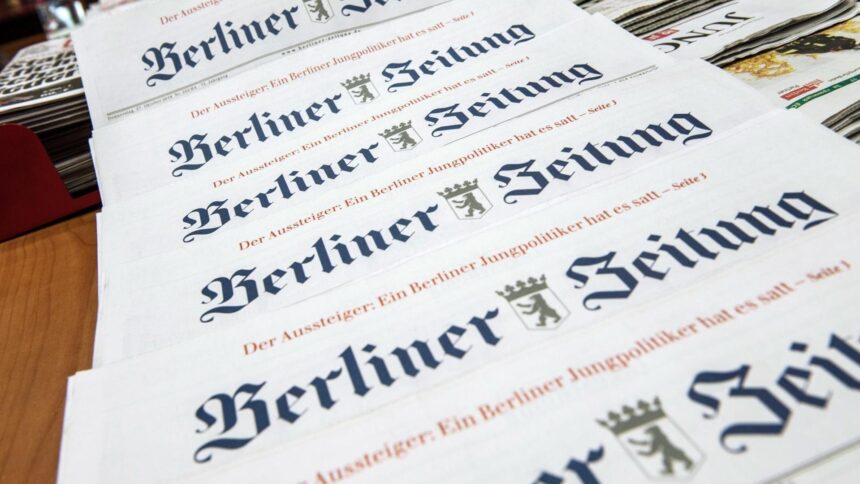
In the past ten years, Azerbaijan has steadily risen to prominence as a geostrategic actor, increasingly recognized not only for its role in global energy markets but also for its broader diplomatic influence, according to a recent analysis by the German publication Berliner Zeitung, as cited by Aze.Media.
The article emphasizes that Azerbaijan’s significance today extends well beyond oil and gas exports. “Baku has evolved into a major player on the geostrategic stage. It has become a key hub for international diplomacy — with both the European Union and NATO referring to Azerbaijan as a ‘reliable partner,’” the article notes, underlining the country’s growing diplomatic weight.
In assessing Azerbaijan’s broader trajectory, the publication draws parallels with other rising regional powers, suggesting that the country is following a path similar to that of Poland, Brazil, and Indonesia. “Like Poland in East Central Europe, Brazil in South America, or Indonesia in Southeast Asia, Azerbaijan is aiming to assert itself as a regional power. This is evident in its engagement with neighboring hegemonic states,” the analysis states.
A key focus of the article is Azerbaijan’s increasingly vital role in ensuring European energy security, particularly in light of the continent’s attempts to reduce reliance on Russian gas since the outbreak of war in Ukraine. The COP29 summit in Baku is cited as a pivotal moment in this transformation: “At the 29th UN Climate Change Conference (COP29), held in Baku last November, it became clear that Azerbaijan is now among the top-tier countries in global energy politics — a view shared by executives in leading Western energy firms.”
The report also highlights the strategic importance of Azerbaijan’s full restoration of territorial integrity, following the return of Garabagh. This development, it argues, has significantly strengthened national unity and international standing.
Looking ahead, Berliner Zeitung identifies the country’s next key challenge: maintaining long-term stability and increasing its visibility in the political and media landscapes of Western Europe and the United States. “By doing so,” the article concludes, “Azerbaijan has the potential to become a model for other developing countries that have long remained under the radar.”