Factors such as Islamophobia, Turkophobia—that is, the Orientalist view of the problem, the factor of the Armenian lobby, etc., have always been present in the Western view of the problem, as well as in the Russian one. One should expect another wave of anti-Azerbaijani and anti-Turkish campaigns to rise in April, in connection with the 1915 events. The countries that condoned the Armenian occupation, turned a blind eye to the war crimes and the destruction of the Azerbaijani heritage both in Armenia and in the occupied territories of Azerbaijan, will interpret historical events in line with today’s geopolitical needs.
The Azerbaijani leadership—first and foremost, President of Azerbaijan Ilham Aliyev—repeatedly stated that we were open to communication and cooperation on all critical issues.
At the same time, as a country affected by a devastating 30-year occupation, we must continue to pursue, as the President pointed out, offensive diplomacy on all fronts—within the framework of international law, in international organizations, in the media, and so on.
There is little to no mention in the international press of Azerbaijan’s efforts to implement the November 10 statement and goodwill gestures, such as postponing the liberation of Kelbajar for 10 days, opening the Azerbaijani segment of the Meghri-Kapan-Goris road, handing over about 1,400 bodies of Armenian soldiers, etc., whereas adequate steps from the Armenian side do not always follow.
Some Western diplomats and experts tell me in private conversations that Azerbaijan, as a winner, should be “generous”, forgetting that we have paid a high price for this victory and, moreover, that we are facing the challenge of restoring and rebuilding, while the Armenian side refuses to hand over the maps of minefields. The emotional burden on the internally displaced persons, who see their homes and the graves of their family members destroyed, not to mention those who lost their loved ones in the war, in Gandja, Tartar and Barda, is enormous—I will admit, in all fairness, that some Western media outlets do mention this.
In the late 1980s, Armenian nationalists carried out an ethnic cleansing of Azerbaijanis in Armenia and shifted all their subsequent actions to the territory of Azerbaijan. If we discuss post-war development and reconstruction, then we need to treat this issue as part of a set—that is, in conjunction with the issues of Armenians in Karabakh, Armenian heritage and so on, and there are similar issues of Azerbaijanis and their heritage in Armenia.
There are several issues on the post-war agenda, on which Azerbaijan is experiencing strong external pressure. Our response should be adequate to specific demands.
War crimes
Various international NGOs have released reports on the war crimes committed during the Second Karabakh War. Some are unbiased, some are one-sided—such as the recent Human Rights Watch publication. The crimes must be investigated, and at the same time, Azerbaijan has started and should continue legal actions in international courts against Armenia for its numerous war crimes. All cooperation should be stopped with those NGOs that adhere to a one-sided approach in this matter.
Detained Armenian servicemen
This is a much-debated issue, and Azerbaijan is under strong pressure from Western governments. I will be brief: Azerbaijan has returned all the prisoners of war. But there is also Paragraph 4 of the trilateral statement concerning the withdrawal of all Armenian armed forces from the territory of Azerbaijan, which has yet to be fulfilled by Armenia. This paragraph is not subject to double interpretation—the part of Karabakh where the Russian peacekeepers are deployed is the internationally recognized territory of Azerbaijan. Negotiations are underway, and if there are positive results, Azerbaijan can consider other steps of goodwill. Obviously, there is also the issue of those Armenian servicemen who murdered three Azerbaijani servicemen and one civilian in December 2020. I wonder how the two-faced American legislator Bob Menendez feels about crime without punishment.
Minefields
Although this issue is not addressed in the November 10 statement, landmine contamination is a fundamental security issue, affecting, among other things, the unblocking of regional communications included in the statement. In the absence of progress on the issue of minefield maps, Azerbaijan should stop making gestures of goodwill without adequate reciprocal steps by Armenia. Moreover, in case of refusal, legal actions should be continued to hold Armenia financially liable for the damage caused, which includes the implantation of landmines.
Cultural heritage
UNESCO and a number of international NGOs keep raising the issue of the Armenian heritage in the territory of Azerbaijan. There is a whole range of issues related to mosques and other Azerbaijani cultural monuments destroyed by Armenian vandals in the formerly occupied territories. But there is also the issue of the Azerbaijani heritage— cemeteries, mosques and so on—in the territory of Armenia. Therefore, I believe that a UNESCO mission should pay a visit to both Armenia and Azerbaijan—this is a matter of principle. We should not focus only on the problem of cultural destruction in the liberated territories of Azerbaijan. If UNESCO does not adopt this approach, then its visit only to Azerbaijan is inappropriate. Western democracies, such as the United States, have withdrawn from UNESCO altogether because of its one-sided approach to the issue of cultural heritage.
Azerbaijan should also raise before international institutions the issue of stolen heritage and artifacts removed from Azerbaijani territories. For example, there are exhibitions held openly in Armenia today, where artefacts taken out of Azerbaijan are demonstrated.
Search for the missing persons
Azerbaijan handed over 1,400 dead bodies to Armenia, whereas Armenia handed over less than a hundred to Azerbaijan. There are still about 4,000 Azerbaijanis who went missing in the First Karabakh War. We must demand the assistance of the Armenian side in the search for graves and mass graves. The trilateral statement of 10 November (Paragraph 8) does not define the historical framework, so it is about the remains of the fatalities in general.
Opening of communications
There is relative progress on this issue, thanks to the trilateral Armenian-Azerbaijani-Russian working group. It was through the efforts of the President of Azerbaijan that the restoration of the access to Nakhchivan, which had virtually been blockaded by Armenia for many years, was included in the statement. At the same time, the November 10 statement explicitly refers to all transport links in the region, and it is important for us to achieve unimpeded movement throughout the territory of Azerbaijan as consistent with our legislation.
In general, economic cooperation can become a platform for the future consolidation of peace in the region.
Reconciliation
This is a very complex and sensitive issue. Foreign colleagues often ask me about the prospects in this area.
There are forces that do not want this reconciliation and, unfortunately, there are groups interested in the reconciliation not happening—both in the West and in Russia. American, European and Russian politicians often continue to whip up hate propaganda for the sake of purely personal financial or electoral interests. This is one part of the problem.
Another part of it is that emotions are running high within both Armenian and Azerbaijani societies. We need actors in Azerbaijan and Armenia, and these should be synchronous actions. Unilateral reconciliation will not work.
What is obvious is that we must start somewhere, somehow, and the experience of foreign NGOs, foundations, etc. can be useful, provided that they act without any hidden agenda. For example, in the past, some people in Azerbaijan tried to promote reconciliation with territorial losses, i.e., with the occupation. It did not work then and it will not work now.
As for the rights of Armenians in Azerbaijan, then the adequate mirror issue is the return of Azerbaijanis to Armenia and ensuring their rights. Multi-ethnicity is one of the important indicators of democracy, which is regularly brought up in a somewhat peculiar way by Yerevan and their patrons in various foundations, who, strangely, never seem to remember this important point, or rather, omission, in the Armenian history and modern statehood.
The most important thing, as I often say this to my European colleagues, is a vision of the future of the South Caucasus based on the principle of territorial integrity. This is the very experience used in the post-war restoration in Europe.
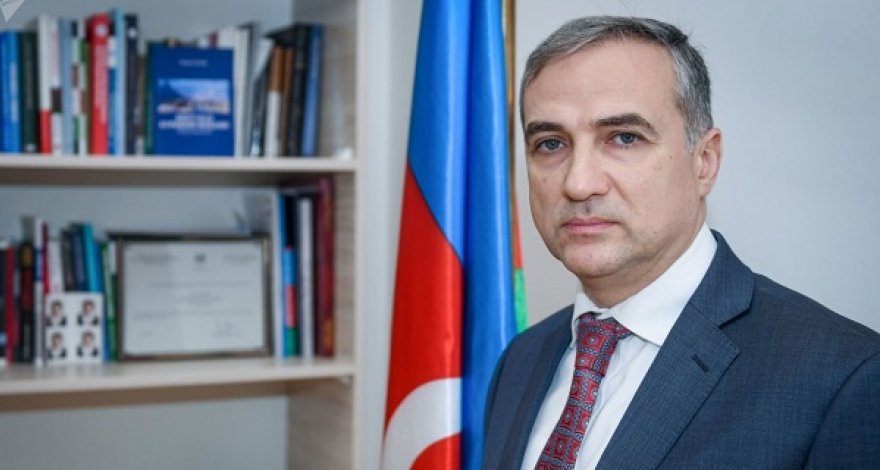
Dr. Farid Shafiyev
Chairman of the Center of Analysis of International Relations, Ambassador Extraordinary and Plenipotentiary
Aze.Media
Translated from DayAz