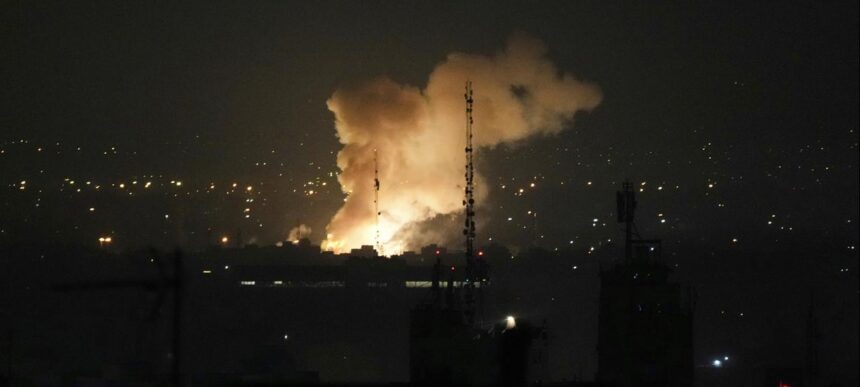
Amid Tel Aviv’s statements about continuing military operations against Iran, Baku remains restrained. Azerbaijan is officially not involved in the conflict and maintains neutrality, despite disinformation circulating in Russian and Armenian social media.
But how do Azerbaijani political analysts assess the new round of escalation?
The current Israeli strike on Iran will not go unanswered by the Islamic Republic and will result in at least short-term escalation, because Israel targeted military infrastructure and high-ranking Iranian officers. This was stated in an interview with Minval by Farhad Mammadov, political analyst and head of the South Caucasus Research Center, commenting on the military confrontation between Israel and Iran.
“So far, there’s only information about a strike on an Iranian oil refinery. Further developments and geographic scope of strikes could expand if Iran responds systematically to Israel,” the expert believes.
Speaking about the role of the U.S. in this situation, he pointed out that America is conducting its own negotiation track with Iran, “but the Iranian side in recent days has been declaring that it has reached a level of uranium enrichment that brings it close to nuclear weapons capability.”
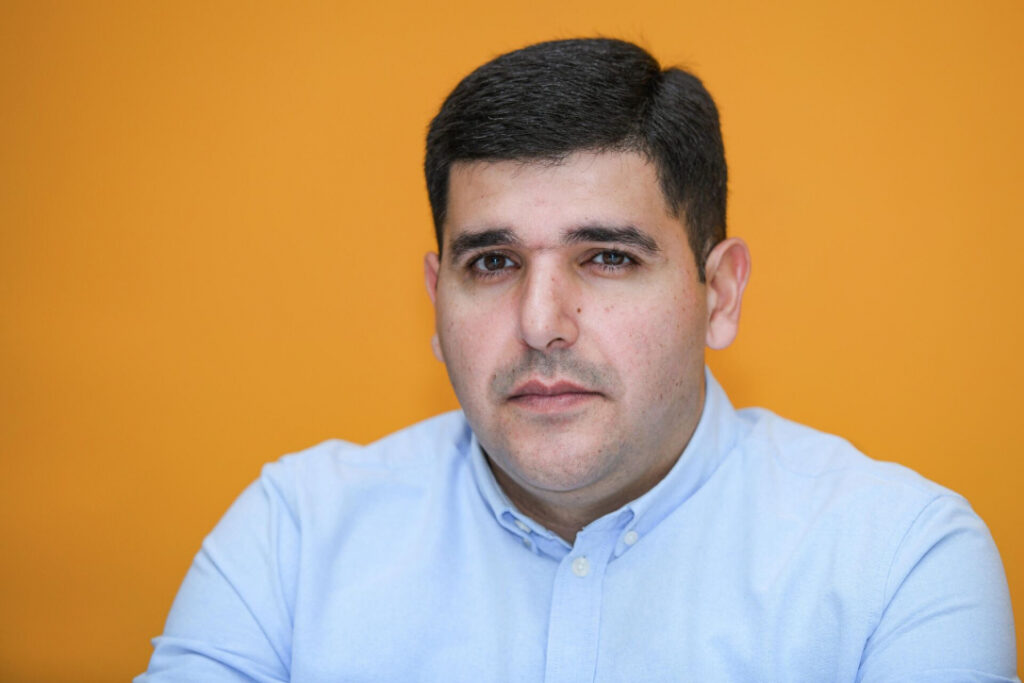
“The U.S. could not have been unaware of the Israeli strike. Without American assistance, an attack of this scale on Iranian territory would be impossible. Israel couldn’t have done it alone — at the very least, intelligence and operational coordination suggest indirect U.S. involvement in the strike,” Mammadov is convinced.
According to Mammadov, Iran’s response may be a direct one against Israel: “The second level could be U.S. military infrastructure that was involved in the strike and may be located on American bases in the Middle East.”
“If this escalation track moves from an Israel–Iran level to an Iran–U.S. level, the consequences for the entire region will be devastating. At the moment, we’re seeing that Israel strikes Iran, and Iran responds to Israel. The conflict remains localized and hasn’t drawn in other countries, although the airspace of third countries is being used,” he said.
Mammadov also addressed potential threats Azerbaijan could face as a result of the confrontation.
“Iran will assess which country’s airspace was used for the strikes against it, and Azerbaijan is not among them. Accordingly, Iran has no grounds for any actions against Azerbaijan. Moreover, there is no Israeli or American infrastructure on Azerbaijani territory,” he noted.
However, Mammadov did not rule out a possible shift in sentiment among Iran’s new military leadership toward Azerbaijan.
“After the deaths of high-ranking Iranian officers, new individuals have come to power who may act differently. This makes the situation unpredictable and thus entails risks. Yet, there are no objective reasons for risks related to Azerbaijan. Still, the new military leadership may have a different attitude toward neighboring countries. It’s important to understand that Iran’s military focus is more concentrated on its western borders and the south,” the expert explained.
Responding to a question about radiation danger due to damage to Iranian nuclear facilities, the political analyst said that due to the closed nature of the Islamic Republic, it is currently impossible to verify the accuracy of Iran’s claim that no leakage occurred.
“Only objective data can confirm this. Trusting Iran’s assertion that there was no leakage… That can only be verified once there is concrete evidence. So the risk exists. We’ll have to wait for precise data,” Mammadov concluded.
Another Azerbaijani political analyst, Elhan Shahinoglu, head of the Atlas Center for Political Research, also commented on the Iran–Israel conflict for Minval, saying the Israeli strikes on Iranian military centers were expected.
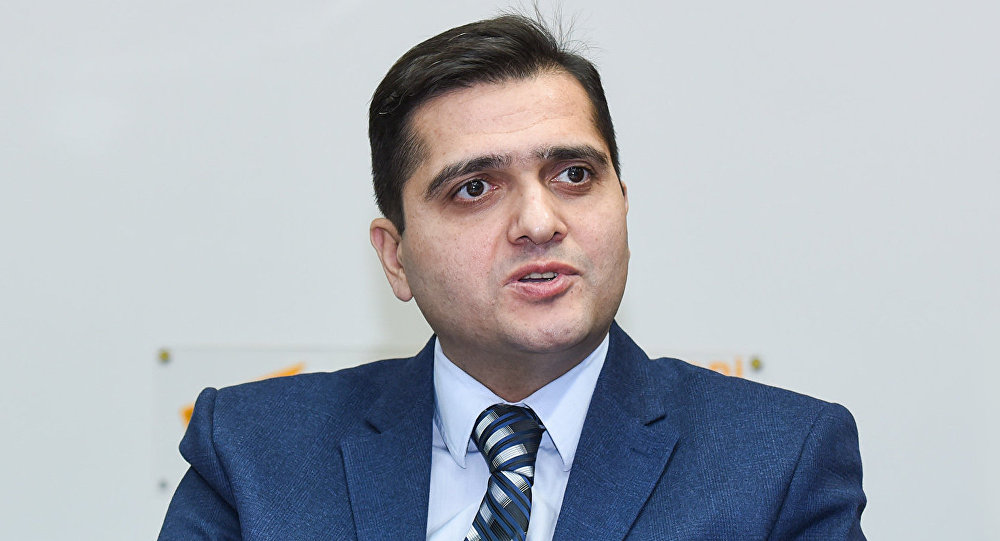
“The Israeli government waited for permission from Washington. U.S. President Donald Trump advised Israeli Prime Minister Benjamin Netanyahu to wait for the outcome of negotiations with Iran. However, official meetings between U.S. and Iranian representatives in various countries yielded no results. Moreover, Iran’s Supreme Leader Ali Khamenei, without naming Donald Trump, sent a message to the U.S. president: ‘Who are you to dictate to us?’ This indicated that Khamenei opposed a nuclear deal between Tehran and Washington. This situation played into Netanyahu’s hands,” the expert asserted.
According to Shahinoglu, another development also worked in Israel’s favor: “The International Atomic Energy Agency adopted a resolution against Iran. The resolution stressed that Iran violated its commitments under the Non-Proliferation Treaty. Iran failed to meet its obligations to the agency. IAEA Director General Rafael Grossi stated that Iran had not informed the agency about nuclear materials at certain prohibited sites or the work being conducted there. Grossi’s claim that ‘Iran enriched uranium to a level sufficient to produce several nuclear bombs’ was enough for Israel to push the button.”
“Israel received permission from U.S. President Donald Trump to attack Iran. Israel will not stop its airstrikes. Its primary goal is to deprive Iran of the ability to acquire nuclear weapons. Until that is achieved, Israel’s airstrikes will continue,” the political analyst is convinced.
Shahinoglu noted that Iran will also attempt to retaliate against Israel, but the impact will be limited. “This was shown in the recent conflict between the two countries. A large number of missiles launched by Iran toward Israel were intercepted in the air, and there were no Israeli military casualties. This time, too, Israel will intercept Iranian missiles and drones before they reach Israeli airspace,” he believes.
Speaking about U.S. actions, Shahinoglu expressed confidence that the United States will not directly intervene in the war, “but the Pentagon will share intelligence on Iran with Israel and help Israel shoot down Iranian missiles and drones in the airspace of Arab countries.”
“If Iran strikes U.S. military bases in Arab countries, it will face a U.S.–Israel alliance, which will only worsen Iran’s situation,” he added.
As a result of this war, the expert believes, developments in Iran could move in two directions: “The regime in Iran will attempt to rally the country’s population against a common enemy. This method was used before — in 1979, a year after the Islamic Revolution, when the war with Iraq began. The new regime, not yet consolidated, managed to mobilize the population for a fight against a common enemy. The regime will try to do the same again. However, the second scenario is also possible: the war could intensify centrifugal forces within Iran. This outcome would also serve Israel’s interests.”
“Azerbaijan must be prepared for various scenarios of how events may unfold in Iran. Our compatriots in Iran might turn to Turkey and Azerbaijan for protection from war. In that case, we will have to provide refuge for our compatriots. We do not want the war to escalate to such a level. At the same time, security measures in Azerbaijan must be strengthened. Conservative circles in Iran may radicalize and take steps against regional countries cooperating with the U.S. and Israel,” Shahinoglu concluded.