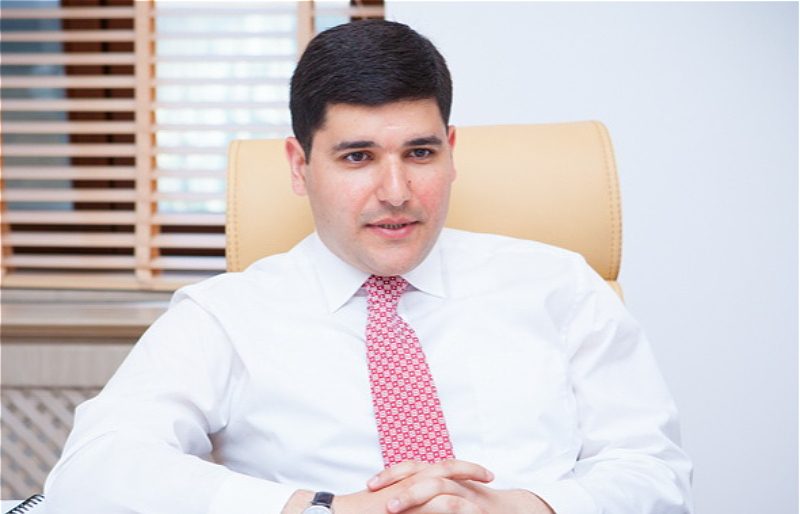
While tensions between Baku and New Delhi have surfaced in the past, political analyst Farhad Mammadov notes that India is now reacting with unusual sharpness and, at times, straying beyond the bounds of diplomatic decorum.
Against the backdrop of sustained economic growth and an increasingly assertive foreign policy, India under Prime Minister Narendra Modi is striving to cement its status as a global power. Central to this ambition is the image of India as a strong and independent actor in South Asia. Within this framework, Pakistan remains a primary challenge to Indian strategy, and any sign of third-party support for Islamabad is interpreted in New Delhi as a direct blow to Indian interests.
“India presents itself as a potential permanent member of the UN Security Council and is actively expanding its diplomatic reach. It needs victories — both regional and symbolic. Escalation with Pakistan serves these goals. But when those goals aren’t achieved, New Delhi starts looking for someone to blame among Islamabad’s allies — including Azerbaijan,” Mammadov told Minval.
Domestic political factors also play a role. Indian authorities seek to project strength both externally and internally. In the context of ongoing tensions with China, instability in Kashmir, and upcoming elections, any criticism directed at the “enemies of India’s allies” becomes a politically useful gesture.
Relations between Azerbaijan and Pakistan are strategic in nature. Islamabad has consistently supported Azerbaijan’s territorial integrity, including in the context of the Karabakh conflict. In return, Baku has deepened its political, defense, and economic cooperation with Pakistan. This is not a situational alliance, but a long-term partnership based on mutual support, shared interests, and religious-cultural affinity.
Pakistan was one of the first countries to recognize Azerbaijan’s independence, and the relationship has remained stable ever since. While India tends to engage in situational diplomacy, Pakistan acts as a reliable ally. This consistency frustrates Indian elites — especially as New Delhi attempts to increase its influence in the Muslim world. Azerbaijan’s support for Pakistan undermines India’s illusion that it can “balance” relations with Muslim countries entirely on its own terms.
Despite political rhetoric, trade between Azerbaijan and India remains steady at around $1 billion annually, with oil exports forming the bulk of Baku’s shipments. Even if India were to halt purchases, it would not deal a critical blow to Azerbaijan’s economy.
“We can redirect our exports. But any contract violations by India could result in penalty clauses,” Mammadov emphasized.
Beyond oil, he noted, cooperation is developing in sectors such as pharmaceuticals, information technology, and education. However, India’s increasingly politicized rhetoric threatens to overshadow pragmatism — and could, in the long run, undermine economic relations as well.
Baku, for its part, continues to show restraint, refraining from responding symmetrically to unfriendly statements. This approach allows Azerbaijan to maintain political dignity and diplomatic flexibility without falling into provocations.
One possible form of Indian pressure might be deeper engagement with Armenia. However, according to Mammadov, such a step would be strategically flawed: “It would be highly disadvantageous for Armenia — India is geographically distant and lacks regional expertise. Becoming a tool in someone else’s geopolitical game is a dangerous bet for Yerevan.”
Moreover, such a policy would likely sour India’s relations not only with Azerbaijan but also with Turkey — another key regional player actively involved in South Caucasus affairs.
The growing tension between India and Azerbaijan is not an isolated incident but part of a broader shift in geopolitical dynamics. India is expanding its ambitions but displays an overly emotional approach in diplomacy. Azerbaijan, by contrast, is acting with calculated consistency.
Much now depends on whether India can step away from playing the role of the “Bollywood protagonist” — where everything is driven by passion and dramatic gestures — and return to pragmatic diplomacy. While New Delhi continues to perform for the crowd, Baku remains calm and focused.