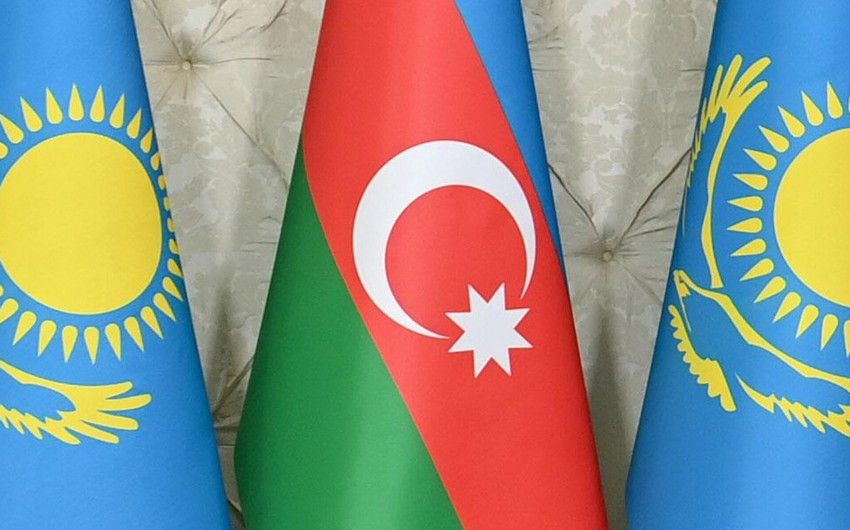
On June 8, 2025, the Jewish News Syndicate (JNS) published an article by former Israeli Minister of Communications Ayoob Kara, titled Azerbaijan, Kazakhstan and Normalization. The article explores the potential accession of Azerbaijan and Kazakhstan to the Abraham Accords and the possible deepening of their cooperation with Israel and the United States.
According to the author, both Muslim-majority countries already maintain active and open relations with Israel and may become the next participants in the normalization process. As highlighted in the article, Kazakhstan benefits from access to Israeli agricultural and medical technologies, desalination facilities, and weapons systems. Azerbaijan, for its part, maintains especially close ties with Israel, including cooperation in defense and communications. Both countries also supply Israel with vital energy resources—oil and gas.
Kara argues that joining the Abraham Accords would allow Azerbaijan and Kazakhstan to expand access to technology not only from Israel but also from the United States, while strengthening their positions within a complex regional environment. Azerbaijan borders Iran and Russia; Kazakhstan borders Russia and China and remains indirectly influenced by Iran. According to the author, these three powers dominate Central Asia and control a significant share of the East–West trade corridors. Under such conditions, regional countries have traditionally pursued a multi-vector foreign policy.
Kara contends that joining the Accords would give Azerbaijan and Kazakhstan a strategic edge over other regional actors and improve their standing vis-à-vis Iran, China, and Russia. In Azerbaijan’s case, it could serve as a deterrent to Iran, which, as the article claims, has engaged in subversive activities targeting Baku: supporting Armenia, arming extremist groups, deploying spies, and even orchestrating terrorist plots against Jewish targets inside Azerbaijan.
From the American perspective, as the author emphasizes, Azerbaijan’s participation in the Abraham Accords would create new opportunities for containing Iran. Of particular interest is the ethnic factor: Azerbaijan could be used as a channel of influence over the large Azeri population living in northwestern Iran—Tehran’s largest ethnic minority.
Kazakhstan is presented as a country seeking to reduce its dependency on China and Russia. Kara notes that deeper cooperation with the U.S. and Israel could support the development of alternative export routes—primarily through the “Middle Corridor,” which runs via the Caspian Sea and Azerbaijan to Europe. This, in turn, would provide Europe with an alternative to Russian oil, strengthen energy security, and give the U.S. access to critical mineral resources beyond Chinese supply chains.
Another important theme in the article is the Turkic factor. Since 2023, Azerbaijan and Kazakhstan have intensified efforts to build a coalition of Turkic-speaking nations, uniting countries from Turkey to Kyrgyzstan on the basis of shared language, history, and culture. Kara suggests that the inclusion of these two leading Turkic countries in the Abraham Accords could prompt similar steps by others in the region. Such a development would strengthen Israel’s position in the Muslim world and pave the way for closer cooperation with both Turkey and Central Asia.
In conclusion, Kara describes the potential accession of Azerbaijan and Kazakhstan to the Abraham Accords as a move where “no party stands to lose.” Israel would gain new allies, the U.S. would secure strategic partners in Eurasia, Europe would benefit from diversified energy supplies, and the Central Asian countries would receive technological and diplomatic advantages. The author calls on all parties not to miss this opportunity, which could mark a turning point for the region as a whole.