The phrase attributed to Socrates—“Speak, so that I may know who you are”—aptly reflects not only the nature and maturity of an individual, but also of groups and even entire communities. It functions as a kind of access code that reveals the emotional state, concerns, and preferences of the subject in question.
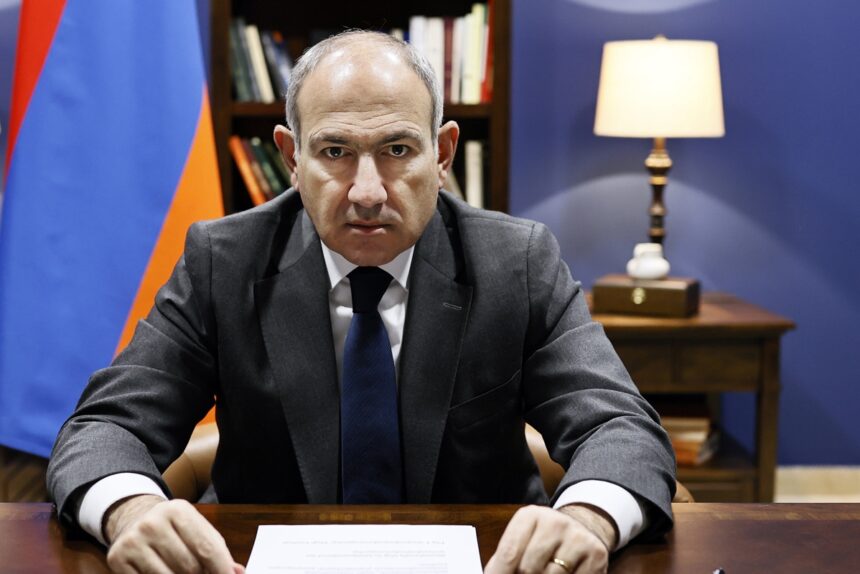
In recent days, the Armenian press has launched a torrent of anger and outrage against Prime Minister Nikol Pashinyan for his persistent advocacy of peace. He is being virtually tormented for calling for reconciliation at any cost. Paradoxically, it seems that had he instead called for a new war, he would have been met with far more sympathy and approval.
Incidentally, the Speaker of Parliament, Alen Simonyan, has also come under fire for not only advocating peace but also for promoting the restoration of economic ties with Azerbaijan. His remark that “five minutes after signing a peace agreement, citizens of Armenia and Azerbaijan will begin trading, communicating, and interacting with one another in every possible way” sent shockwaves through both the old and new guard of obscurantists and their media mouthpieces. To their ears, it sounded like some kind of idyllic nightmare—“the sleep of reason breeds monsters.”
During the years of Armenian occupation of Azerbaijani territories, the European Union—and the collective West—constantly demanded that the leaders of the conflicting parties prepare their societies for peace. But after Azerbaijan’s successful military campaign in 2020, Brussels’ once-peaceful voice fell silent. Perhaps Baku’s “peace through strength” model suddenly suited European sensibilities—though this is hard to believe—or perhaps nostalgia kicked in for the old days when the region existed in a “no war, no peace” limbo.
Either way, the opinions of third parties are less relevant now, because it is the peoples of Azerbaijan and Armenia who are most in need of peace and stability. They are exhausted from this drawn-out conflict. The time has come not only to think about peace but to actively build it—through concrete steps, not merely verbal praise of Yerevan.
In this context, Baku has built up significant diplomatic and political capital—something that cannot be said of the opposing side, which has indulged in empty rhetoric while being swayed by radical forces and foreign lobbyists. These actors are bent on turning the South Caucasus into a zone of heightened turbulence. The militaristic fervor of certain centers and powers is off the charts, and they would do better to channel that energy into regional normalization rather than imposing their tattered rulebook on foreign arenas.
Here lies the significant fault of Nikol Pashinyan, who has failed to resist these alien influences. After winning the most recent parliamentary elections, he was obligated to lead the process of peace restoration through direct negotiations with Baku. Azerbaijan continues to advocate for a bilateral format, clearly observing that Yerevan is succumbing to the agenda of foreign powers. A window of opportunity was missed—but it is not too late to recover lost ground and respond to Baku’s demands in pursuit of a stable and predictable peace.
Pashinyan and his team must also quell internal reactionary forces, who collectively complain about the absence of mechanisms to protect against external threats. The implication is obvious. According to their narrative, it is Azerbaijan that threatens Armenia—this, after having defeated the aggressor and immediately offering the vanquished instigator a path toward integration.
Armenia’s ongoing procurement of new offensive weaponry is hardly a signal of peaceful intentions. Driven by revanchist sentiments, Armenian radicals fail to recognize that the frustration they feel is the logical outcome of their own reckless policies. Overcoming this inferiority complex requires permanently closing the chapter on military confrontation.
Those in Armenia who predict catastrophe fail to realize that it has already occurred—by their own doing. What matters now is to abandon all explosive tendencies in favor of predictability. The Prime Minister must stop coddling hotheads and firmly put them in their place if he genuinely wishes to steer the country toward stability. He must also rid himself of the meddling external sponsors whose so-called donor assistance is less about peacebuilding and economic recovery and more about fueling hatred toward neighbors.
The propaganda machinery serving the opposition and revanchists could not ignore the trilateral summit held on May 28 in Lachin between Azerbaijan, Türkiye, and Pakistan. Broadcasting the event, the media spun it into near-alarmist reports of a newly forming military alliance. Do they truly believe that these three countries are preparing to confront Armenia?
If so, they could not have concocted a more banal story. President Ilham Aliyev’s statement that the military cooperation among the three nations will strengthen peace and stability across a vast geography was a clear message to all who view the greater Eurasian space as a zone of chaos and are scheming new malevolent agendas.
It is not those who speak and act in the name of peace and stability who should concern troubled minds, but those intoxicated by delusional visions of a “Greater Armenia.” They must understand that the ambitions they reveal carry an obligation to accept the consequences.
The sooner they forget the phantom contours of their mythical grandeur, the sooner they can tune into the wavelength of peace and normalcy. Ultimately, this is the most direct and reliable path toward adapting to the new realities.
Tofig Abbasov