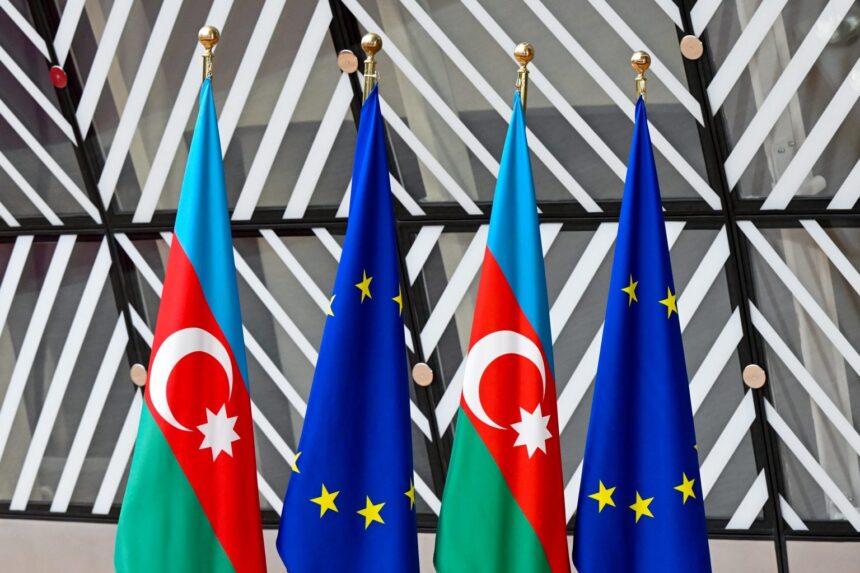
Presented by the European Commission in Brussels, the strategy envisions deeper cooperation with key countries in the region, including Azerbaijan.
The new EU agenda focuses on three main priorities: security, sustainable development, and environmental protection. As part of the strategy, nine flagship initiatives are planned, covering both traditional areas such as maritime security and energy, and emerging challenges including climate-related risks and post-conflict recovery.
One of the key components will be the establishment of a Black Sea Maritime Security Hub, which will work to safeguard critical infrastructure and coordinate demining efforts. In parallel, the EU is advancing a dedicated Connectivity Agenda designed to integrate the transport, energy, and digital networks of the South Caucasus and Central Asia with European corridors.
European Commission President Ursula von der Leyen emphasized the strategic importance of the region’s stability: “Security in the Black Sea is directly linked to Europe’s geopolitical balance, energy resilience, and economic prosperity.”
The list of partner countries in the new strategy includes Ukraine, Moldova, Georgia, Türkiye, Armenia, and Azerbaijan. A ministerial meeting with the participation of these countries is expected to be held in the near future to coordinate the next steps.
According to experts, the strategy could mark a new phase in strengthening the EU’s role in a region increasingly viewed as a critical transit and geopolitical hub between Europe and Asia.