March, in the Azerbaijani calendar, is the month of celebration for the beloved national holiday Novruz Bayram. Preparations begin early, and by the end of February, the countdown of the “last Tuesdays” begins — each dedicated to water, fire, wind, and earth. It’s a joyful time of nature’s awakening, the first plowing of the fields, and public festivities…
But then, why does the Azerbaijani language contain the saying “Mart gəldi, dərd gəldi” (“March came, sorrow came”) — especially considering that the Julian and Gregorian calendars only reached Azerbaijan by the 19th century at best, and it would take time for such expressions to enter folklore? There are many theories — from historians and linguists alike. Yet, a particularly compelling one suggests that the bitter phrase “Mart gəldi, dərd gəldi” is a direct reference to the terror unleashed by Dashnaks and Bolsheviks against the Azerbaijani civilian population in March 1918, culminating in the massacre in Baku on March 31 of that same year. Following these events, it’s important to remember, ethnic Azerbaijanis no longer constituted the majority in Baku.
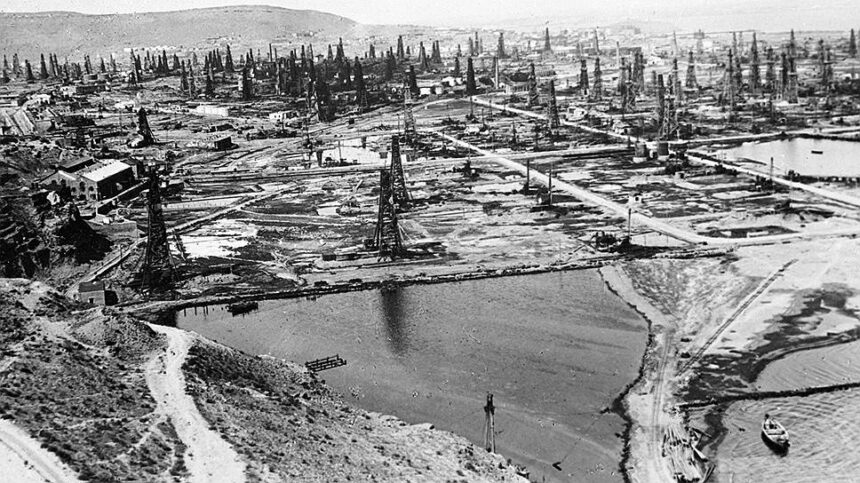
And even more significant is the fact that the March massacre was, to a large extent, a war for oil. For Baku oil — Azerbaijani oil — which Armenian circles sought to “appropriate.” Especially since they already had a taste of the profits. The Tsarist government had created preferential conditions for Armenian entrepreneurs in Baku, allowing families like the Mantashevs and Mirzabekyants to profit handsomely from the oil industry. Eventually, they simply no longer wished to share with the Taghievs, Naghiyevs, and Mukhtarovs. The plan seemed entirely feasible: with the support of the Bolsheviks and the Volga-Caspian flotilla, a massacre of Muslims in Baku would allow the city and its oil fields to fall right into their hands. It didn’t work. On September 15, 1918, the National Army of Azerbaijan and the Caucasian Islamic Army under Nuru Pasha drove out both the Dashnaks and their protectors from Baku.
However, many of the perpetrators of that massacre would later return to Baku alongside the 11th occupying army. Dashnak units were even integrated into the Red Army without reorganization. Throughout the Soviet period, Azerbaijani oil served everyone’s interests — except those of Azerbaijan itself — and Armenia was not left without its share of the “oil pie.” This, however, didn’t stop Armenian figures from continuing to dream of claiming Azerbaijani oil as their own.
By the 1920s, former Armenian oil magnates — including Levon Mantashov — became active participants in a well-known scheme to buy shares of pre-revolutionary oil companies. At the time, the USSR had begun negotiations with European countries, and someone in London had the “brilliant” idea to buy controlling shares in companies that operated in Azerbaijan before the revolution and then press claims against the Soviet Union. The plan ultimately failed, but Armenian circles didn’t let the dream die.
This chapter of “oil intrigue” is rarely remembered, though numerous facts suggest that on the eve of and during World War II, certain Armenian diaspora circles hoped to gain control over Azerbaijani oil — through Nazi Germany. And remarkably, Germany was receptive to the idea.
According to reliable sources, the future SS Gruppenführer and Gestapo chief Heinrich Müller, using the alias “Engineer Krause,” arrived in Baku on October 17, 1938 as part of a delegation from the firm “Krupp & Co.” In reality, his task was to form an intelligence network made up of Dashnaktsutyun activists.
Notably, Müller and two of his associates met with close relatives of Soghomon Tehlirian, who had once been arrested in Charlottenburg for assassinating Talaat Pasha. According to case files, it was Tehlirian himself who connected the Gestapo to his Baku-based relatives — specifically, a certain Serjik Movsesyan. Even more intriguing was the existence of a special unit within the Wehrmacht’s Armenian Legion, known as “Nakharar” (the “Ministerial” or “Noble” Legion), from which Germans trained future administrators for the occupied territories. No other “Eastern Legion” had anything similar. But once again, the dream of oil conquest failed — Germany lost the war, and the Wehrmacht never reached Baku.
What is most astonishing is that even after the collapse of the USSR, Armenian circles did not abandon their ambitions to “get their hands” on Azerbaijani oil. Former Armenian President Serzh Sargsyan once even complained from the rostrum of the Council of Europe: how is it that Azerbaijan spends its oil revenue solely on itself?
The notorious Levon Melik-Shahnazaryan — who had facilitated public contacts between the Armenian government and Talysh separatists, as well as North Caucasian jihadist underground groups — went so far as to publicly declare that, once Armenians “were drinking tea in Baku,” oil platforms and pipelines would continue operating, but the revenues would now flow into Armenian pockets.
Apparently unaware of how the “oil tap” was turned off for Saddam Hussein after the invasion of Kuwait, Armenian planners once again set their sights on oil before the 44-day war of 2020 — a war in Armenia envisioned as “a new war for new territories.” Some circles even fantasized about “returning Armenian refugees” to major Azerbaijani cities — under the protection of “peacekeepers.” These peacekeepers, as it seems, were to play the role of the “XIII Red Army.” After all, we all saw the “XII Red Army” in January 1990. And once again, the plan failed. This time, Armenia lost the war.
But does that mean Armenian circles have abandoned their dreams of seizing Azerbaijani oil?
Nurani