This footage challenges the widely accepted narrative of “mutual” ethnic cleansing, shifting focus to Armenia’s policies during the late 1980s and early 1990s.
The mainstream narrative on Armenian-Azerbaijani “mutual” deportations
In the late 1980s, weakening Soviet control fueled violence and forced displacements between Armenians and Azerbaijanis. These events drastically reshaped the demographics of both Armenia and Azerbaijan, setting the stage for decades of conflict. While the long-accepted view attributes much of the crisis to the Soviet government’s inconsistent response, newly uncovered speeches by former President Levon Ter-Petrosyan may point to underlying motives, potentially reshaping our understanding of the events.
The Sumgait pogrom of February 1988 marked one of the earliest major outbreaks of violence in the Armenian–Azerbaijani conflict, making it crucial to examine its causes to clarify the broader responsibilities of both sides. The Armenian official position asserts that the Sumgait riots were an act of ethnic cleansing orchestrated by Azerbaijani authorities against the Armenian population, claiming that the violence was a response to Nagorno-Karabakh Armenians’ demands for self-determination. Conversely, Azerbaijan’s official stance disputes this narrative, arguing that tensions in Azerbaijan were not sparked by “peaceful Armenian demonstrations” but were instead a reaction to the mass deportation of tens of thousands of Azerbaijanis from Armenia, which began in November 1987 and intensified over the following months. These deportations added to the growing hostility between the two communities.
Although some investigative findings have suggested that the Sumgait events were provoked and prearranged, the prevailing narrative has largely aligned with the Armenian perspective. For these reasons, it is widely believed that Azerbaijanis ethnically cleansed Armenians in Azerbaijan, while Armenians similarly targeted Azerbaijanis in Armenia and Karabakh, which was later occupied illegally by Armenia. Consequently, these mutual displacements are often categorized as mutual ethnic cleansing in mainstream discourse.
Game-changing address by the former President
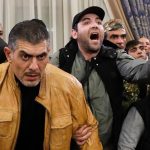
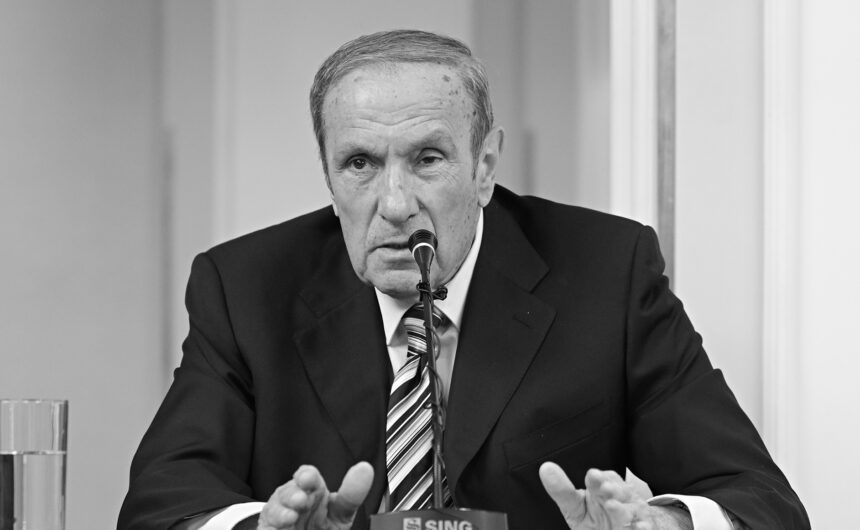
Renowned video blogger Albert Isakov, citing Armenian sources on his YouTube channel, has shared video footage of a speech by Armenia’s first president, Levon Ter-Petrosyan. The speech, delivered on July 27, 1993, following the occupation of the Azerbaijani city of Aghdam, was addressed to members of the Yerkrapah paramilitary organization. This speech fundamentally alters the entire narrative, supporting Azerbaijan’s stance. Footage was possibly leaked by Pashinyan’s circle to discredit Ter-Petrosyan and his Armenian National Congress.
Ter-Petrosyan asserts that Armenia would not have achieved independence if the expulsion of Azerbaijanis had not begun in 1988. He highlights that forming Armenian militia units—later the core of the nation’s army—provided critical military experience even before Armenia or Azerbaijan declared independence. According to him, this movement resolved a “600-year-old problem” by entirely cleansing Armenia and Karabakh of other ethnic groups, primarily Azerbaijanis. He stresses that if some 170,000 Azerbaijanis had remained in areas like Vardenis, Masis, and Amasya, Armenia would be unable to protect strategic regions such as its northern borders or Lake Sevan. Ter-Petrosyan insists that these gains were not handed down by chance, but were secured by the Armenian national movement and its military arm, the Yerkrapah self-defense units. The same holds true for Karabakhs, which he says is now fully controlled by Armenians. He also states that it was the goal of the Armenian national movement to displace Armenians from Azerbaijan, which supports claims that Armenians triggered the tragic events in Sumgayit.
Historical accounts suggest that Armenia took deliberate measures that resulted in the expulsion of Azerbaijanis – some call it ethnic cleansing – from areas such as Basarkechar (modern-day Vardenis), Ulukhanli (part of the Masis region today), and Aghbaba (modern-day Amasia), as well as the broader Zangezur region (modern Syunik Province in Armenia). These areas were historically home to significant Azerbaijani populations.
Potential legal outcomes of Ter-Petrosyan’s speech
The statement made by Levon Ter-Petrosyan as President, which presents the occupation and ethnic cleansing committed during his presidency as a national policy, proves unequivocally Armenia’s State responsibility for these alleged crimes, just as it demonstrates the systematic and organized manner in which they were committed. It is argued that this policy remained consistent across successive Armenian leaders. Levon Ter-Petrosyan’s successor, Robert Kocharyan, reportedly promoted ideas of “ethnic and genetic incompatibility” between Azerbaijanis and Armenians. Another former president, Serzh Sargsyan, has been cited as acknowledging his role in the 1992 Khojaly events and officially endorsing the ideology of General Garegin Nzhdeh. Current Prime Minister Nikol Pashinyan, known for his statement “Karabakh is Armenia,” is likewise said to uphold measures preventing the return of Azerbaijanis expelled from Armenia.
The above-mentioned national discrimination policy has been argued by Azerbaijan before the ICJ as a violation of the International Convention on the Elimination of All Forms of Racial Discrimination (CERD). As a State Party to the CERD since 1993, and with the recent ICJ judgment on jurisdiction approving the 1993 to 1996 period as relevant to the dispute, and full jurisdiction for the post-1996 period due to the continuous nature of the violations, Armenia bears State responsibility. This responsibility extends not only to the ethnic cleansing of Azerbaijanis living in Armenia and Karabakh but also potentially to Armenians living in Azerbaijan. While Armenia’s responsibility for the ethnic cleansing of Armenians in Azerbaijan is debatable, it remains a strong argument after Petrosyan’s speech. This is supported by principles under ARSIWA and the Nicaragua case, as Armenian leadership played a key role in the communal conflict, as confirmed by Ter-Petrosyan’s speech.
Although Armenia was part of the Soviet Union during most of the deportations, it was bound by Soviet laws, which adhered to various human rights treaties, including the CERD. State responsibility could still be established post-independence (post 1991), as these deportations continued. Under the law of succession, Armenia could be argued to have been bound by the CERD, and it is clearly bound by customary international law, which prohibits forced deportations.
Beyond State responsibility, individual criminal responsibility may also be relevant. While the International Criminal Court does not have jurisdiction before July 2002, and therefore cannot prosecute figures like Ter-Petrosyan and others for earlier deportations, it could be argued that the denial of return of Armenian-Azerbaijanis to Armenia could qualify as crimes against humanity under the Rome Statute, specifically as other inhumane acts category of the Rome Statue. Criminal responsibility before the ICC is limited, but alternatives exist.
As a State Party to various international treaties, Armenia is obligated to initiate criminal investigations into those responsible for the forced deportations of Azerbaijanis from Armenia and Armenians from Azerbaijan. Azerbaijan could also initiate investigations into those responsible. Moreover, under universal jurisdiction, other States could initiate criminal investigations. For example, U.S. nationals among refugees and IDPs, whether Armenian or Azerbaijani, could seek redress under the Alien Tort Statute in American federal courts. Another, though less realistic, option would be the establishment of an international ad hoc tribunal through an agreement between the two States to investigate these crimes under customary international law.
In conclusion, this leaked video significantly alters the narrative, potentially holding Armenians accountable for both forced deportations in the region. Beyond the legal implications, the international community has an ethical responsibility to address the plight of refugees and IDPs, revisiting this issue with a fresh perspective that challenges the previously dominant narrative.
Javid Rahimli is a senior-year law student at Baku State University. Alongside being a youth worker, Javid worked as a Secretary General of ELSA Azerbaijan and a Board Member of the YEAs Network. His research interests are public international law, geopolitics, conflict resolution and corruption.