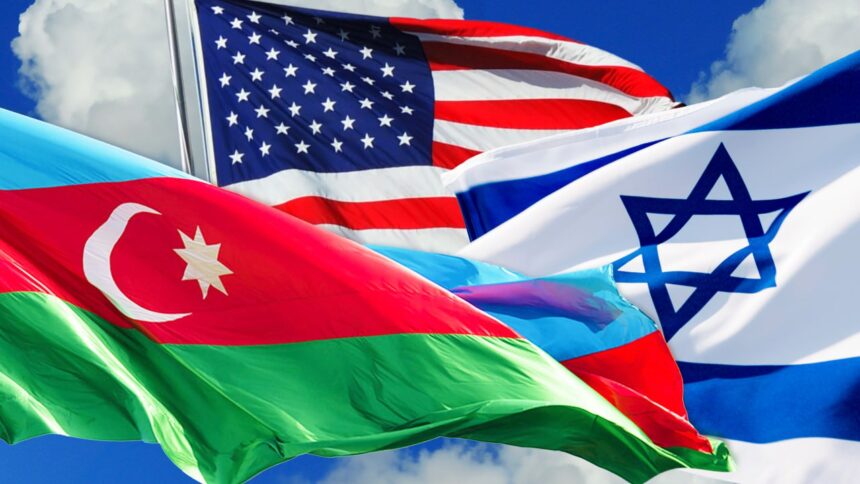
The Trump administration, which begins its work on January 20th, places the security of Israel, its primary ally in the Middle East, at the forefront. Statements from Trump’s close associates clearly indicate that his doctrine includes provisions for expanding the Abraham Accords. In this context, the Israeli leadership and national diplomacy—both governmental and public—should judiciously direct Washington’s attention to those actors in the geopolitical landscape of the Eastern Mediterranean and Western Asia who have long-established strategic partnerships with Jerusalem and can positively impact the role of the Jewish state in Trump’s envisioned “new Middle East”.
Azerbaijan deserves special attention as it holds the longest and most comprehensive partnership with Israel among Muslim nations. During a December 2024 meeting with the President of Azerbaijan, leaders of the American Israel Public Affairs Committee (AIPAC) acknowledged that the U.S. had not fully appreciated Azerbaijan’s longstanding support for Israel and contributions to regional stability. “For the Trump administration and the State of Israel, Azerbaijan holds significant value,” noted the Maariv, covering the meeting.
As Mark Fish acknowledges in The Jerusalem Post: “The arrival in Baku of both the current and incoming leaders of AIPAC demonstrates a clear recognition of Azerbaijan’s pivotal role in regional stability and its unwavering support for Israel. It also reflects an acknowledgment that past U.S. administrations did not fully appreciate the value of engaging with Azerbaijan”.
In its turn, Maariv emphasized that, against the backdrop of the weakening of Iranian influence in the Middle East, “the leader of Azerbaijan is capable of contributing to a reduction in tensions in a region that the American administration views as being of high strategic importance“.
Indeed, as Songer Cagatay of The Washington Institute for Near East Policy (WINEP) noted in 2005: “Washington has many reasons to further improve its relationship with Azerbaijan and to support that country in the international arena. In this context, it should applaud the Azerbaijani friendship with Israel”. Given the changed geopolitical realities, there are now more reasons to “improve relations with Azerbaijan”. Therefore, when shaping its policy in the South Caucasus, the Trump administration should consider the following factors:
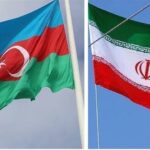
- Azerbaijan is the only country in the world that has maintained a 30-year-long military-strategic partnership with the U.S.’s key ally in the Middle East while bordering two of America’s geopolitical rivals—Russia and Iran.
- Azerbaijan shares a 765 km border with Iran, with Tehran just 365 km away, and ethnic Azerbaijanis, Iran’s largest minority, comprise approximately 20% of Iran’s population (17.7 million).
- Azerbaijan is vital to Europe’s energy security, supplying oil and gas to 17 EU countries as a key alternative to Russian supplies.
- Azerbaijan is an important hub for regional transit trade. In November 2024, the Israeli ambassador to Baku stated: “Israeli companies are now recognizing the strategic importance of Azerbaijan, not only as a partner but also as a crossroads between East and West – the Middle Corridor – serving as a gateway to Central Asia”.
- Azerbaijan is the largest country in the South Caucasus in terms of territory, population, economy, and military power.
Since the 1990s, Azerbaijan, a secular, Muslim-majority state, has been a discreet pillar of Israel’s regional security, key to U.S. interests.
According to Globes, these relations “have flourished since 1992” and are “the most stable” among all that the Jewish state maintains in the Muslim world. As reported by Haaretz, in 1998 Azerbaijan was already designated as a “key state” in internal documents of Israel’s MFA. In 2009, Deputy Director-General of the MFA, Pinhas Avivi, declared: “Relations between Israel and Azerbaijan are of a strategic nature“. In 2011, Infrastructure Minister Uzi Landau remarked: “Israel needs a strong Azerbaijan”. In 2013, the Globes emphasized: “Israel views Azerbaijan as an important ally and a true friend…“. In 2022, Foreign Minister Yair Lapid stated: “Azerbaijan is an important partner for Israel”, while former Israeli Ambassador to the UN, Danny Danon, noted: “Azerbaijan is one of our most important allies in Asia…“.
In December 2023, Ynet noted that “Azerbaijan is the only Muslim country in the world supporting Israel in the war” (against Hamas and Hezbollah). In February 2024, INN reported, citing government sources in Jerusalem and leaders of the Jewish diaspora, that despite pressure from other Muslim countries, President Aliyev unequivocally stands with the Jewish state amid the war. Around the same time, Srugim referred to Azerbaijani leader as a “friend of Israel“, emphasizing his special role in advancing bilateral relations. In July, representatives of both countries’ leadership, including Azerbaijan’s Minister of Defense, held talks on “strengthening regional cooperation”. Ynet highlighted that despite pressure on Baku, the intensification of the partnership occurred precisely during the height of the war (while all moderate Muslim countries distanced themselves from the Jewish state).
Even when most of the Western airlines suspended flights to Israel, Azerbaijan’s state-owned airline continued operating flights with only brief interruptions, and Israeli tourist flow to Azerbaijan increased by 50%. In October, Foreign Minister Eli Cohen once again reaffirmed that relations with this Muslim-majority country are “of strategic importance“. In November, Ynet noted that, against the backdrop of Yerevan’s anti-Israel stance and its ties with Tehran, Jerusalem intends to further strengthen its ties with Baku.
Azerbaijan holds the longest and most comprehensive partnership with Israel among Muslim nations. “Here is an example of how Muslims and Jews work together to ensure a better future for both,” PM Netanyahu stated in 2016.
The following facts demonstrate Azerbaijan’s special importance for the national security and regional defense capabilities of the Jewish state:
Since the 1990s, Azerbaijan has been key to Israel’s energy security. A senior Israeli intelligence source told Israel Hayom that Azerbaijani supplies were crucial even before Arab relations normalized (1994) and Israel discovered major gas fields (1999–2009). Azerbaijan’s energy bolstered Israel’s economy in the 1990s and 2000s, remaining its sole reliable partner in the Muslim world during the Second Intifada (2000–2004). The Israeli ambassador to Baku noted: “We believe that true friendship is tested in times of need, and I think this friendship between our countries has been proven in those critical times”. Israel Hayom reported in 2019 that Azerbaijan is the source of over 60% of the gasoline that Israelis consume. In 2021, Foreign Minister Gabi Ashkenazi stated: “Azerbaijan is an ally, a friend, and the largest supplier of energy resources to Israel“. In 2022, the Zman.co.il stated: “Most of the fuel in Israel comes from Azerbaijan — from gasoline for private cars to jet fuel for the Air Force’s fighter jets“. As Ynet noted in 2024, during the height of the war (when Israel’s armed forces particularly needed uninterrupted fuel supplies), Azerbaijan increased its oil exports to the Jewish state by 55%.
Since the late 2000s, Azerbaijan has been a top importer of Israeli military products, with Israeli supplies comprising 60–69% of its military imports in the 2010s. A new agreement was signed in September 2024. These deals generate billions, supporting Israeli jobs, funding new military developments, and contributing to joint Israeli-U.S. projects critical to Israel’s security.
Azerbaijan is a key Israeli partner against Iran, with both viewing the Ayatollah regime as an existential threat and cooperating for many years. “We share a common dangerous enemy—the Iranian tyranny that threatens the destruction of both our peoples”, Knesset members stated in 2023 in a collective message to their Azerbaijani counterparts.
It is symbolic that the foundation of this partnership to counter the Iranian threat was laid 30 years ago in the U.S. In October 1995, during a meeting in New York with Israeli Prime Minister Yitzhak Rabin, President Heydar Aliyev emphasized that his “country has a very long and tense border with Iran” and requested assistance in the field of security[1]. In 1997, Prime Minister Benjamin Netanyahu visited Azerbaijan, where he held talks with Heydar Aliyev. This meeting gave a significant impetus to the strategic partnership between the two countries.
“Particularly since Ilham Aliyev became Azerbaijan’s president in October 2003, Iran has engaged in a campaign of intimidation toward the country. A group of high-level Iranian military officers visited Baku in August 2004, urging Azerbaijan to cease security cooperation with Israel and stop receiving Israeli military and intelligence officers…” noted WINEP. In June 2006, Infrastructure Minister Binyamin Ben-Eliezer stated: “Azerbaijan is a Muslim country with a large Shia population, bordering Iran. The location of this country is of great interest to us“. Government sources in Jerusalem clarified this statement in the context of the potential use of Azerbaijani territory in the event of an American or U.S.-Israeli operation against Iran. In December 2006, Brigadier General (Res.) Oded Tira emphasized: “We should also coordinate with Azerbaijan the use of airbases in its territory and also enlist the support of the Azeri minority in Iran“. In 2008, Foreign Minister Tzipi Livni stated: “There are very close ties between Israel and Azerbaijan in strategically important areas such as security and intelligence sharing“. In 2009, U.S. Deputy Ambassador to Baku Donald Lu, describing the security cooperation between Israel and Azerbaijan, quoted Aliyev in a document sent to the State Department. In a private conversation, Aliyev stated that these relations resemble an iceberg: “Nine-tenths of it is below the surface“.
In February 2012, the Associated Press noted that Azerbaijan had become an important base for Israeli intelligence. At the same time, The Times, citing a Mossad operative in Baku, reported that dozens of Israeli intelligence operatives were active in Azerbaijan. “Last year, we increased our presence, and this has brought us much closer to Iran,” the operative told the publication. In March 2012, Foreign Policy Magazine reported: “If Israeli jets want to land in Azerbaijan after an attack, they’d probably be allowed to do so. Israel is deeply embedded in Azerbaijan, and has been for the last two decades“.
The visit of Israel’s Defense Minister to Baku in 2014 “served as proof of the high level of military coordination between the two countries“. At the time, he confirmed that Azerbaijan and Israel are “engaged in broad-based strategic cooperation“. In 2015, The Institute for National Security Studies (INSS) emphasized that the Iranian threat serves as a unifying factor, as both countries view it as an “existential threat“. “Mossad has a large and significant presence in Azerbaijan,” reported a prominent Israeli intelligence analyst in 2016. “Intelligence cooperation between the two countries makes it very difficult for the ayatollahs’ regime,” stated Israel Hayom in 2021.
The Second Karabakh War (2020) solidified Israel’s regional position
In the war, Azerbaijan reclaimed much of its territory—which had been occupied for 30 years with the tacit support of Iran, extending its border with Iran by 100 km. “During the war between Azerbaijan and Armenia, Israel sided with Azerbaijan, while Iran supported Armenia,” reported Globes. “The Iranians’ aspirations to ensure the success of the Armenians and to maintain the minimum length of the common border with Azerbaijan were effectively countered by Baku, which is relying on Israeli weapons on a large scale…,” noted Israel Hayom. “The Iranians did not like what happened during this war because it complicated their situation,” stated in February 2021 the former head of the AMAN Military Intelligence Analysis Directorate, Yossi Kuperwasser. “The effectiveness of the deep friendship between the two countries became evident to the entire world during the Second Karabakh War, in which Azerbaijan achieved a brilliant victory through Israeli arms,” emphasized Israel Hayom. The Azerbaijani Foreign Minister added: “During the war, Azerbaijan received genuine support from its Israeli friend“.
The members of the Azerbaijani parliament noted in a collective address to the Members of the Knesset: “The Azerbaijani people appreciate and will never forget Israel’s consistent support for Azerbaijan’s justified position during the 44-day patriotic war“. “The outcomes of the Second Karabakh War heightened tensions between Iran and Azerbaijan”, observed INSS. The Ayatollah regime attempted to pressure Baku. In 2021-2022, the Islamic Revolutionary Guard Corps held two drills near Azerbaijan’s border simulating troop deployment, while Tehran and its proxies ran intimidation propaganda campaigns aimed at Azerbaijan’s leadership. They claimed that “Aliyev is a puppet of the Zionist regime” and that “the government has been in the hands of Zionists for 30 years“.
The deputy speaker of the Iranian parliament issued a clear warning to Azerbaijan’s leader: “Read some modern history to learn about the fate of leaders who trusted America and Zionism“. Blatantly antisemitic propaganda was also employed: Aliyev was depicted in a grotesque image as a religious Jew. Against this backdrop, in October 2022, Defense Minister Benny Gantz visited Baku and emphasized the “importance of the strategic relationship” between the two countries. A month later, Azerbaijan announced the opening of its embassy in Israel. In 2023-2024, Iranian provocations, subversive activities, and attempts to intimidate Azerbaijan continued, including those aimed at its relations with Israel.
Azerbaijan works to normalize Turkey-Israel relations and mediates during crises between them
“President Aliyev, who has previously proved his mediation capabilities between Turkey and Israel, is likely to play a similar role again in the coming years (under the Trump administration),” Maariv reported in December 2024. During the 2008-2010 Turkey-Israel crisis, Azerbaijan worked to restore dialogue. In June 2012, the IzRus website, focused on Israeli foreign policy in the former Soviet Union, reported, referring to “diplomatic sources in Jerusalem“: “Officials in Baku are trying hard to reconcile the opposing sides“.[2] That same year, INSS noted: “As Israeli-Turkish relations worsened, Turkey tried to pressure Azerbaijan to cool relations with Israel. President Aliyev’s regime has so far refused Turkey’s entreaties”.In 2018, the leader of Azerbaijan mediated between Ankara and Jerusalem, increasing efforts after the 2020 Karabakh War, when Azerbaijan relied on both partners’ support.
“Armenia’s military actions are supported by Iran and Russia, while Azerbaijan is supported by Israel and Turkey,” emphasized Globes in 2020. “Azerbaijan is one of the few arenas where Israel and Turkey have a common strategic interest…” In December 2020, NewsWalla cited governmental sources in Jerusalem, reporting that Aliyev, in his communication with Erdogan, was making efforts to normalize relations between Turkey and Israel. In 2021, the Assistant to the Azerbaijani President confirmed: “We are interested in ensuring that our allies also maintain friendly relations with each other”.
The attempted normalization between Turkey and Israel in November 2021 – March 2022 took place with the tacit participation of Azerbaijan, namely its Foreign Intelligence Service (XKX), which maintains close ties with Mossad and MİT. “The fact that both Ankara and Jerusalem are perceived as important allies of Baku and that Azerbaijan’s victory in the Second Nagorno-Karabakh War is attributed in part to the assistance received from these two countries were among the factors that contributed to the warmer relations between Turkey and Israel over the past year”, noted INSS in the fall of 2022. In October 2022, during Benny Gantz’s Baku visit, Azerbaijan urged renewing Israel-Turkey military ties, leading to the first Israeli Defense Minister’s Ankara visit in 12 years.
Azerbaijan exemplifies Muslim-Jewish symbiosis and fosters Israel-Muslim ties
A century before the Abraham Accords, Azerbaijan became the first modern Muslim state to showcase such cooperation, evident in Jewish representation in its parliament[3], senior government[4] roles, and leadership of state institutions[5] during the Azerbaijan Democratic Republic (1918–1920).Azerbaijan is the only Muslim country with a large Jewish settlement (over 3,000 residents). It is also the only place in the Muslim world where street names are displayed in Hebrew. As it was reported by Israel Hayom, “Azerbaijan is the only Muslim country in the world where, during celebrations and marches commemorating military victories, local residents display Israeli flags”. In December 2024, AIPAC leaders reminded that after Hamas’s invasion of southern Israel on October 7, 2023, Azerbaijani citizens brought flowers and lit candles outside the Israeli embassy to honor the victims. Expressions of sympathy and solidarity with Israelis were even voiced by members of Azerbaijan’s parliament.
This uniquely positive attitude towards the Jewish state, unparalleled in the Muslim world, reflects Azerbaijan’s exceptional relationship with Israel.As early as 2009, the Israeli ambassador in Baku noted that Azerbaijan could serve as a model for other Muslim countries in terms of relations with Israel[6]. In 2012, Foreign Minister Avigdor Lieberman stated that Azerbaijan could act as a mediator between Israel and the Arab world. In 2020, Dr. Baram from the Truman Research Institute at the Hebrew University of Jerusalem emphasized that: “…Azerbaijan has played a behind-the-scenes role in facilitating Israel’s relations with Gulf states and moderate Muslim countries. I myself witnessed meetings in Baku between Israelis and senior figures from the Arab world years before they became official in Israel”. Immediately after the signing of the Abraham Accords, Baku became one of the first venues for establishing contacts between Israeli and UAE diplomats. In 2023, President Herzog, addressing President Aliyev, stated: “It is no secret that your country is a Muslim nation, with the majority of its population being Shia. Despite this, the love and affection between our peoples is an example of how we can change the world and move forward”. As Maariv underlined in December 2024, Azerbaijan serves as a “successful model of coexistence” between Muslims and Jews.
[1] Maariv 24.10.95 (saved in the printed version).
[2] Publication of the Israeli Russian-language site IzRus (saved in the printed version)
[3] Address-calendar of the Republic of Azerbaijan for 1920. Baku, 1920. Part IV. pp. 2, 45; Azerbaijan Democratic Republic (1918-1920). Baku, 1998. p. 55;
[4] Address-calendar of the Republic of Azerbaijan for 1920. Baku, 1920. Part IV. pp. 3,13.
[5] Address-calendar of the Republic of Azerbaijan for 1920. Baku, 1920. Part IV. pp. 17.
[6] Haaretz, 28.06.09 (saved in the printed version)
By Zeev (Vladimir) Khanin and Alex Grinberg
Capt. (res.) Alexander Grinberg, Former IDF Military Intelligence & Research Fellowship, Expert on Iran in IDF Military Intelligence