Following the 1997 Good Friday Agreement which ended thirty years of terrorism, Northern Ireland and the Republic of Ireland gained numerous benefits. The peace dividend has brought Northern Ireland and Ireland higher levels of foreign investment and foreign assistance. In the 1990s and 2000s, Ireland became known as the ‘Celtic Tiger’ as the economy grew and Irish began to re-emigrate to the country from the US and elsewhere.
Peace should bring benefits to the countries involved in a peace dividend as well as greater levels of foreign support from countries who have supported negotiations and the de-escalation of tensions and conflict. Why then has this not happened in the South Caucasus?
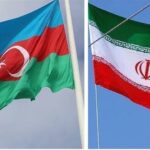
Since the conclusion of the Second Karabakh War in 2020, Armenia and Azerbaijan have been moving towards peace. The last region of Azerbaijan under Armenian occupation was returned in Autumn 2023.
It is worth mentioning that this conflict was by far the bloodiest to have taken place during the Soviet Union’s disintegration, lasting for six years from 1988-1994. Three quarters of a million Azerbaijani’s and a quarter of a million Armenians were pressure to leave both countries. Tens of thousands of Azerbaijani civilians and POWs disappeared, presumed to have been subjected to extrajudicial executions by Armenian nationalist paramilitaries.
Armenia’s occupation of a fifth of Azerbaijani territory laid waste to every building. Religious, cultural, administrative, educational, and political buildings and infra structure was systematically destroyed. Tens of thousands of mines were laid. Azerbaijan – like Ukraine – are the two most mined countries in the world. Environmental damage in both countries is extensive.
The EU has though only offered economic and financial aid to Armenia, the country which has not suffered from foreign occupation. As part of the EU-Armenia Partnership Agenda, the EU will provide a 270 million euros Resilience and Growth Plan for Armenia in 2024-2027 to improve Armenia’s socio-economic resilience and trade diversification. In comparison, EU support to Azerbaijan is paltry.
After nearly three decades of failed negotiations by the OSCE (Organisation for Security and Cooperation in Europe), a second Karabakh war broke out which lasted 44 days with 7,000 mainly military casualties. Civilian casualties were far fewer than in the late 1980s-early 1990s with 200 main Azerbaijani’s killed from missile and rocket attacks.
Benefits should accrue to both sides of the conflict who have supported the peacemakers – Armenia and Azerbaijan. This has not taken place because only one side – Armenia – has powerful lobbies in the US and France. The US has continued to pursue policies antagonistic towards Azerbaijan with sixteen legislative initiatives against Azerbaijan introduced in the US Congress in the last year alone.
In October 1992, the US Congress adopted the Freedom Support Act which provided financial, technical, and other forms of assistance ‘to support freedom and open markets in the independent states of the former Soviet Union.’ Section 907 prohibited the provision of U.S. assistance ‘to the Government of Azerbaijan until the President determines . . . that the Government of Azerbaijan is taking demonstrable steps to cease all blockades and other offensive uses of force against Armenia and Nagorno-Karabakh.’
Armenia had by the time of the passage of this law occupied a fifth of Azerbaijani territory. Azerbaijan was the only former Soviet republic of fifteen against whom the US applied Section 907.
Section 907 was waived in the aftermath of the 9/11 terrorist attack. Azerbaijan, the most secular Muslim country in the world, offered to cooperate with the US in the Global War on Terror. Azerbaijan is on the flight path to Afghanistan where NATO forces were based from 2003-2021.
In 2001, the US Senate adopted an amendment to the 1992 law that would allow the U.S. President to waive Section 907 from the following year. Section 907 was waived until 2023. Azerbaijan was no longer needed by NATO and the US after the chaotic withdrawal of US forces in Summer 2021 and the takeover of the country by the Taliban. Section 907 was no longer waived as a revenge against Azerbaijan for reclaiming its internationally recognised territory in two short wars n 2020 and 2023 that had been under Armenian occupation.
On a matter of principle and international law, US action was strange, to say the least. President Joe Biden was the leader of the Ukraine Defence Contact Group (UDCG) that were sending military equipment to Ukraine to defend its territorial integrity. The UDCG (also known as the Ramstein group) united 57 countries, including 32 NATO and EU members and 25 other countries.
The US, it would seem, pursues a multi-vector policy of supporting territorial integrity in Ukraine and opposing this principle in Azerbaijan. Washington has yet to comprehend that the Global South is fed up with US, and Western in general, duplicity towards conflicts. The contradictory US approach to supporting Christian Ukraine and opposing Muslim Azerbaijan adds to the already deep disquiet of Western hypocrisy towards war crimes: condemning those undertaken by Russia in Ukraine and ignoring them when committed by Israel.
US duplicity is made all the stranger when we take in the fact Azerbaijan and Israel have pursued two decades of security cooperation in security affairs. Both countries view Iran as existential threats to their national security. The US is Israel’s closest foreign ally and at the same time is hostile to Azerbaijan, one of Israel’s closest regional partners.
US policy towards the South Caucasus needs a reset, or in Gorbachev’s catch phrase perestroika. Section 907 should be struck from the 1992 law, thereby no longer requiring US presidents to waive it. The US – and Europe – should support both Armenia and Azerbaijan’s reconciliation and movement towards peace through military, security, and economic assistance. The EU is already moving in this direction by increasing its import of Azerbaijani energy, one of several alternatives to Russian energy which the Europeans stopped importing after Russia’s 2022 full-scale invasion of Ukraine.
As the just concluded COP (UN Climate Change) summit in Baku showed, Azerbaijan is already playing an important role as a natural partner for the West. The template for how the US should approach both sides to the peace process in the South Caucasus should be the Israeli-Egyptian and Northern Irish peace processes. Only by adopting this approach will Washington be able to counter charges of ‘hypocrisy’ from the Global South.
Taras Kuzio is professor of political science at the National University of Kyiv Mohyla Academy.