Background of Section 907
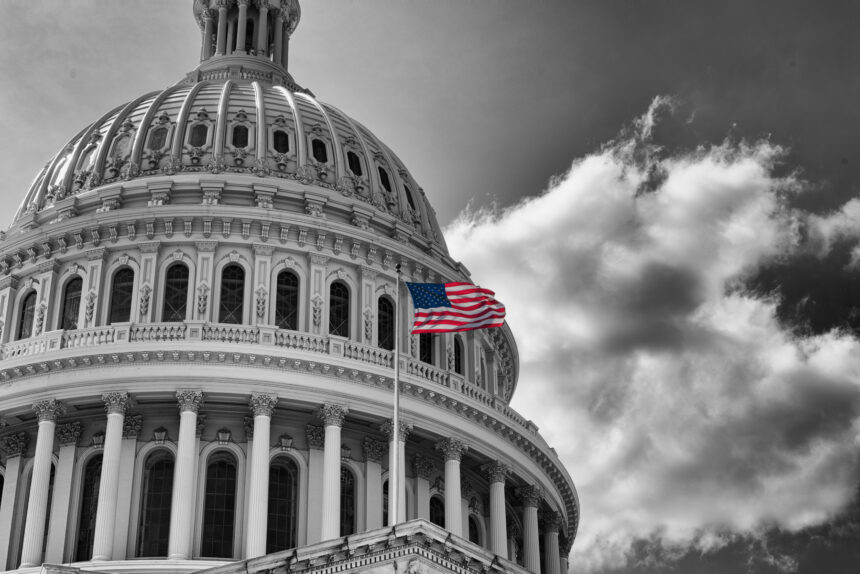
On August 6, 1992, U.S. Congress passed the Freedom Support Act to accelerate transition to democratic governance and free market economy in Russia and other newly independent states following the collapse of the Soviet Union. Later on, humanitarian, security, and counter-terrorism dimensions were also incorporated into the document.
A few months later, on October 24, the Senate adopted an amendment, known as Section 907, which prohibited direct assistance of the United States to the government of Azerbaijan in any form. Due to Section 907, which was strongly lobbied for by the Armenian-American community in the U.S. during the First Karabakh War, Azerbaijan became the only post-Soviet nation which could not receive direct American assistance.
As the post-9/11 War on Terror and the Afghanistan campaign necessitated close cooperation between the United States and Azerbaijan, including the military component, the Senate in 2001 adopted an amendment to the Act that would endow U.S. President with the power to waive Section 907. George W. Bush first waived Section 907 in 2002, and successive administrations have continued this pattern until 2023 although the very provision still remained a huge obstacle for tighter collaboration between Baku and Washington, D.C.
In fall 2023, Senate-adopted Armenian Protection Act again restricted U.S. foreign assistance to the government of Azerbaijan in 2024 and 2025 and even barred U.S. President from providing a waiver to this prohibition for these two years.
Is Section 907 still relevant?
Section 907 remains one of the most problematic issues in the Azerbaijan-U.S. relations and an obstacle for elevating them into a higher level. Having developed its economy thanks to windfall hydrocarbon revenues in the last two decades, Azerbaijan has significantly reduced its need in foreign aid from big powers and international institutions, including the United States. Nevertheless, the very existence of such a controversial legal issue aimed against Azerbaijan remains a Damocles sword – both symbolically and sometimes practically – and generates public outrage in the Azerbaijani society, which considers Section 907 a telling example of unfair treatment and double standards their country has always had to face.
More than 30 years have passed since the adoption of Section 907, while the very context that gave birth to it, the Karabakh conflict, is now effectively over. Thus, this provision could be now categorized as outdated and irrelevant. Yet, its existence and/or usage as a tool of pressure against Azerbaijan strengthens the already prevalent belief in Baku in the overwhelming influence of the pro-Armenian lobbying forces over U.S. foreign policy. This sort of approach, in its turn, may divide South Caucasus in the American eyes into two categories, “friends” and “others”, and falsely categorize Azerbaijan as the latter, harming the very American interests in the region. Moreover, it takes Baku a lot of extra resources and energy to turn back this unfair decision and secure the waiver.
Armenia-Azerbaijan peace process and the elimination of Section 907
Though the repeal of a legal provision in U.S. legislation may become more complicated than its adoption, it is still worth trying to take steps to waive or even repeal Section 907 (through a new bill or a sunset clause).
One of the most effective actions in this regard could be the incorporation of joint Armenian-Azerbaijani efforts for repealing Section 907 into the peace process and even the peace deal. As described above, the very provision was passed in the early 1990s due to Azerbaijan`s alleged blockade against Armenia. As part of confidence-building measures and in order to accelerate the peace process, Yerevan solely and/or together with Baku could reach out to the U.S. Government and pro-Armenian lobbying groups in the U.S. to push the repeal of Section 907. Even if Yerevan is unable to influence the aforementioned stakeholders, such a move would hold symbolic significance and weaken anti-Azerbaijani discourse in the United States.
In this regard, one can recall the recent cases of Armenian-Azerbaijani cooperation which produced tangible results: e.g. in late 2023, Armenia withdrew its COP29 bid and supported Azerbaijan`s candidacy to host this international mega-event. This process was accompanied by the swap of detainees between the two countries. Furthermore, Baku has invited Yerevan to join efforts in dissolving the OSCE Minsk Group, a special body which was designed in the 1990s to facilitate the Armenian-Azerbaijani talks and offer settlement plans for the Karabakh conflict. In the past few years, especially following the 2020 War, the Minsk Group has virtually been dysfunctional, and thus, irrelevant for the South Caucasus geopolitics.
Section 907, too, is no longer relevant and it would be illogical to preserve it if the stakeholders are genuinely interested in ending the Armenia-Azerbaijan feud. Yerevan, too, can show good will and contribute to the long-lasting peace and reconciliation in the region if it also promotes the repealing of Section 907.
Rusif Huseynov