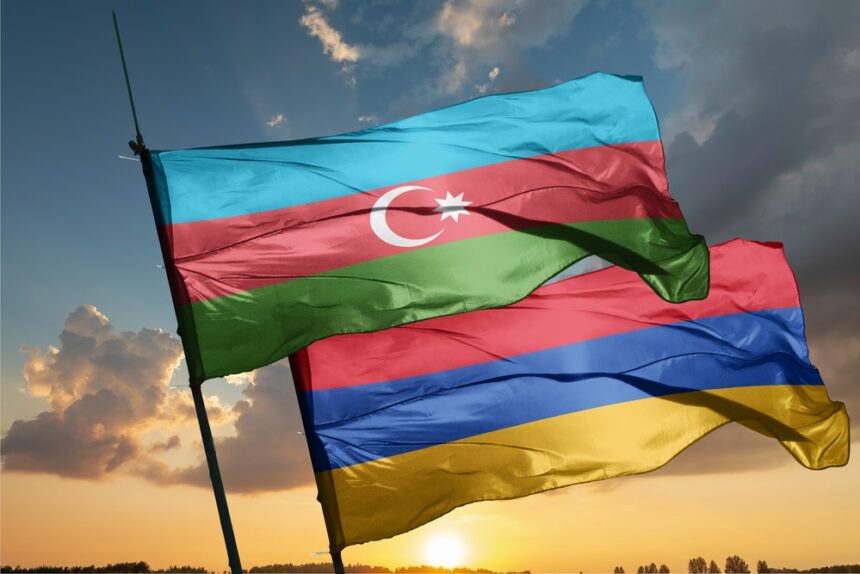
“Today… peace between Armenia and Azerbaijan is not only possible but within reach,” said Armenia’s Prime Minister Nikol Pashinyan optimistically on September 26 at the 79th session of the United Nations General Assembly (UNGA). Armenian officials seek to persuade the international community that “Azerbaijan continues to resist signing a peace agreement… For this vision to become a reality, Azerbaijan must abandon its delaying tactics and unreasonable demands”. For the people of Azerbaijan, it is nothing short of surreal to read Armenian officials calling for peace and reconciliation.
Contrary to the claims of the Armenian government, peace between the two South Caucasus countries has always been within reach. However, it was never achieved due to one simple reason: Armenian governments repeatedly refused to comply with the resolutions of the United Nations Security Council adopted in 1993. These resolutions called for the withdrawal of Armenian forces from the Karabakh region and surrounding districts of Azerbaijan, which Armenia had occupied during the First Karabakh War in 1992-1993.
The post-Soviet leaders of Armenia, including the current Prime Minister Nikol Pashinyan, consistently treated the occupied Karabakh region as part of Armenia’s historical lands and sought to realize the national objective of unifying Karabakh with Armenia, as outlined in the Republic of Armenia’s constitution. They pretended to engage in the internationally mediated peace negotiations without genuine commitment and while attempting to gradually annex these territories. This continued until the Second Karabakh War in 2020, when Azerbaijan ended the illegal occupation by military means and declared the Armenia-Azerbaijan conflict resolved.
Although the incumbent Armenian government verbally recognized Azerbaijan’s territorial integrity with Karabakh part of it after the 2020 war, they have yet to apologize for the illegal occupation that resulted in the displacement of up to a million Azerbaijanis, complete destruction of their villages and towns through scorched earth policy, and more importantly, heinous crimes and mass atrocities against Azerbaijani civilians. Anyone visiting the formerly occupied territories today can witness the outrageous level of destruction and plundering of natural resources in these lands committed by Armenia during the occupation period after the First Karabakh War.
Armenian officials never acknowledge this, but the fact remains: it was, nevertheless, Azerbaijan that extended a hand of peace and invited Armenia to sign a peace treaty based on the mutual recognition of each other’s territorial integrity in March 2022. This proposal has yet to materialize due to two key reasons.
First and foremost, contrary to claims of the Armenian side, it has been Armenia that has employed “delaying tactics” throughout the process, responding to Azerbaijan’s peace treaty proposals after prolonged delays. The most recent instance occurred when Armenia took 70 days to respond to Azerbaijan’s proposals, submitted on June 24, 2024, with a reply only arriving on August 31. This naturally raises a legitimate question: if Armenia were truly so eager for a peace agreement, why do they continue to delay the negotiations?
The second reason is more fundamental. As mentioned above, there are territorial claims against Azerbaijan in the national legislation of the Republic of Armenia. The Republic’s constitution refers to the Declaration of Independence of Armenia, which explicitly calls for the unification of Karabakh with Armenia, as a key objective of the Armenian statehood.
Azerbaijan has been clear in its demand: Armenia needs to remove this territorial claim from the constitution before the two countries sign a peace treaty. “The Armenian people should constitutionally declare an end to their utopian claims of uniting Karabakh with Armenia and express their intention to live in peace with Azerbaijan,” said Hikmat Hajiyev, foreign policy adviser to the Azerbaijani president on September 18.
Contrary to the claims of the Armenian side, this demand is not something the Azerbaijani side came up recently to delay the peace agreement. In September 2021, before the peace treaty negotiations started, Azerbaijan’s President Ilham Aliyev clearly pointed it out: “There is a territorial claim against Türkiye [and Azerbaijan] in the Constitution of Armenia. They should abandon that. They need to revise and re-adopt their constitution… They must give up their claims against Türkiye and Azerbaijan”.
In a crucial development for resolving the dispute, Armenia’s Prime Minister, Nikol Pashinyan, has acknowledged the importance of the issue and attempted to address it. During a meeting with members of his political party on January 20 this year, Pashinyan stressed the need for Armenia and Azerbaijan to ensure that there are no grounds for future territorial disputes. He declared: “Diplomatic documents often contain nuanced implications and warnings. The subtleties of Azerbaijan’s proposals, and potentially ours, highlight the dangers of territorial disputes, whether immediate or imminent.” He went on to call for a new constitution, asserting that Armenia needs “a new constitution, not constitutional changes,” that would make the country “more competitive and stable in the new geopolitical and regional environment.”
To the detriment of the peace treaty talks, the Armenian government appears to have backed away from this position. The June 7 statement by the Armenian Foreign Ministry and the subsequent statements of the Armenian officials reject calls for the removal of territorial claims from the constitution and present this request as “a complete interference in the internal affairs of the country.” Armenia ignores the fact that a state’s constitution is no longer its exclusive internal matter if it contains territorial claims and legal bases for a military conflict against another state.
That said, peace between Armenia and Azerbaijan has long been within reach but was never realized because Armenia refused to de-occupy the Azerbaijani territories and comply with the international law and norms in relations with Azerbaijan. While Armenian officials today portray Azerbaijan as the obstacle to peace, it is Armenia’s ongoing delays and failure to renounce constitutionally proclaimed territorial claims that continue to hinder progress. Only with genuine commitment to peace – demonstrated not just in words but in deeds – can reconciliation between Armenia and Azerbaijan become a reality.
Vasif Huseynov