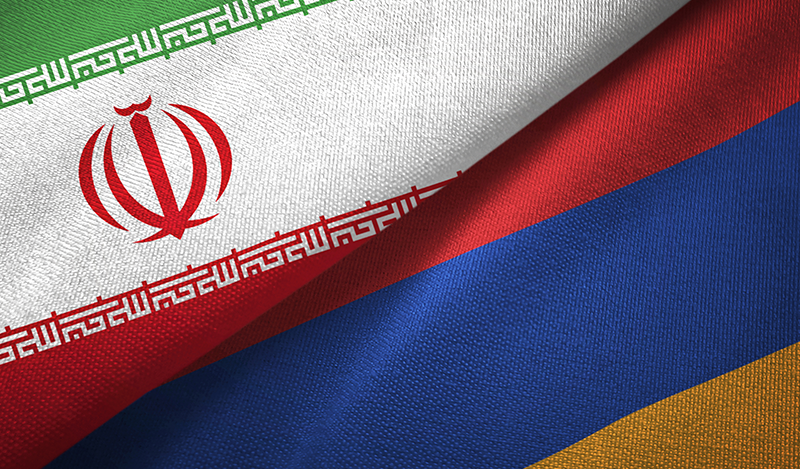
However, the complex relationship between Iran and Armenia serves as a counterpoint to Huntington’s thesis, illustrating that geopolitical concerns often transcend religious and cultural boundaries. Iran, a Shiite Muslim nation, aligns itself with Christian-majority Armenia rather than its Shiite-majority neighbor Azerbaijan, driven by strategic interests rather than religious affiliations.
Giacomo Chiozza’s research effectively debunked Huntington’s thesis, highlighting its empirical flaws. By carefully analyzing all conflicts that occurred between 1946 and 1997, Chiozza found that countries within the same civilization are more prone to conflict. Iran’s preference for Armenia over Azerbaijan highlights how strategic interests and regional security concerns outweigh religious and cultural commonalities.
The Tehran-Yerevan partnership, fuelled by geopolitical concerns rather than religious ones, highlights the intricate dynamics that shape international relations in the region. As Iran and Armenia collaborate on military, economic and strategic initiatives, their alliance underscores the purely hard-headed considerations that often guide foreign policy, challenging the notion that civilizational differences are the primary drivers of global conflict.
Türkiye’s alignment with Azerbaijan and their mutual emphasis on reinforcing Turkic links in the Caucasus and Central Asia seem to pose an obstacle to Iran’s regional influence, particularly as there is a sizable Azerbaijani population within Iran, which views with sympathy the economic development and prosperity enjoyed by their peers up north.
Hence, by betting on Armenia, Tehran aims to disrupt the sovereignty and aspirations of Azerbaijan, as it seeks to counterbalance the expanding power of its Turkic neighbors, strengthening its position in the South Caucasus while ensuring that Armenia remains a crucial ally in this area.
From Armenia’s perspective, particularly considering Russia’s insufficient support during the Karabakh conflict, cooperation with Iran serves to alleviate perceived pressures from Türkiye and Azerbaijan. This partnership allows Armenia to counterbalance Azerbaijan’s rise and influence through the military and economic assistance it receives from Iran.
Iran’s backing for Armenia is evident through substantial military and economic aid in the past three decades, including an alleged recent $500 million arms deal. This purported secret agreement, which supposedly includes advanced weaponry such as suicide drones, would signify a new milestone in the military cooperation between Tehran and Yerevan, ringing alarm bells in Baku, which had hoped to resolve the conflict with Yerevan definitively and focus on advancing its economic development and enhancing regional interconnectedness.
In addition to their military ties, the Iran-Armenia relationship is bolstered by extensive economic collaboration, encompassing investments, infrastructure projects, and trade agreements. This year, the 18th meeting of the Iran-Armenia Joint Economic Commission further strengthened their partnership, resulting in the signing of several agreements across various sectors.
The Iran-Armenia alliance is also evident in their coordinated stance on regional issues, including opposition to the Zangezur Corridor – a project that Armenia views as a threat to its sovereignty. The Zangezur Corridor aims to connect Azerbaijan to Türkiye via the Nakhchivan Autonomous Republic, traversing Armenian territory. Both Armenia and Iran oppose this project, albeit for different reasons.
Furthermore, Iran, Armenia and India have proposed a Persian Gulf–Black Sea Corridor as a strategic countermeasure to Türkiye and Azerbaijan’s Zangezur Corridor. This multimodal trade route, designed to connect India with Europe via Iranian ports and Armenian territory, seeks to bypass traditional routes like the Suez Canal and establish a Persian Gulf-Black Sea corridor. This project also stands in direct competition with Türkiye’s Development Road, which connects the Great Faw Port in Iraq to Europe through Türkiye, offering an anticipated savings of 15 days in transit time by avoiding the Suez Canal.
For Armenia, it offers a crucial alternative to dependence on Russia and establishes direct economic and strategic ties with India, thereby supporting its broader security and economic diversification objectives. Through this corridor, Iran aims to alleviate sanctions imposed by the U.S. and Western states and create new opportunities for economic growth.
In analyzing Iran’s relationship with Armenia, it becomes clear that Iran’s foreign policy is pragmatic and largely driven by geostrategic interests. Toward the end of former Iranian President Ebrahim Raisi’s administration, there was a brief period of improved Tehran-Baku relations. However, this progress stalled following Raisi’s death, particularly after Armenian President Nikol Pashinyan’s visits to Iran, which reinforced the ties between Tehran and Yerevan.
While some observers anticipated that recently elected Iranian President Masoud Pezeshkian, an Azeri by origin, might bring a new dynamic to Iran’s relations with Türkiye and Azerbaijan, the strong influence of the supreme leader and the Revolutionary Guards in Iranian policymaking makes significant changes in the short term unlikely.
The development of the Persian Gulf–Black Sea Corridor not only serves as a counterbalance to both the Zangezur Corridor and the Development Road but also exemplifies the disruptive approach adopted by Iran to enhance its economic and strategic position at the expense of its neighbors.
In conclusion, the Iran-Armenia relationship challenges conventional narratives that place religious and cultural identities at the forefront of international alliances. Instead, it underscores the primacy of strategic interests in shaping foreign policy.
Iran’s Machiavellian alignment with Armenia, despite religious differences, highlights how geopolitical concerns often override civilizational divides. This partnership, driven by mutual strategic, economic and military interests, aspires to disrupt the rising influence of Türkiye and Azerbaijan in the region and beyond. As the geopolitical landscape continues to evolve, the Iran-Armenia alliance stands as a testament to the complex interplay of strategic considerations in international relations
Mehmet Kılıç