In the decades after the collapse of the Soviet Union, the South Caucasus – particularly Azerbaijan and Georgia – remained largely off the radar for Gulf Arab states, mainly due to geographic distance and limited economic opportunities. However, over the past few years, the two regions have been developing increasingly closer relations – especially trade, investment, tourism, and energy ties – that are evolving into more strategic geopolitical engagement.
The South Caucasus has been gaining strategic importance on the global arena and benefiting from shifting geopolitical dynamics in the region. The war in Ukraine has boosted the South Caucasus’ strategic value, particularly with the expanding Middle Corridor route linking the Black Sea and Turkey through Georgia and Azerbaijan to Central Asia and China bypassing Russia. This route offers the shortest overland connection between the European Union and China, Eurasia’s two largest economies, as an alternative to the traditional Russian route.
Additionally, the war in Ukraine has taken Russia’s attention away from the South Caucasus, creating space for other powers to fill the vacuum and reducing the degree of traditional Russian influence. This has prompted Azerbaijan and Georgia to look to diversify their trade, political, and security ties. The Gulf Cooperation Council states, as rising economic and geopolitical powers in Eurasia, have become particularly attractive for the investment-hungry South Caucasus.
Georgia
Since the early 2010s, Georgia has worked to advance economic and investment interests with the GCC states. Although Gulf states have been cautious about large scale investments, they have shown growing interest in Georgia’s nascent energy sector and transportation corridor.
Gulf states have particular interest in the development of Georgia’s ports and railway infrastructure as part of the Middle Corridor, which could offer the GCC states another route to reach the EU market. GCC states have in the past made investments in Georgian ports. In 2008, the United Arab Emirates’ Ras Al Khaimah Investment Authority bought the Black Sea port of Poti. In March, AD Ports Group, the operator of industrial towns and free zones in Abu Dhabi, announced it signed a deal to purchase a 60% share in a major dry port in Tbilisi. The dry port lies strategically on the Middle Corridor and is expected to process around 96,000 20-foot equivalent units of cargo per year after the first phase, with total capacity estimated at around 286,000 20-foot equivalent units upon completion.
The UAE is a leading Gulf investor in Georgia’s economy and the sixth globally, with the relationship bolstered by a Comprehensive Economic Partnership Agreement reached in October 2023. The agreement supports liberalization of bilateral trade, permitting 97.5% of goods from Georgia to enter the UAE duty free. From January through July, Georgia’s exports to the UAE increased 11% compared with exports over the same period in 2023. The UAE expects that by 2031 the deal will contribute an additional $4 billion to the country’s gross domestic product. The goal is to boost non-oil trade between the two countries, which has been steadily growing and reached $481 million in 2022. The UAE is Georgia’s biggest trade partner from the Arab world, accounting for 63% of the country’s trade with Arab countries.
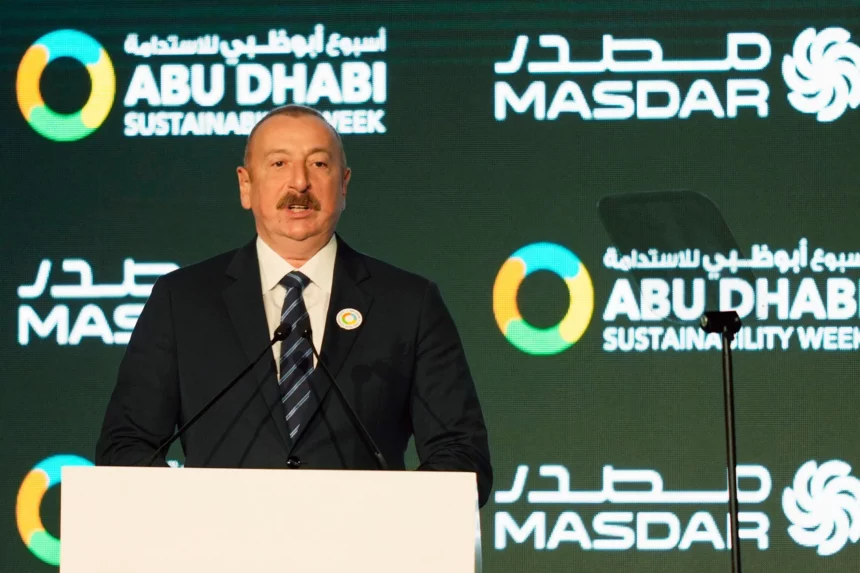
The UAE is also investing in solar energy in Georgia. In late 2023, the UAE’s renewable energy developer Masdar and the Energy Development Fund of Georgia signed an agreement to build the country’s largest solar power plant in Georgia’s Gardabani municipality, aiming to reduce dependence on imports and diversify local sources of electricity supply.
Additionally, tourism from Gulf countries to Georgia has surged due to visa liberalization. In the first six months of 2024, there was a nearly 40% increase in the number of visitors from Gulf states compared with the same period in 2023. The increase was particularly notable from Saudi Arabia, Kuwait, and Qatar.
Georgia and GCC states have expanded relations in diplomatic and political spheres as well. Georgia has strengthened diplomatic ties by opening embassies in Qatar and Saudi Arabia and establishing a diplomatic mission in the UAE. GCC states have shown support for Georgian sovereignty, which has been challenged by Russia’s occupation of 20% of Georgian territory since 2008. In January, Georgia and Saudi Arabia set up the Intergovernmental Coordination Council, aiming to advance political cooperation. Moreover, in February, the Georgian capital Tbilisi hosted the Georgia-Saudi Arabia Business Forum during which the two countries signed four agreements on expanding industrial, energy, and cultural ties.
Azerbaijan
Azerbaijan’s relations with the Gulf Arab states center around the country’s large oil and gas sector and are driven largely by Azerbaijan’s broader involvement in the Middle East. Baku has close ties with Israel and cautious, tense relations with Iran. Maintaining close relations with the GCC states helps Azerbaijan navigate Middle East geopolitics.
In November 2023, Azerbaijan and the GCC approved the Joint Action Plan 2024-2028, which aimed to advance political, investment, trade, and energy cooperation. In recent weeks, Azerbaijan and the UAE discussed progress on joint green energy initiatives, within the framework of the Joint Intergovernmental Commission on Economic, Trade, and Technical Cooperation between the two countries. On August 1, at the ninth session of the commission, which was held in Azerbaijan, Baku and Abu Dhabi agreed to expand ties in fields such as business and investment, tourism, aviation, industry, agriculture and food security, and energy.
Tourism is especially attractive as about 100,000 Saudis visited Azerbaijan in 2022. This was a major increase from the 33,273 Saudi visitors recorded in 2017. There has been similar growth in tourist flows from the UAE. The two countries established a visa-free regime in July 2023. In the first four months of 2024, there was a 22% increase in visits by Emiratis to Azerbaijan compared to the same period in 2023.
Gulf states have been expanding economic ties with Azerbaijan and making significant investments, particularly in the energy sector. On May 3, Saudi Energy Minister Prince Abdulaziz bin Salman met with Azerbaijani President Ilham Aliyev in Baku, where they discussed energy cooperation, particularly initiatives by Saudi Arabia’s ACWA Power in renewable energy. In January 2022, ACWA Power broke ground on a $300 million wind power plant northwest of Baku. The Abu Dhabi National Oil Company announced in August 2023 that it would acquire a 30% stake in the Absheron gas field in the Caspian Sea off the coast of Baku. Earlier this year, UAE President Mohammed bin Zayed al-Nahyan visited Azerbaijan and discussed enhancing energy partnerships.
In December 2023, Abu Dhabi sovereign wealth fund ADQ and Azerbaijan Investment Holding launched a $1 billion joint venture aiming to boost bilateral trade, focusing on clean energy, agriculture, pharmaceuticals, and technology. In the same month, the UAE’s Ministry of Investment and Azerbaijan’s Ministry of Digital Development and Transport signed a memorandum of understanding aiming to advance Azerbaijan’s digital infrastructure, focusing on developing data centers.
The GCC and Azerbaijan are working to expand trade ties. The Federation of Gulf Cooperation Council Chambers held the first Gulf-Azerbaijan Economic Forum in 2017 and is set to host a second forum in late September. In 2023, the volume of trade between the Gulf countries and Azerbaijan was estimated at $1.8 billion.
Relatedly, there is an emerging opportunity presented by shifting trade connectivity in Eurasia. Azerbaijan serves as a major transit route in the sprawling International North-South Transport Corridor, a network of roads, railways, and shipping routes connecting Azerbaijan, Russia, India, Iran, and other countries, linking the Baltic Sea to the Gulf. Though the corridor is usually associated with Russia’s and Iran’s efforts to connect their respective ports, the initiative offers GCC states an avenue to tap into Russia’s market as well as trade opportunities as Moscow shifts toward Asia away from the West.
Azerbaijan and GCC countries also share concerns about the ongoing geopolitical conflicts in the Middle East. And for Baku, its relations with Israel represent a major dilemma. Some GCC states have normalized ties with Israel, while Saudi Arabia’s normalization track has been effectively put on hold due to the raging war in Gaza. Azerbaijan therefore has had to tread carefully by balancing between its close ties with both the GCC states and Israel. When the Islamic-Arab summit gathered in November 2023 to condemn Israel’s military operation, Azerbaijan, as a member of the Organization of Islamic Cooperation, was absent from the summit.
Counterbalancing Russia
Russia’s distraction with its war in Ukraine has pushed the South Caucasus closer to the Middle East and, particularly, GCC states. The expanding relations between the two regions are building on opportunities for increased trade and investments, but they also factor in important geopolitical calculations. While the GCC states view the South Caucasus as a critical corridor to Europe, the growing role of the Gulf states on the global stage allows Azerbaijan and Georgia to pursue a multivector foreign policy and counterbalance Russia’s traditional dominance with surging Gulf Arab engagement.