Nestled on the shores of the Caspian Sea, Azerbaijan, an important strategic partner for China in the South Caucasus, has become one the latest countries to seek membership in the Brics grouping, a formidable economic bloc founded by Brazil, Russia, India and China, and later joined by South Africa.
In the evolving multipolar world order, Azerbaijan exemplifies the trend of countries leveraging their unique geopolitical positions to diversify alliances, pursue national interests and strengthen their global standing, as displayed by its strategic efforts to capitalise on its location at the crossroads of East and West.
The increasing economic and political impact of Brics is the source of Azerbaijan’s enthusiasm for the bloc. With its recent expansion, which included Egypt, the United Arab Emirates, Ethiopia and Iran, Brics has become a formidable economic powerhouse, accounting for almost half of the world’s population and more than a quarter of the global economy.
For Azerbaijan, a country looking to lessen its reliance on hydrocarbons and diversify its economy, Brics could provide access to large markets, technology transfers and development experience. Brics’ New Development Bank offers an appealing alternative to Western lenders by financing infrastructure projects and promoting economic development.
Aside from economics, Brics membership aligns with Azerbaijan’s ambition for a more multipolar world order. The bloc’s emphasis on multilateralism and its status as an alternative to the conventional Western-dominated international system resonate with Azerbaijan’s foreign policy stance, which strives to balance relations with Russia and the West while strengthening connections with developing nations.
Brics provides a chance for Azerbaijan to speak out on global issues and help shape a more equitable and just international order. Azerbaijan’s membership in Brics would not only strengthen the group’s geopolitical influence but also provide China with major economic and diplomatic benefits. Hence, China’s enthusiastic response to Azerbaijan’s intention to join Brics comes as no surprise.
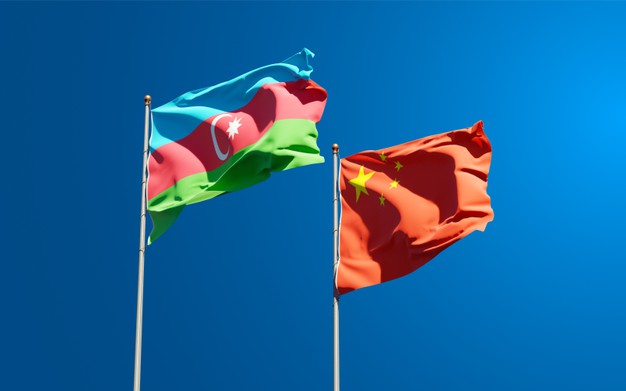
China, as a primary architect of Brics development and a loud proponent of multipolarity, sees Azerbaijan’s future participation as strategically important. At the Shanghai Cooperation Organisation summit in Astana in July, both countries reinforced this confluence of interests by issuing a joint declaration on establishing strategic cooperation.
Azerbaijan’s strategic location in the centre of Eurasia makes it a critical link in China’s ambitious Belt and Road Initiative, a massive infrastructure development project designed to connect China to Central Asia, Europe and beyond.
Azerbaijan’s well-developed transport infrastructure, including the Baku-Tbilisi-Kars railway and the Trans-Caspian International Transport Route – also known as the “Middle Corridor” – complements China’s pursuit of alternative trade routes to Europe, especially amid geopolitical tensions stemming from the Russia-Ukraine conflict.
Azerbaijan’s strategic position on the Middle Corridor is crucial for China’s trade ambitions, offering a safe and efficient land-sea route that dramatically reduces transit times and costs. This pathway enables China to diversify its freight distribution, strengthen Eurasian economic relations and increase its worldwide influence.
With transit times already cut from 53 days to 18 to 23 days and goals for further reductions, the Middle Corridor will considerably strengthen China’s trade and economic connectivity across Eurasia. Joining Brics could foster preferential trade agreements, boosting China-Azerbaijan trade and expanding Chinese market access in the Caucasus. It may also boost Chinese investments in Azerbaijan’s tech, agriculture and infrastructure sectors.
The partnership could enhance collaboration in renewable energy too, leveraging Chinese expertise in solar and wind technology. This aligns with Azerbaijan’s goal to generate 30 per cent of its energy from renewables by 2030, targeting US$2 billion in investments for such projects.
Azerbaijan’s commitment to intercultural dialogue and regional cooperation, evident in its membership in forums such as the Non-Aligned Movement and the Organisation of Islamic Cooperation, is consistent with the Brics vision of an inclusive, multipolar world.
Azerbaijan’s hosting of the World Forum on Intercultural Dialogue exemplifies this dedication. Furthermore, as a secular Muslim-majority country, it could serve as a bridge between Brics founding members and Muslim countries that recently joined such as Iran and Egypt.
But while Brics membership holds great promise for Azerbaijan, challenges remain. Domestically, economic diversification, reforming institutions and settling a long-term peace accord with Armenia are critical.
On the global stage, Azerbaijan must strike a cautious balance between its Brics ambitions and existing Western connections, particularly its energy partnership with the European Union. This difficult balancing effort shows the complexity of a multipolar world in which countries want to diversify partnerships while maintaining existing relationships.
Brics’ internal dynamics present additional challenges. The bloc is not a monolithic entity; member states often pursue divergent interests. Azerbaijan will need to navigate these complexities adeptly, leveraging its diplomatic skills to foster consensus and avoid intra-Brics conflicts.
Despite these obstacles, the potential benefits of Brics membership for Baku and Beijing outweigh the risks. Brics offers Azerbaijan a platform to speed up its economic development, diversify its partnerships and enhance its global standing. For China, Azerbaijan’s inclusion strengthens Brics’ presence in Eurasia, enhances regional security cooperation and eases regional commerce and investment.
Azerbaijan’s invitation to the Brics summit in Kazan, |Russi, in October is pivotal. The summit’s decisions, particularly those concerning Azerbaijan’s Brics ambitions, could determine the country’s future and affect regional dynamics, potentially altering the growing multipolar international order.
As the world moves away from unipolarity, strategic connections like the one emerging between Azerbaijan and Brics will become increasingly crucial in establishing a more just, equitable and multipolar global environment, brick by brick.
Dr Magsud Mammadov is currently an AsiaGlobal Fellow at the Asia Global Institute, with over 15 years of diverse experience in government, multilateral institutions and the private sector.