By using this site, you agree to the Privacy Policy and Terms of Use.
Accept
Azemedia new logo
  • Home
  • Opinion
  • News
    • Economy
    • Energy
    • Climate and Ecology
  • Diaspora
  • Interview
  • Science
  • Logistics-Transport
  • History
  • Defense
Aze.MediaAze.Media
Font ResizerAa
Search
  • News
  • Economy
  • Climate and Ecology
  • Energy
  • Opinion
  • Culture
  • Gender
  • Interview
  • Science
  • Logistics-Transport
  • History
  • Defense
  • Karabakh
  • Diaspora
  • Who we are
Follow US
© 2021 Aze.Media – Daily Digest
Aze.Media > History > The discovery of a bronze age game board in Azerbaijan challenges the origin of one of the world’s oldest games
History

The discovery of a bronze age game board in Azerbaijan challenges the origin of one of the world’s oldest games

A new archaeological study revealed that an ancient board of a game, known as “Hounds and Jackals” or the “Game of 58 Holes”, found in 2018 on the Absheron peninsula in present-day Azerbaijan, is the oldest known.

AzeMedia
By AzeMedia Published August 30, 2024 3k Views 7 Min Read
Oldest Game Board
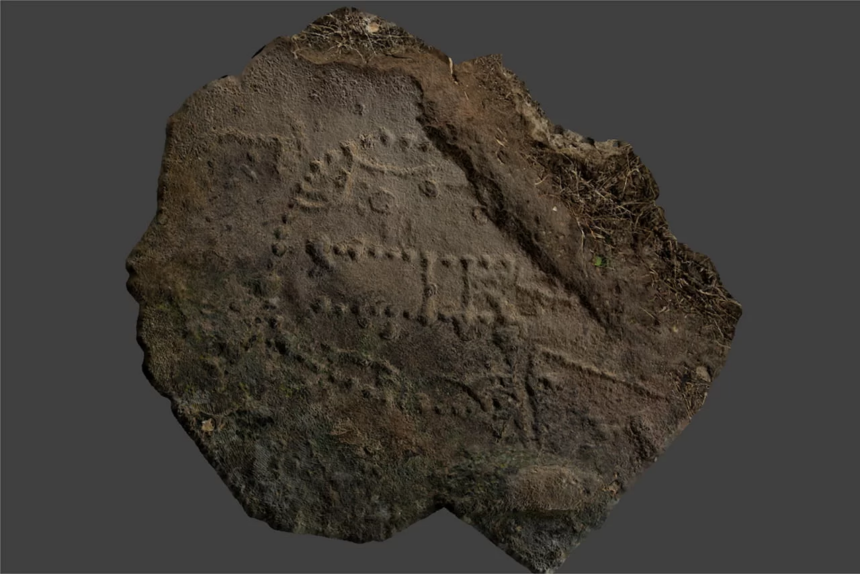
The fifty-eight holes board from Çapmalı. Image Credit: W. Crist et al.

For a long time, most have believed that the oldest board games originated in ancient Egypt. That presumption has been contested by a recent study, though. Analyzing board games found on Azerbaijan’s Absheron Peninsula indicates that they might have originated in Asia rather than Egypt.

The study is published in the European Journal of Archaeology. Traditional interpretations hold that the board game originated in ancient Egypt in the second millennium BCE, but evidence from recent excavations suggests that the game was also played in the South Caucasus during this time, casting doubt on this theory.

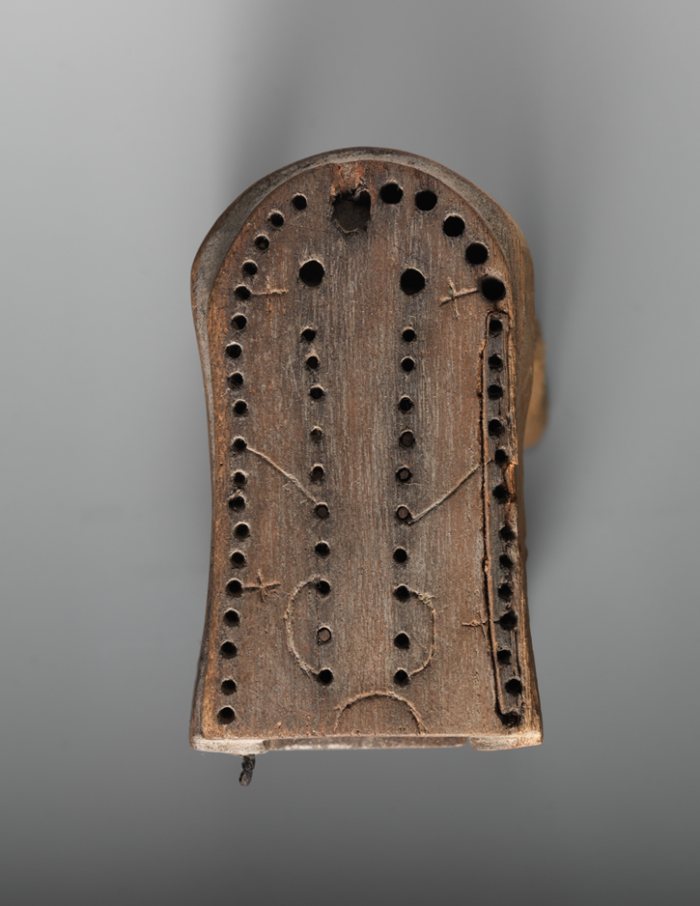
Sometimes called “hounds and jackals” due to some gaming pieces having animal heads carved into them, 58 Holes was played for centuries, from the middle of the Bronze Age and into the Iron Age.  The game was played on a board with fifty-eight holes arranged in two parallel rows of ten holes each, encircled by an arc of thirty-eight holes, and dates back to the third millennium B.C. The shapes of the game pieces varied with the region, and they moved in this pattern. Certain holes had lines connecting or marking them, indicating intricate game rules.
Çapmali Rock Shelter Min
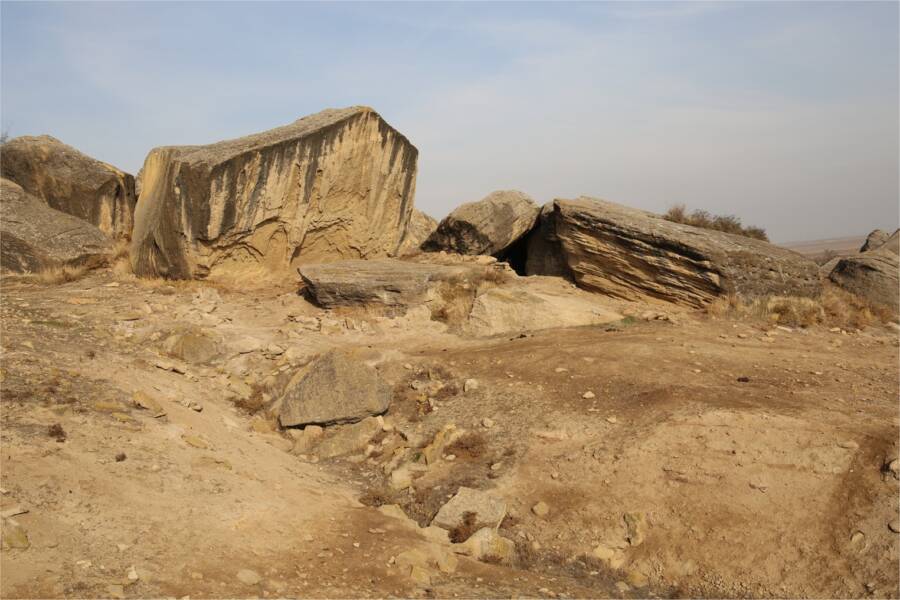
The Çapmalı rock shelter. The stone in the center is where researchers came across the Game of 58 Holes.
Photo: European Journal of Archaeology

In the tomb of el-Asasif in Egypt, the earliest known discovery of a board of this type dates from between 2064 and 1952 B.C. Because of this discovery and other boards discovered in Mesopotamia, the Levant, and Anatolia, archaeologists have speculated that the game may have originated in Egypt or southwest Asia.

Another example of an early board was found in Stratum II at Kültepe in central Anatolia which probably dates from around 1885 to 1836 BCE.

“Six patterns with the distinctive geometry of the game” were found by researchers at several locations throughout the Absheron Peninsula. The best example of these was discovered in the Gobustan National Reserve, close to the western shore of the Caspian Sea, at a rock shelter known as Çapmalı.

By studying the site, researchers determined that the “game pattern on stone… can be associated with the shelter’s earliest, Middle Bronze Age, layer.”

According to the study, there is evidence from Azerbaijan that people played the game during the late third to early second millennium BCE, long before it appeared in Egypt. Moreover, it seems those who did play it also participated in regional interactions that ranged across southwestern Asia at the time.

“The diversity of the fifty-eight holes board in south-western Asia—as well as its early appearance and longevity there—offers a stronger case for an origin further north than Egypt,” the authors explain.

“Rendered as a series of shallow depressions, with narrow channels connecting certain holes, the pattern closely resembles boards found in south-western Asia and Egypt,” write Walter Crist and Rahman Abdullayev.

Other examples of the game were found at sites in Ağdaşdüzü, Yeni Türkan, and Dübəndi.

The arrangement of the boards at sites like Çapmalı indicates that the game might have been an integral part of daily life, possibly used during the winter months when shepherds settled in shelters like Gobustan.
Hounds And Jackels
A well-preserved example Game of fifty-eight holes board from Tomb 312 at el-Asasif, Egypt. Eleventh Dynasty.
Photo: Metropolitan Museum of Art

This theory is supported by the analysis of the pottery discovered at these locations, which points to the seasonal occupation of these areas by pastoral communities. Along with older artifacts from the Middle and Late Bronze Ages, the discoveries include ceramic fragments from the Khojaly-Gadabay culture, which date from the 13th to the 7th century B.C. The combination of these materials suggests that the Çapmalı site and others in the area were occupied over and over for centuries, maybe by the same groups of people who had similar cultural traditions.

These results imply that the Absheron Peninsula was not isolated, but rather a part of a larger cultural network that linked the peoples of the Caucasus with civilizations to the south, including Mesopotamia and Egypt.

Although their work suggests 58 Holes may have originated in southwestern Asia before it became popular in Egypt, the authors stress that more information would be needed before any individual culture could be credited with its invention.

Cover Image: The fifty-eight holes board from Çapmalı. Image Credit: W. Crist et al.

Oguz Buyukyildirim

Cropped Resim 2021 03 09 201538

You Might Also Like

The story of a provocation – Who stood behind the events in Sumgait?

A tragedy that changed national consciousness

From Black January to sovereignty: lessons Azerbaijan cannot forget

Historian Rizvan Huseynov: Azerbaijan should learn from Kazakhstan’s experience

September 27: The day Azerbaijan shattered Yerevan’s dreams and changed the course of history

AzeMedia August 30, 2024 August 30, 2024

New articles

148898 AAfileIranAzerbaijan
Iran’s Caspian signaling and the boundaries of regional alignment
Opinion April 1, 2026
Tumblr 7785d4993072edee15c5f76f97426150 cbc66783
No talks with revanchists: what Armenians will have to pay for
Opinion April 1, 2026
FzXmfsHpncSf7mjEilSDOohDU3PyMoxbiG63JOjQ
ING Group: Azerbaijan’s external economic position remains very strong
News April 1, 2026
69ca6321ec2b869ca6321ec2b9177487132969ca6321ec2b669ca6321ec2b7
Baku Initiative Group calls on UN member states to take practical steps on slavery resolution
News March 30, 2026
7YNXnb05zWpwunxmQWNmwxfqd6tq6osklTkNbHWo
Azerbaijan evacuated over 3,000 people from Iran to date
News March 30, 2026
Bildschirmfoto 2026 03 30 um 11.14.38
Turkey-Azerbaijan alliance strained by opposing stances on Israel
Opinion March 29, 2026
Screenshot
President Ilham Aliyev completely, directionally turned his country around – Steve Witkoff
News March 28, 2026
69c778d12350869c778d123509177468027369c778d12350669c778d123507
Azerbaijani oil price exceeds $124
News March 28, 2026
QJ9m9qaUTjKho4NQMQ4PTfRb7ykBAWVDMnL2UsSf
FAO offers Azerbaijan to develop five-year fisheries development plan
News March 28, 2026
577c9b7a tcxj78bkp11yulvvjs6gr
Türkiye and Azerbaijan sign media cooperation pact at STRATCOM summit
News March 28, 2026

You Might Also Like

фото

The story of a provocation – Who stood behind the events in Sumgait?

February 27, 2026 11 Min Read
1614066762 Feyyad Ana

A tragedy that changed national consciousness

February 25, 2026 8 Min Read
Basliksiz

From Black January to sovereignty: lessons Azerbaijan cannot forget

January 20, 2026 8 Min Read
гусейнов 1

Historian Rizvan Huseynov: Azerbaijan should learn from Kazakhstan’s experience

November 4, 2025 6 Min Read
Unnamed

September 27: The day Azerbaijan shattered Yerevan’s dreams and changed the course of history

September 27, 2025 9 Min Read
52 11

107th anniversary of the liberation of Baku from Bolshevik–Dashnak occupation

September 15, 2025 5 Min Read
Baku City View 1320x880

The history of Azerbaijan without Russian editing

September 4, 2025 10 Min Read
Hell

“In 1920, our independence was drowned in blood”

August 28, 2025 8 Min Read

Useful links

426082d1 a9e4 4ac5 95d4 4e84024eb314 pojkz91103g6zqfh8kiacu662b2tn9znit7ssu9ekg
Ab65ed96 2f4a 4220 91ac f70a6daaf659 pojkz67iflcc0wjkp1aencvsa5gq06ogif9cd0dl34
96e40a2b 5fed 4332 83c6 60e4a89fd4d0 pojkz836t9ewo4gue23nscepgx7gfkvx6okbbkasqo
759bde00 a375 4fa1 bedc f8e9580ceeca pq8mvb9kwubqf6bcadpkq5mz16nayr162k3j2084cg
aze-media-logo-ag1

We are a unique political and socio-cultural digest offering exclusive materials, translations from Azerbaijani media, and reprints of articles from around the world about Azerbaijan.

  • Privacy Policy
  • Terms and Conditions
  • Cookies Policy

Email: editor@aze.media

© 2021 Aze.Media – Daily Digest
aze-media-logo1 aze-media-logo-ag1
Welcome Back!

Sign in to your account

Lost your password?