Hungarian Prime Minister Viktor Orbán, presiding over the European Union (EU), participated in the summit of the Organization of Turkic States (OTS) in Shusha this month. Speaking at the summit, the Prime Minister noted that he considers the OTS an important organization promoting cooperation between East and West.
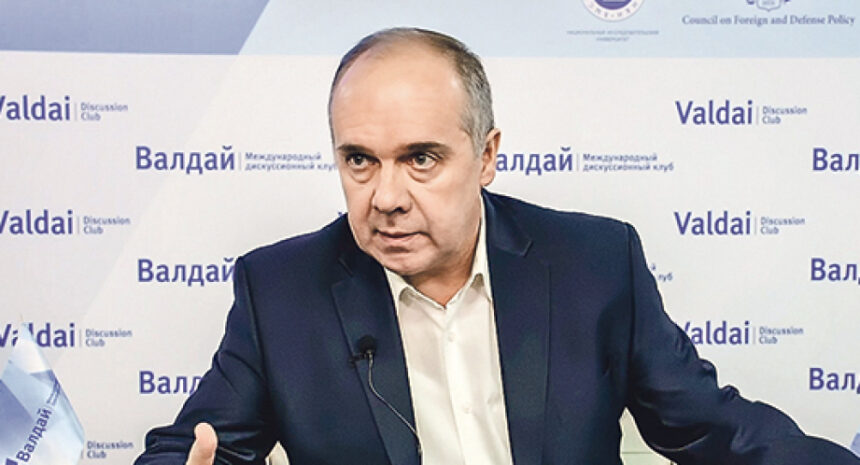
AZERTAC interviewed Hungarian expert Gábor Stier, a member of the Valdai International Discussion Club.
– How do you assess the results of Viktor Orbán’s visit to Azerbaijan and how will this affect the development of bilateral economic relations?
– Orbán’s cooperation with the Turkic world expands Hungary’s geopolitical and economic opportunities. Both directions fit perfectly into the EU’s policy, as Brussels has recently focused on the Caucasus region. This is primarily related to compensating for the energy resources lost due to sanctions against Russia. The region is of great importance to Hungary as one of the centers of trade routes between China and Europe. Azerbaijani gas is important, but as the Hungarian Prime Minister has repeatedly emphasized, Hungary does not build a “gas friendship,” but rather a brotherly relationship with Azerbaijan. During the current negotiations, Orbán sought to establish cooperation with the region based on national interests. The most important outcome of the trip was Hungary’s acquisition of a stake in one of the world’s largest natural gas fields. This will protect against significant price fluctuations and uncertainty in the energy market. With this historic agreement, Hungary’s supply security could reach a new dimension. The Shah Deniz field is one of the largest natural gas fields in the world. Annual production is about 30 billion cubic meters, and a significant portion of the gas reaches Europe through the Southern Gas Corridor. The Hungarian state energy company MVM acquired a 5% stake in the production-sharing agreement for the Azerbaijani gas field.
Since Azerbaijan has become extremely important in Hungary’s energy supply, the strategic partnership between the two countries provides Hungary with a significant competitive advantage and at the same time considerable security. But close cooperation is not limited to traditional energy sources. The large-scale project to transport green electricity from Azerbaijan to Hungary and Europe via the Black Sea is accelerating. Hungary has been systematically building relations with Azerbaijan in other areas for many years. As a result, the commercial turnover of 120 million euros was a record last year. In addition, Hungarian companies will participate in the restoration of settlements in the liberated Karabakh. It should also be noted that the Hungarian government takes a pragmatic approach to the Karabakh issue. In Shusha, Viktor Orbán noted the return of Karabakh as a step towards stabilizing the region.
– The Karabakh Declaration was signed at the informal summit of the Organization of Turkic States in Shusha. How will this document contribute to the activities of the Organization of Turkic States? What challenges does this organization face today?
– The Karabakh Declaration, signed in Shusha, is another step towards strengthening cooperation in the Turkic world. In my opinion, this will further deepen energy and trade ties, and further unite the Turkic world. This is necessary in the context of the transformation of the world. As for the Organization of Turkic States, it is one of the most important pillars of cooperation between East and West. It is an important prerequisite for economic growth and improving living standards, and stability also strengthens the Turkic world geopolitically. Stability in the region, through which trade routes and energy resources pass, meets the interests of China and Europe, while the US is not directly interested in this. For official Washington, it is more important to keep Beijing and Moscow under pressure by destabilizing the region.
– Partnership in the energy sector, including renewable energy and energy efficiency, is very important today. How do you assess the cooperation between Azerbaijan and Hungary in this direction?
– As I have already mentioned, the energy sector is perhaps the most promising area of cooperation between our countries. And this is not by chance, since Azerbaijan is rich in hydrocarbons, especially gas. But Baku also pays great attention to renewable energy projects, which opens up another opportunity for cooperation. Azerbaijan wants to export more gas to Europe and also establish its first major renewable energy sources. In addition, the creation of a green energy corridor is planned. As part of cooperation with Azerbaijan, Georgia, Romania, and Bulgaria, Hungary also signed a declaration of intent to import large volumes of green energy into Europe. To this end, the energy companies of the participating countries will create a joint company, and if everything goes well, supplies along this route may begin at the beginning of the next decade. Naturally, for this, it is necessary to complete the construction of the world’s longest underwater pipeline with a length of more than 1,100 kilometers. This also shows that Hungarian-Azerbaijani energy cooperation still has great potential.
– Interaction along the East-West and North-South transport corridors is an important area of cooperation between Azerbaijan and the OTS member states. How can the OTS contribute to the development of Azerbaijan’s transport sector, including the development of the Middle Corridor, as well as the North-South route?
This aspiration is partly supported by the recently signed Karabakh Declaration, as both the Middle Corridor and the North-South route expand and strengthen the region, connecting it with other key regions geopolitically, commercially, and logistically. Therefore, Azerbaijan triumphs in the development of these projects not only from an economic but also from a geopolitical point of view. Official Baku is fortunate that, along with the states of the region, China, Russia, and the European Union are interested in the implementation of the East-West and North-South routes. Therefore, financial resources will be allocated to these projects.
– What are your expectations for COP29 in Baku this November? How can Hungary support Azerbaijan in successfully hosting COP29?
– Hosting COP29 provides Azerbaijan with an excellent opportunity to showcase its achievements and effectiveness in addressing climate change issues, as well as its environmental achievements. This can contribute to the initiation of future cooperation, including attracting new technologies for environmental protection activities. This also means that new joint projects can be started using the most modern technologies. As for development projects in Karabakh, it is quite reasonable to carry out all developments here using the principles of environmentally friendly, sustainable development, and a circular economy. Projects in the field of hydropower and the creation of solar power plants will certainly be present. I am confident that this will support the local economy. This conference can give impetus to many projects. China can play an important intermediary role in this matter. Hungary can help Azerbaijan in terms of energy efficiency and give this issue more importance in the EU. And holding the meeting in Baku will give new impetus to green projects in the region.