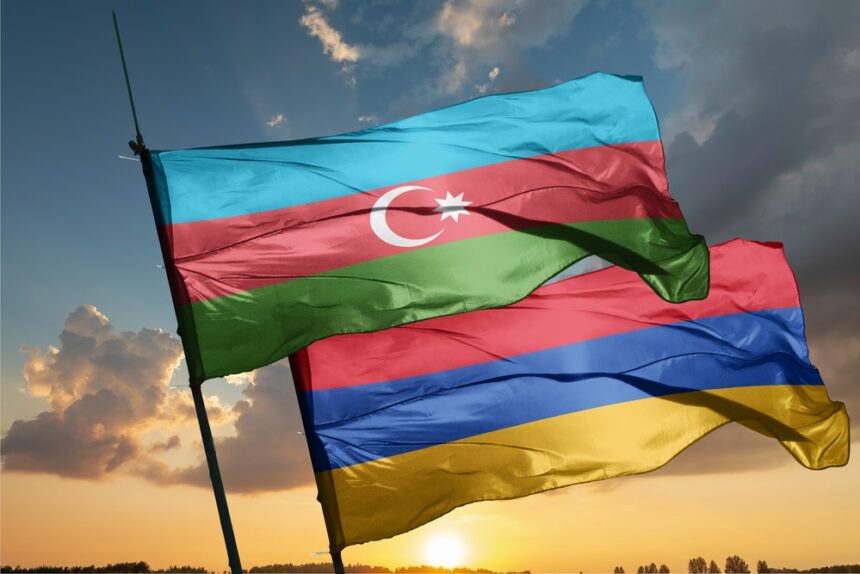
Despite various international efforts and fleeting moments of optimism, the road to lasting peace remains elusive.
Historical context & recent developments
The conflict between Azerbaijan and Armenia centered on the now defunct Nagorno-Karabakh region, a territory internationally recognized as part of Azerbaijan but predominantly populated by ethnic Armenians by 2023. The dispute escalated into full-scale war in the late 1980s and early 1990s, resulting in significant occupation of Azerbaijani lands, casualties, and displacement of nearly 1m refugees from present-day Armenia and IDPs. A ceasefire brokered in 1994 did little to resolve the underlying issues, leading to intermittent clashes over the subsequent decades.
The Second Karabakh War in 2020 marked a significant turning point. Azerbaijan’s decisive victory and reclamation of territories occupied by Armenia for nearly 30 years reshaped the regional dynamics. This military success was seen as a crippling blow to Armenian fascism and occupation, significantly altering the strategic landscape and bringing new momentum to peace efforts.
Since 2020, both nations have made numerous attempts to negotiate a peace agreement. Despite a shared rhetoric of desiring peace, progress has been halting and fraught with setbacks. The negotiations have been characterized by the axiom, “a step forward, three steps back,” reflecting the complexity and deep-seated mistrust between the parties.
Key obstacles to peace
Azerbaijan insists that any peace accord must eliminate Armenia’s territorial claims and require constitutional amendments to remove clauses pertaining to Azerbaijan and Türkiye. This demand faces significant opposition from nationalist and ultra-nationalist factions within Armenia, who are unwilling to renounce historical claims.
Armenian Prime Minister Nikol Pashinyan, while ostensibly committed to a peace deal, faces considerable internal opposition from revanchist and ultra-nationalist forces. These groups, supported by the Karabakh junta regime and the global Armenian diaspora, resist any agreement perceived as a capitulation.
Azerbaijan is wary of international mediators, given their historical biases and ineffective mediation. The OSCE Minsk Group, comprising the US, France, and Russia, has failed to enforce UNSC resolutions calling for Armenian withdrawal from occupied territories, leading to widespread skepticism about their neutrality.
The role of international actors
The involvement of international actors has been a double-edged sword. On one hand, external pressure and mediation are essential for brokering and enforcing peace agreements. On the other, the perceived biases and strategic interests of these actors have often exacerbated tensions.
France’s open support for Armenia, including initiating anti-Azerbaijani resolutions with the UN and arms sales, has undermined its role as a neutral mediator. The sale by France of CAESAR artillery systems to Armenia exemplifies this bias, fostering distrust in Baku.
The US has also faced criticism for its perceived partiality and the substantial financial aid provided to Armenia, which some view as bolstering Armenian intransigence.
Russia’s role has been particularly complex. Historically providing substantial military support to Armenia, Moscow’s position has fluctuated, particularly under different leaderships. The Kremlin’s influence remains significant, but its intentions are often viewed with suspicion by both parties.
The situation remains ambiguous, with both Azerbaijan and Armenia accusing each other of a wide range of transgressions. Azerbaijan, in particular, is wary of involving international actors in the current stage of negotiations, citing their ineffective and biased roles in the past. This skepticism stems from a history of pro-Armenian bias and a failure to enforce meaningful resolutions.
The aftermath of the 2020 war exposed many geopolitical dynamics. France, rather than adhering to its OSCE Minsk Group mandate, openly supported Armenia. This included initiating several anti-Azerbaijani resolutions at the UN Security Council, which ultimately failed, highlighting France’s inability to maintain impartiality. Additionally, France, alongside India and other nations, continued to supply Armenia with weapons and missiles, further eroding trust. The recent sale of CAESAR artillery systems to Armenia underscores Azerbaijan’s perception that France cannot be a neutral mediator.
Similarly, the United States has also been criticized for its role. Since the early 1990s, the US has funneled billions of dollars into Armenia, a move seen by Azerbaijan as an attempt to sustain Armenian control over the disputed territories and legitimize the occupation.
Russia’s involvement in the conflict has been marked by fluctuating strategies and support. During the Soviet era, Moscow’s policies often fueled the conflict. Under Boris Yeltsin, Russia provided Armenia with billions of dollars worth of weapons. Vladimir Putin’s administration continued this trend, supporting the regimes of Robert Kocharyan and Serzh Sargsyan. A slight change in Russian policy only emerged with the rise of Nikol Pashinyan in 2018, albeit inconsistently.
Looking ahead to the COP29 summit in November 2024, which Azerbaijan is set to host, there is cautious optimism about the potential for a peace agreement. However, the path to such an accord is fraught with challenges. Experts are skeptical about the feasibility of a peace deal given Azerbaijan’s firm demands and the persistent mistrust between the parties.
The post-COP29 landscape
As COP29 approaches, Azerbaijan is slated to host in November 2024, there is cautious optimism that this event might catalyze renewed peace efforts. However, the path to a peace accord remains fraught with challenges. The following scenarios could unfold:
The international attention from COP29 could pressure both parties to make meaningful concessions. This would require Armenia to amend its constitution and renounce territorial claims, while Azerbaijan might need to offer security guarantees and economic incentives.
Given the deep-seated mistrust and domestic opposition in both countries, negotiations might continue to stall, perpetuating the current state of uneasy ceasefire without substantial progress.
Recent border violations and military skirmishes raise the specter of a third war. Both nations are heavily armed and nationalist sentiments run high in Armenia, making the prospect of renewed conflict a serious concern.
Conclusion
The conflict between Azerbaijan and Armenia remains one of the most intractable disputes in the post-Soviet space. Despite significant changes on the ground and intermittent diplomatic efforts, a lasting peace remains elusive.
As the post-COP29 period unfolds, the possibility of a peace accord will depend on the willingness of both parties to make difficult compromises and the ability of international actors to facilitate a fair and unbiased resolution. Without these elements, the region risks remaining locked in a cycle of conflict and instability.
While the desire for peace is evident, the historical and ongoing complexities involving international actors, domestic politics, and deep-seated mistrust continue to hinder progress. The upcoming COP29 summit may offer a platform for renewed efforts, but significant hurdles remain before sustainable peace can be achieved.
Fuad Muxtar-Agbabali is a distinguished journalist from Azerbaijan and has authored many white papers on International Affairs and political analysis focused in the regions of Europe and Southern Caucasus.