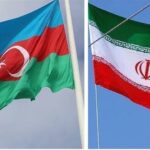
This essentially explains the sharp rebuke from the Armenian Prime Minister towards President Lukashenko.
It’s long been no secret that Presidents Lukashenko and Aliyev have close partnerships, which are much older than Pashinyan’s tenure in power in Armenia.
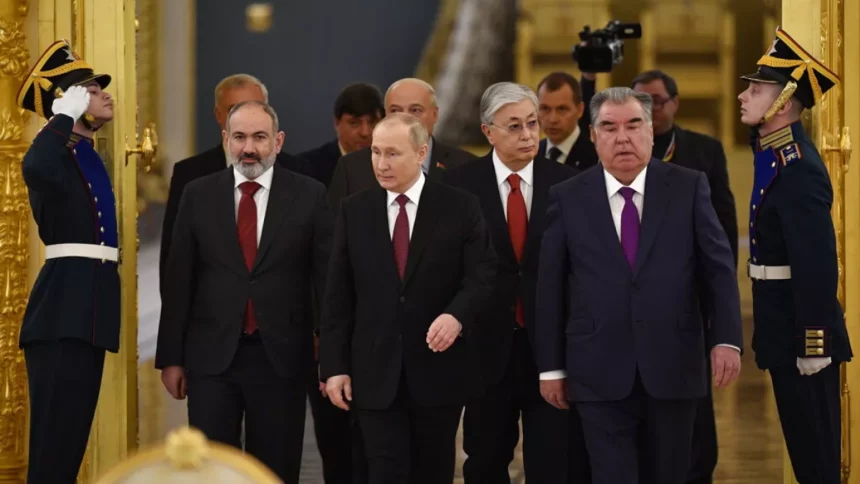
In early June, a meeting of the CSTO Security Council Secretaries Committee took place in Almaty, during which Belarusian Security Council Secretary Alexander Volfovich proposed starting a dialogue on forming a new system of international security in the Eurasian space.
The platform of the new organization should include initiatives to address common challenges for the Commonwealth of Independent States (CIS), the Shanghai Cooperation Organization (SCO), and the Conference on Interaction and Confidence Building Measures in Asia (CICA).
Here arises an important nuance. After prolonged negotiations during Alexander Lukashenko’s visit to Azerbaijan, indirect evidence suggested that part of the exchange between the two leaders was dedicated to security issues. Lukashenko himself mentioned this in a few remarks during the public part of his negotiations with Vladimir Putin in Minsk.
As is known, Azerbaijan has recently become a key guarantor of security in the South Caucasus and promotes its agenda in the 3+3 format. Naturally, if Azerbaijani diplomats get involved in developing a new security platform to replace the CSTO or overshadow its agenda, Baku will bring its vision of regional processes into it. And the main partner representing the South Caucasus in the dialogue among the initiative’s participants turns out to be official Baku, President Ilham Aliyev, and not Pashinyan, who is turning towards the West, with one foot already outside the CSTO (recall that after the visit of US Deputy Secretary of State for European and Eurasian Affairs James O’Brien to Armenia, Pashinyan announced raising Armenia-US relations to the level of strategic partnership).
Only this shift towards Baku in the prospective security strategy of Moscow and Minsk can explain Pashinyan’s outrageously sharp remark regarding the well-known situation of Belarus’s support and sympathies towards Azerbaijan. It’s long been no secret that Presidents Lukashenko and Aliyev have close partnerships, which are much older than Pashinyan’s tenure in power in Armenia.
Pashinyan clearly lacked not only diplomatic tact but also basic restraint when he literally shouted from the rostrum of the Armenian parliament:
“… I want to declare that I will never visit Belarus again as long as Alexander Lukashenko is president. And no official representative of Armenia will visit.”
It’s clear that after the Prime Minister’s public outburst, the Armenian Foreign Ministry recalled its ambassador in Minsk for further consultations.
Let’s recall that the state visit of the Belarusian President to Azerbaijan, during which Alexander Lukashenko made the remarks that angered Nikol Pashinyan, took place from May 15 to 17. But a month has passed since then. It seemed the train for such a stormy reaction had long left the station. Therefore, the reasons for the Prime Minister of Armenia’s angry dissatisfaction should be sought in some future arrangements being discussed today in the context of the development and possible transformation of the CSTO.
With such vocabulary and an unstable nervous system towards traditional, not overseas, partners, Pashinyan might find himself outside the room discussing the future security of Eurasia even before he manages to submit a note on Armenia’s withdrawal from the CSTO or freezing its membership in this structure.
Back in the 2010s, the Collective Security Treaty Organization began to transform into three segments of independent coordination due to several geopolitical reasons and, primarily, the Karabakh conflict – the Russian-Belarusian, Central Asian, and Russian-Armenian segments.
By 2024, the Russian-Belarusian segment has shown itself as the most capable element of the CSTO in terms of political and military coordination. Both countries have practically acted as one in this sphere.
The Russian-Armenian segment shrank to the level of formal documents by 2020 and, after the Second Karabakh War, was on the verge of collapse due to Pashinyan’s efforts.
The Central Asian segment tries to maintain public neutrality concerning the Russia-West confrontation, fearing to make gestures of support for either side (although in the community of regional senior military officers, there may be certain, not publicly expressed, sympathies towards Russia).
At the same time, there is a tendency to expand the Central Asian segment of the CSTO by involving Uzbekistan. As is known, in July, this country, along with Azerbaijan, will participate in the “Birlik” exercises in Kazakhstan, which will take place outside the CSTO format but with the same military units that usually participate in exercises with the Russian side…
The proposals voiced by Belarusian Security Council Secretary Alexander Volfovich, apparently arose from discussions held on May 23-24 during Vladimir Putin’s official visit to Minsk. Essentially, the basic details of this initiative could have been voiced there along with the new Russian Defense Minister Andrei Belousov.
One of the CSTO’s problems is the lack of sufficient funding and a bland image (lack of positive media coverage in the organization’s member countries). If we set aside the past confrontation between Armenia and Azerbaijan and the current Russia-West conflict in Ukraine, part of the really effective post-Soviet security agenda could have been activated collectively many years ago.
Thus, at the next SCO summit in Astana on July 3-4, some of these initiatives with which Belarus enters this largest security organization may be considered, having preliminarily discussed them with its partners from Tashkent to Baku.
And it seems that Armenia will not be among them.
Ilgar Huseynov
Translated from haqqin.az