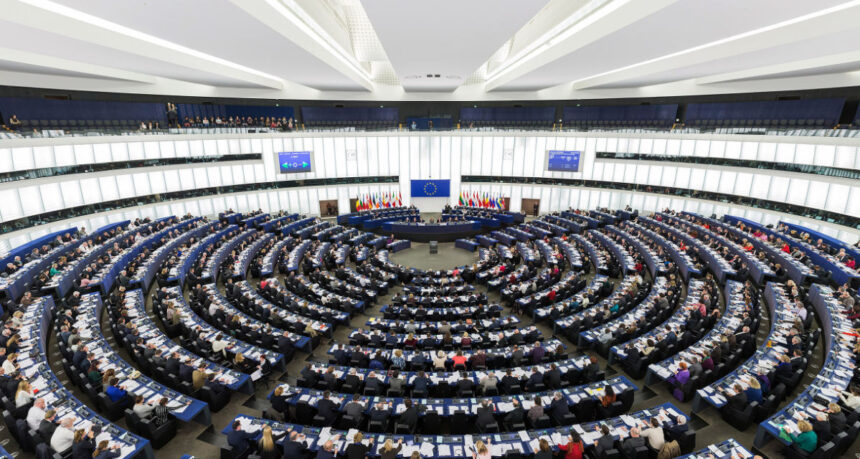
However, there will be some caution due to the significant losses of centrists in several key European countries. Much will depend on whether Ursula von der Leyen or her equivalent can be reinstated as head of the European Commission, and whether a powerful far-right faction can be formed within the EP.
The sensation in the European Parliament elections was not that the right and far-right gained more representation than before, but that they won majorities in key EU countries—France, Germany, Italy, and others. This outcome is a complete failure for President Macron and Chancellor Scholz in terms of their external and internal policies.
Scholz is standing firm, not resigning or dissolving the legislative body despite persistent calls for it. Macron, however, had to call for snap elections to the National Assembly, and the French Prime Minister requested resignation, though it was not accepted by the President. Unofficially, Macron is consulting with close associates about holding early presidential elections, although the Élysée Palace has not confirmed this. Resignation seems logical since Macron’s party, Renaissance, received half the votes (15.2%) compared to Marine Le Pen’s National Rally in France. The latter may further strengthen its position in the upcoming parliamentary elections in late June or early July.
Preliminary data indicates that despite the evident success of the right/far-right in the EP elections, they will not be able to “break through” Brussels: Eurosceptic parties will receive 100-130 out of 720 mandates in the EP, while mainstream parties like the European People’s Party (185 mandates), centrists, social democrats, and greens will form a majority and block the far-right from entering the EU’s leadership structures. This includes the powerful European Commission, which is expected to be headed again by Ursula von der Leyen, who aligns with Washington’s interests along with EU foreign policy chief Josep Borrell. Essentially, unless something extraordinary happens and she is not re-elected, the “war party” will dominate the EU for the next five years.
Von der Leyen’s main task is to unite traditional centrist parties (socialists, liberals) to form a majority (at least 361 seats in the parliament). She also has the “greens” and possibly the right-wing Brothers of Italy party led by Prime Minister Meloni as backup. Thus, negotiations will be intense.
Von der Leyen will also likely need support from Macron, if he remains influential in the coming weeks, and Scholz, as leaders of the largest EU countries. However, Brussels insiders consider Macron unreliable and speculate he is lobbying for former Italian Prime Minister Mario Draghi to head the European Commission.
Regardless, it will be harder for the European Parliament to pursue a hawkish policy, especially if a powerful far-right faction forms. Predicting its formation is premature as new alliances must first develop in the EP. It’s uncertain whether right and far-right members will avoid internal discord, particularly regarding support or non-support for Russia in the context of the Ukraine war. Notably, French and German far-right parties recently split, albeit not over Russia and Ukraine.
Discussing the hawkish policy and its potential victory in the new EP, this triumph might not yield the desired results. Dominance of right-wing forces in France (first place) and Germany (second place), among others, will impact decisions on issues like immigration, climate policy, financial support for Ukraine, and sanctions against Russia and other “odious” countries, including EU exit considerations.
Regarding the Russia-Ukraine context, a reconfiguration in the EP might still provide funds for Ukraine’s war effort, though less than Kyiv and the US desire; sanctions against Russia will continue but at a reduced pace. Brussels will continue to intervene in the affairs of other countries, especially in the post-Soviet space, but less aggressively, considering the policies of right/far-right and Eurosceptic parties in victorious countries.
The Kremlin has already labeled the new European Parliament as “pro-European” and “pro-Ukrainian.” “It seems indeed that the majority in the European Parliament will be pro-European and pro-Ukrainian. However, we also see the future configuration of the European Parliament and the growing popularity of right-wing parties,” stated Dmitry Peskov, the press secretary of the Russian president.
The question arises why “old good Europe,” considering specific countries rather than as a whole, has made a “right turn,” though not fully at the European Parliament level.
The rightward shift developed gradually over the past five years, driven by several factors. Firstly, the socio-economic situation in Europe significantly worsened due to the Ukrainian war (partly due to sanctions against Russia), which previously affluent Europeans were not accustomed to. Now, they count the billions Europe spends on Ukraine and their own losses. Secondly, Europeans are fed up with the US’s diktat, losing not only money but sovereignty and traditional ways of life.
Additionally, they fear being drawn into the war; they are dissatisfied with the EU’s migration policy (especially under Macron and Scholz). Thus, voters reacted negatively to leaders supporting military intervention in Ukraine: Macron, a staunch supporter of arms supplies and even troop deployment to Ukraine, and Scholz, not far behind, were shown the door by voters.
Far-right parties focused on these issues, plus the Middle East and Africa’s problems, particularly in France. The general trend in the new “right-wing countries” is prioritizing Europe’s interests over those of the US and Brussels, which demands more power and acts in unison with Washington.
In short, the removal of the Eurocracy, which works against Europe’s interests, hasn’t happened yet, and the European People’s Party seems poised to play a leading role again in the EP. But it will face strong opposition from countries that have made a “right turn.”
Thus, while no geopolitical shock occurred at the European Parliament level, it is present within the EU. Examples from France (the most significant), Germany, Austria, and others illustrate this.
For Brussels and Washington, the rise of right/far-right forces in European countries is just the first episode of a bad dream, frightening overseas politicians who imposed “American values” on Europeans, turning them into a US appendage, including unconditional support for Ukraine—a clear overreach.
A thorough analysis of the European Parliament elections is yet to come—after the final establishment, block and faction formations, and the possibility of creating a unified front against the collective European People’s Party.
But likely, the European setup many EU countries long for will not occur until after the next EP elections in five years. However, local elections (at the country level) could influence the continent’s overall situation unless the powers that be push it to the point of no return.
Irina Dzhorbenadze
Translated from minval.az